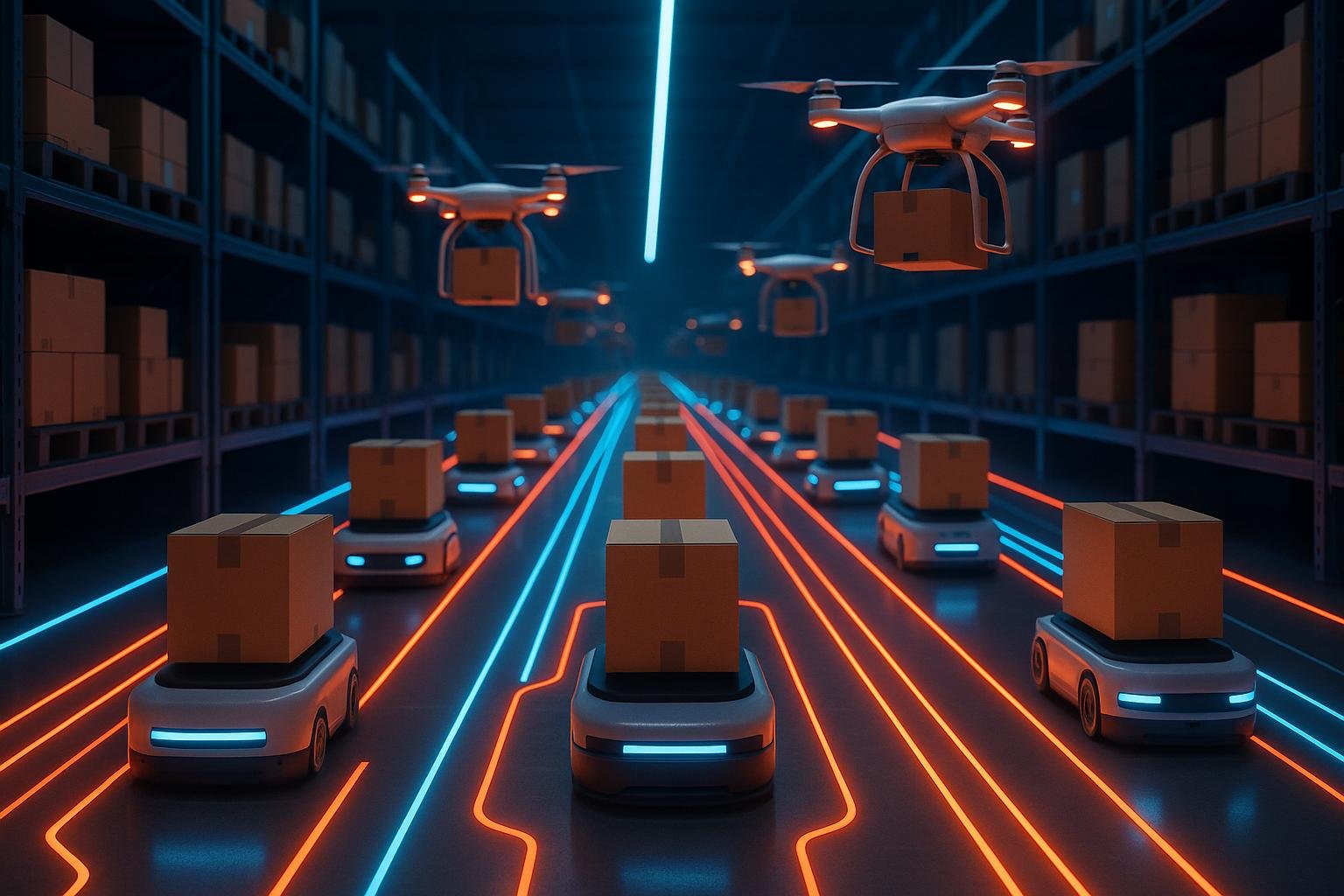
Retailers are harnessing pragmatic logistics strategies , from inventory accuracy to automation , to transform growth trajectories, reduce costs, and enhance customer satisfaction amid shifting industry dynamics.

When retailers treat logistics as an afterthought, growth becomes uneven: marketing campaigns win attention, product lines expand, but orders slow, costs rise and customer satisfaction slips. According to the original report by Phase V Fulfillment, the differen...
Continue Reading This Article
Enjoy this article as well as all of our content, including reports, news, tips and more.
By registering or signing into your SRM Today account, you agree to SRM Today's Terms of Use and consent to the processing of your personal information as described in our Privacy Policy.
Inventory management is central to that flow. Industry data shows that inaccurate counts and poor visibility create cascading failures: misplaced stock undermines forecasting, which in turn distorts replenishment and raises fulfilment lead times. The lead article highlights practical controls that distinguish robust operations , clear SKU organisation, automated receiving, real‑time tracking, reliable cycle counts and simple forecasting , and notes that cost control becomes possible only after inventory control. Complementary guidance from supply‑chain analyses stresses the same point, advocating source tagging, RFID and POS integration to provide near real‑time demand signals and tighter vendor collaboration.
Warehousing is where those inventory rules are realised. A thoughtfully designed warehouse reduces wasted motion, speeds picking and protects throughput; a badly structured one creates bottlenecks. The lead report and several sector guides recommend small but effective changes , clarifying pick paths, redesigning storage zones, and segmenting high‑velocity SKUs , that can transform performance without major capital expenditure. For mid‑market firms, the natural next step is often partial outsourcing or partnering with third‑party logistics providers to gain capacity and systems without the overhead of adding facilities. Case studies across food & beverage and health & beauty supply chains underline how freight consolidation and shared warehousing delivered measurable cost and service improvements for firms with seasonal peaks and complex packaging needs.
Fulfilment is the customer’s first material experience of logistics. Consistency in picking, packing and quality checks matters as much as speed: slow, error‑prone fulfilment damages brand trust even when upstream planning is strong. The Phase V analysis emphasizes practical interventions , minimising walking time, simplifying pick routes, automating labelling, and embedding mandatory quality checks , and notes how 3PL models can help growing retailers preserve service levels while scaling. Independent logistics commentary reinforces those prescriptions, adding that order management discipline and electronic data interchange between trading partners reduce exceptions and improve on‑time performance.
Shipping remains both a cost centre and a brand touchpoint. The lead article recommends diversifying carriers, smarter routing rules, renegotiating rate tiers and right‑sizing packaging, and suggests positioning inventory closer to demand to shave zone costs. Broader industry guidance concurs and warns that volatile transport rates and shifting tariff policies make vendor compliance increasingly important: proactive compliance programmes reduce chargebacks, sustain retail partnerships and protect margins. For many retailers, optimising zone distribution and leveraging multi‑node networks have produced immediate per‑order savings.
Returns and reverse logistics are frequently neglected profit drains. The Phase V piece outlines straightforward controls , consistent RMA rules, fast inspection steps, clear restocking procedures and prompt refund communication , that preserve resale value and inventory accuracy. Sector guides add that structured returns workflows and regional returns hubs are particularly important for retailers operating omnichannel models, where returns volume and complexity escalate rapidly.
Three structural trends are reshaping retail logistics. First, micro‑fulfilment and localisation of inventory are shortening delivery times and reducing split shipments, meeting rising customer expectations for rapid delivery. Second, automation , from conveyors and scanners to robotic picking and smart routing , is becoming a practical lever to stabilise operations amid fluctuating labour markets, though experts caution that automation should follow, not replace, disciplined process design. Third, omnichannel routing that unifies ecommerce, store replenishment, marketplace orders and click‑and‑collect from a single inventory pool is now a baseline requirement for consistent customer experience.
Sustainability is also moving from PR to procurement. Data shows that optimised packaging, consolidated freight and route optimisation both reduce carbon footprints and lower long‑term material and transport costs, and retailers that adopt greener logistics practices often see improved brand perception.
Crucially, improvements do not require a robotics budget. The lead article and multiple industry guides point to a pragmatic hierarchy of actions: tighten inventory accuracy, simplify pick routes, refresh carrier mixes, improve packaging choices, outsource peak periods and clean up returns processes. These steps deliver measurable uplift in speed and cost without major system overhauls.
As retailers scale from single warehouses to multi‑node networks, their logistics needs change: small teams benefit most from simplicity and disciplined basics; mid‑market players need multi‑location visibility, partial automation and stronger WMS features; enterprises treat logistics as a strategic function, layering advanced forecasting, robotics and negotiated carrier frameworks to drive down cost per order. Across that spectrum, the objective remains unchanged: faster, cheaper, more accurate flow.
According to the original report, Phase V positions itself as a partner for retailers seeking that stability. Industry sources advise approaching such relationships with clear performance metrics and compliance expectations to avoid hidden costs. Strengthening logistics , whether through internal reforms or selective outsourcing , creates long‑term operational resilience and helps ensure that growth is not merely larger, but also smoother and more predictable.
Source: Noah Wire Services
Subscribe to Industry Updates