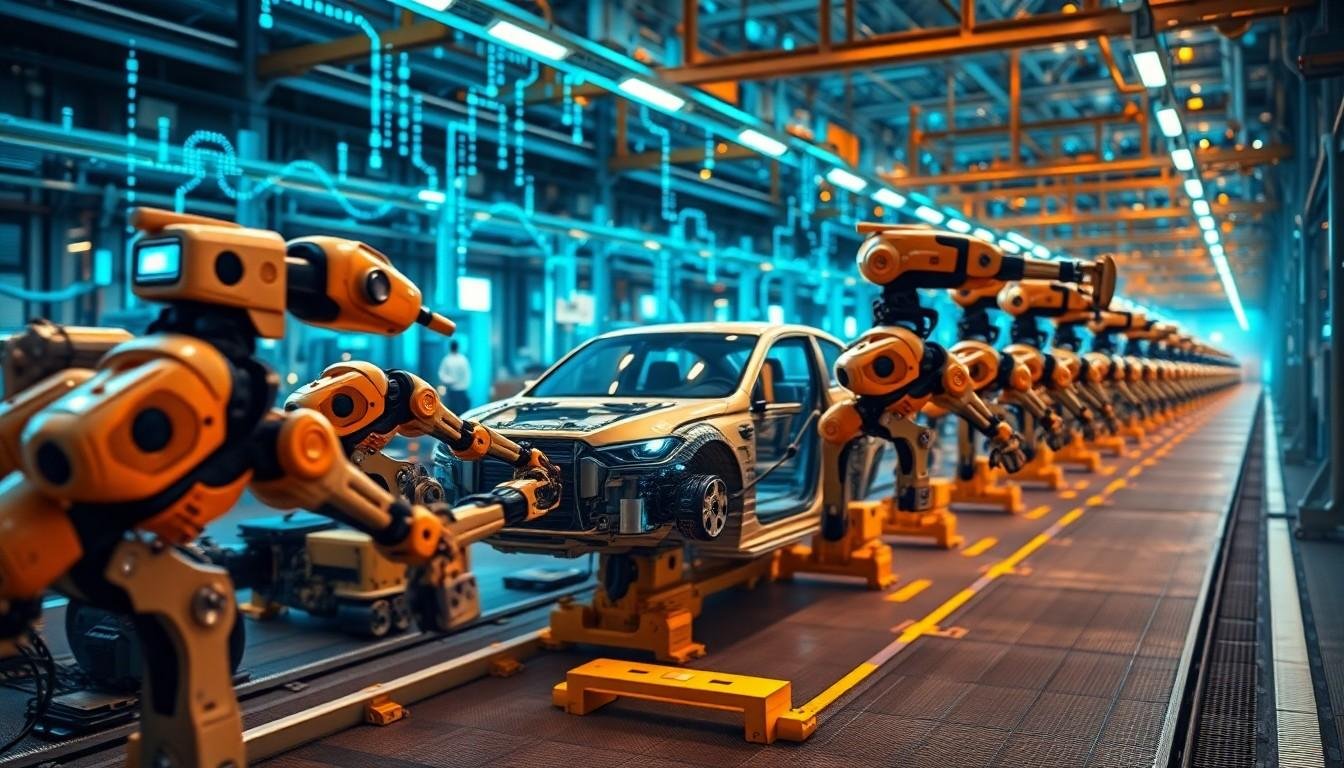
Automotive supply chains are entering a different operating era. The familiar pattern of annual plans, monthly reviews and weekly adjustments was built for a comparatively stable market, not one shaped by tariff shifts, semiconductor scarcity, electrification, regionalisation and supplier stress. Capgemini argues that this environment now demands a supply chain that never really switches off: one that senses change continuously, tests options quickly and feeds decisions back into exec...
Continue Reading This Article
Enjoy this article as well as all of our content, including reports, news, tips and more.
By registering or signing into your SRM Today account, you agree to SRM Today's Terms of Use and consent to the processing of your personal information as described in our Privacy Policy.
ution in real time.
That shift matters because the consequences of supply chain decisions are no longer confined to operations. A stock move affects cash, margin, service and sustainability at the same time. In an industry where inventory can protect production but also trap working capital, leaders need a way to understand not just what is happening, but what it means financially before the damage is done.
The control tower is therefore being redefined. Where it once functioned mainly as a visibility tool, Capgemini says it is becoming an intelligence layer that links demand, supply, logistics, finance, risk and aftersales in a single view. The goal is not simply to report disruption faster, but to help organisations decide sooner and act with more confidence.
This is increasingly relevant for vehicle manufacturers and suppliers, who are dealing with uneven demand for new models and battery electric vehicles, as well as persistent uncertainty in upstream networks. Traditional planning rhythms can easily miss signals that emerge between cycles. A supplier failure, a transport delay or a sudden swing in customer demand may already have changed the picture by the time it appears in a report.
AI is changing that cadence. According to Capgemini, demand sensing can pick up earlier indicators from internal and external data, while scenario modelling can assess the impact of alternative responses before commitments are made. The practical value lies in reducing decision latency. Instead of waiting for the next planning meeting, teams can see probable outcomes, compare options and choose actions while there is still time to protect service or cash.
Research discussed in an SSRN paper by Dr Praveen Mishra points in a similar direction, arguing that automotive volatility requires synchronised, AI-driven supply chain architectures built on distributed intelligence, real-time data and predictive simulation. McKinsey has also described digital supply chain intelligence as central to building resilience in North America’s automotive sector, especially where uncertainty is now part of the normal planning environment.
Capgemini describes this as an always-on intelligence model. In that approach, the system continuously senses change, predicts outcomes, evaluates scenarios, recommends actions, executes decisions and learns from results. The result is a continuous decision loop rather than a sequence of disconnected planning rounds.
That has implications well beyond operations. Automotive resilience is also a financial problem. Buffer stock can preserve output, but it also ties up cash. Emergency freight can keep plants running, but it can erode margin. A supplier interruption can quickly become a revenue risk. Capgemini says the control tower must therefore connect operational signals to financial consequences, so that resilience is managed in economically rational terms rather than through blanket inventory build-up.
This is where financial and working capital intelligence becomes important. Instead of asking where to add more stock, leaders can ask which inventory positions are genuinely protecting revenue, where cash is being trapped unnecessarily and which mitigation measures create the best trade-off between service and cost. That includes tracking excess and obsolete stock, expedites, supplier disruption exposure and potential cash release opportunities.
Studies on AI in the automotive sector make a similar case. A paper on SSRN by Abdul Rahman says machine learning and predictive analytics can improve working capital management through better demand forecasting, more efficient accounts payable and receivable processes and tighter inventory control. The implication is that AI is becoming as relevant to cash conversion as it is to production planning.
Capgemini’s argument is that visibility alone is no longer enough. Many companies already have dashboards and alert systems, but those tools do not necessarily resolve the competing interpretations that follow a disruption. The next step is orchestration: a common decision layer that connects procurement, manufacturing, logistics, finance, sustainability and risk teams, so that everyone is working from the same set of facts and scenarios.
That is also where partner ecosystems matter. Automotive supply chains span multiple tiers, and the impact of a disruption often lands far from the original event. Procurement needs supplier intelligence, operations needs material and transport visibility, and finance needs to understand the effect on revenue, margins and cash. A shared control structure gives each function a clearer line of sight into the same event.
Implementing this model is not simply a technology exercise. Capgemini says it requires a trusted data foundation, end-to-end process alignment, embedded AI recommendations, and performance measures that are tied to business value rather than system activity. AI models also need context: supplier, manufacturing, logistics and customer data must be linked in a way that gives the algorithms real business meaning. Without that, the risk is that models generate fast but unreliable answers.
The broader case for change is supported by industry evidence. A report cited by MHL News, drawing on Accenture research, says companies with mature supply chains that use AI and generative AI can achieve 23 per cent higher profitability than peers. The message is that resilience and profitability are no longer competing objectives if the planning model is intelligent enough to balance them together.
For automotive companies, the conclusion is straightforward. The future supply chain will be judged not by how much it can see, but by how quickly it can turn that visibility into action. Those that can detect risk earlier, model consequences faster and manage inventory with financial discipline are likely to be better protected against disruption and better placed to release working capital. In a market where volatility has become the norm, that may be the new baseline for competitiveness.
Source: Noah Wire Services