For years, ERP and PLM platforms were treated as the backbone of supply chain digitisation. They helped firms centralise information, improve reporting and give leaders a clearer view of operations. But as supply chains have become faster, more fragmented and more data-heavy, those systems are increasingly being seen as only part of the answer rather than the full operating model.
The argument, made in Supply Chain Game Changer, is that legacy ERP and PLM tools were built for a...
Continue Reading This Article
Enjoy this article as well as all of our content, including reports, news, tips and more.
By registering or signing into your SRM Today account, you agree to SRM Today's Terms of Use and consent to the processing of your personal information as described in our Privacy Policy.
different era. They were designed to support defined sets of users and relatively stable business processes, not today’s environment of constant integration, rapid change and end-to-end orchestration. In practice, that has left many companies with systems that are expensive to maintain, difficult to adapt and too rigid to support modern decision-making at scale.
ERP systems still play an important role. As TechTarget notes, they can provide visibility into supply, demand, capacity and product flow, while also supporting forecasting, reporting and control across multiple business functions. SAP similarly argues that ERP can strengthen supply chain management by improving collaboration, transparency and demand planning. Yet the very breadth of these systems can also make them cumbersome, particularly when data is trapped in silos or when businesses need real-time insight rather than periodic reporting.
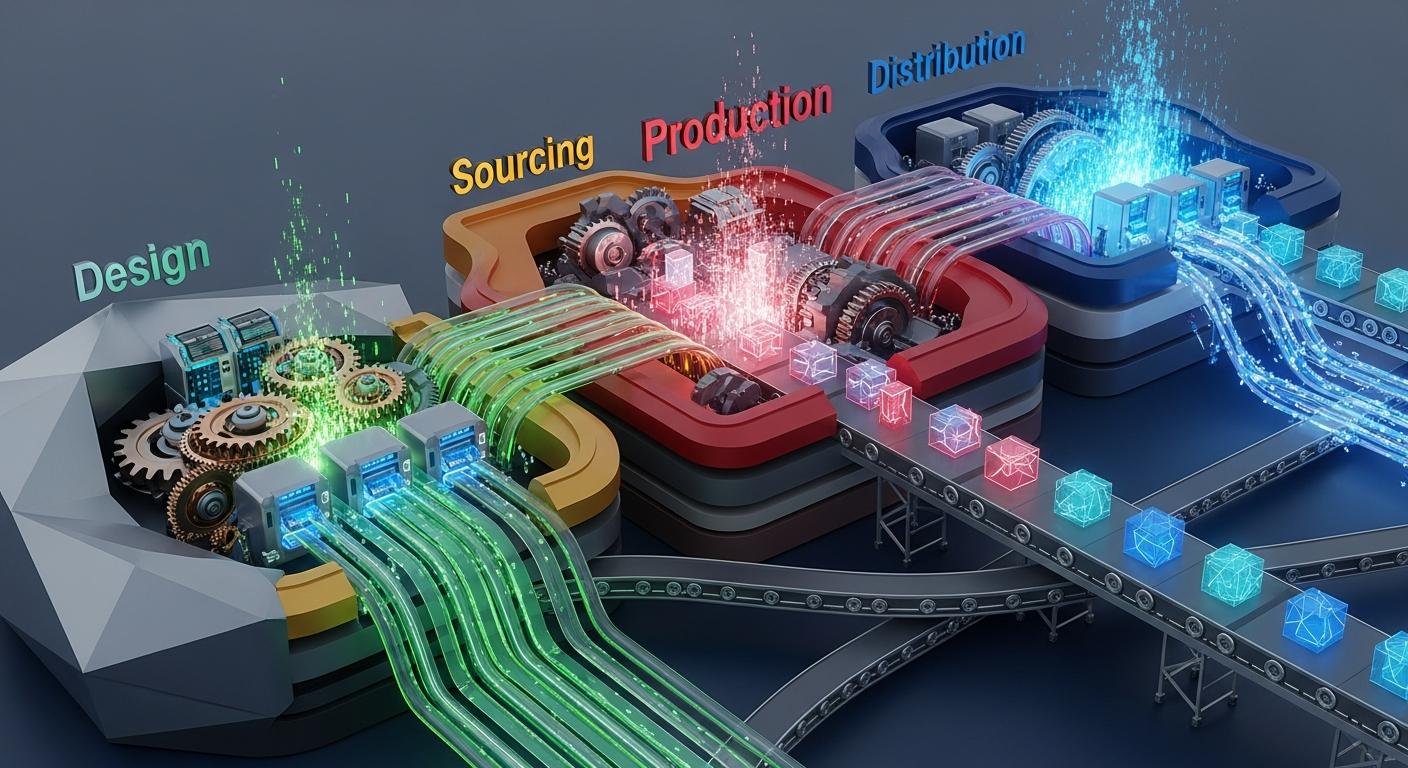
That tension has become more visible as companies try to connect design, sourcing, production and distribution. PLM systems are useful for tracking a product from concept to launch, and they can be valuable for managing technical documentation and early-stage development. However, according to OpenBOM, traditional PLM and ERP setups often struggle to connect product data with process management and inventory control, leaving gaps between engineering intent and operational reality. The result is that teams may understand what was designed, but not always how it is performing through the rest of the supply chain.
The case for newer supply chain management platforms is that they attempt to close those gaps. Rather than acting as isolated record-keeping tools, they are presented as horizontal systems that connect product development, sourcing, production, logistics and sales in a single digital framework. Proponents say this makes it easier to share information across functions, run live reports and respond more quickly to disruptions.
Supporters also point to flexibility. The Supply Chain Game Changer article argues that modern platforms can be configured around the business, rather than forcing the business to conform to the software. That matters because supply chains increasingly depend on integration with other systems, and several providers now stress open APIs and software development kits as a way to link legacy tools with newer applications. Industry commentary from Lokad goes further, saying that traditional ERP is structurally unsuited to serve as the main supply chain decision engine because it was built for transactional processing rather than live operational optimisation.
The growing push towards integrated platforms also reflects a wider problem: fragmented supply chain data. Supply Chain Today has noted that information often sits across ERP, warehouse, transport and manufacturing systems, making it difficult for analytics and AI tools to work effectively. In that context, the argument against relying on ERP and PLM alone is not that they are obsolete, but that they are no longer sufficient on their own.
What emerges is a more nuanced picture than a simple replacement story. ERP remains central to finance, operations and control. PLM still matters for innovation and product governance. But companies aiming for faster execution, clearer visibility and more resilient planning are increasingly looking for systems that connect these functions rather than merely store their outputs.
In that sense, the debate is less about abandoning legacy software altogether than about rethinking its role. The future of supply chain technology appears to lie in platforms that can unify data, support collaboration and give managers a live picture of the value chain from design to delivery.
Source: Noah Wire Services