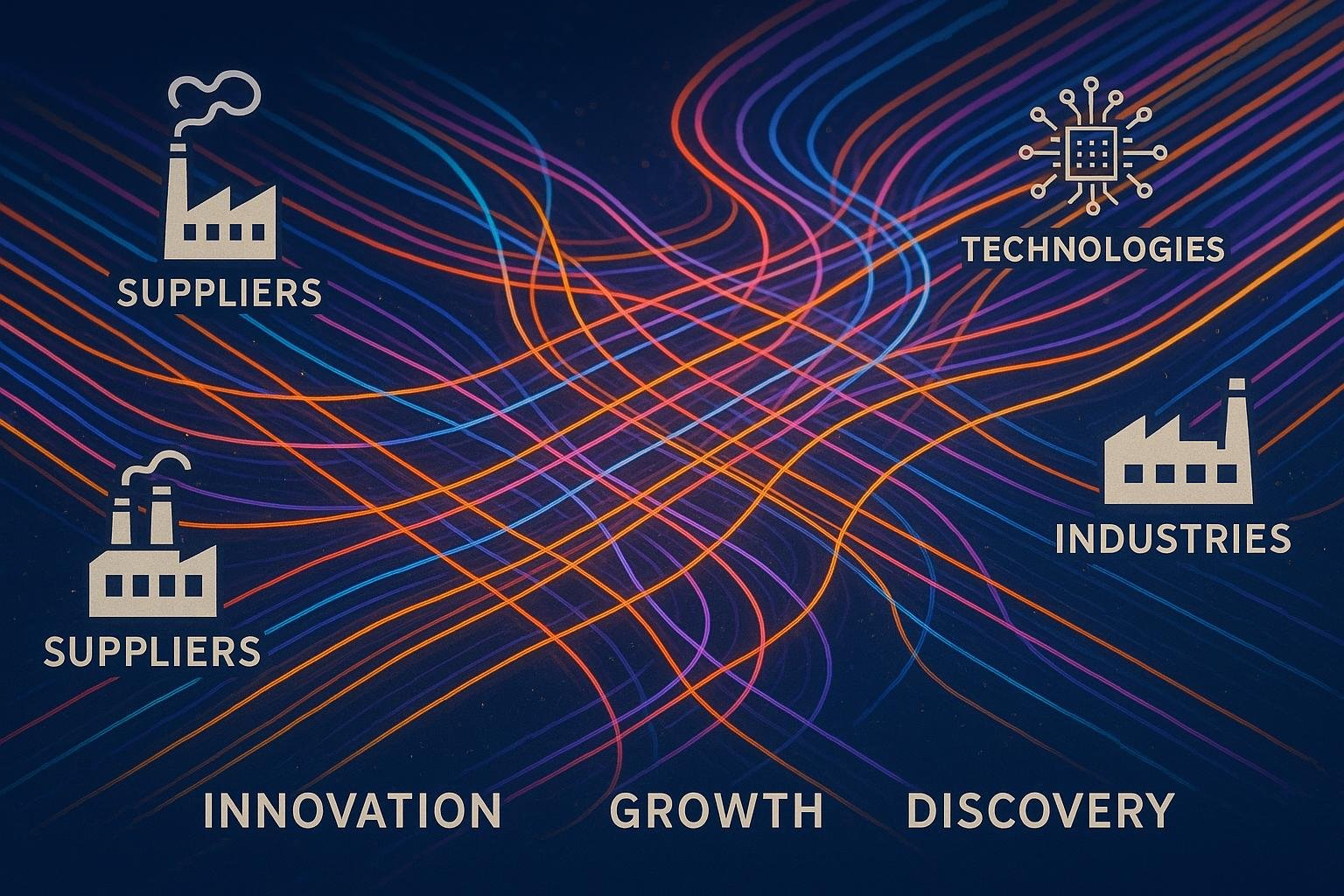
As companies seek faster, cost-effective solutions, strategic supplier collaboration and digital ecosystems are transforming innovation processes, unlocking faster time-to-market and sustainable growth.

In a business environment where speed, cost discipline and close customer insight increasingly determine winners, companies are shifting from closed R&D models to orchestration of innovation across their supply base. According to ITONICS, supplier-driven innovation, ...
Continue Reading This Article
Enjoy this article as well as all of our content, including reports, news, tips and more.
By registering or signing into your SRM Today account, you agree to SRM Today's Terms of Use and consent to the processing of your personal information as described in our Privacy Policy.
Sourcing ideas from suppliers is not a marginal tactic but a strategic lever. McKinsey has found that more than half of adopted innovations originate outside the organisation, and externally sourced concepts are typically commercialised faster than purely in‑house efforts. EY argues that strategic supplier collaboration also enables the integration of sustainable materials and processes from the outset, letting companies set new eco‑standards while trimming waste through better inventory synchronisation and real‑time forecasting. Such operational benefits amplify the innovation upside by making new solutions commercially viable sooner.
The potential payoffs are measurable. ITONICS highlights outcomes such as EBIT growth several times that of peers and significant reductions in total lifecycle cost when suppliers are involved early in design. These claims align with broader procurement thinking: engaging suppliers at the concept and design stages fixes the majority of product costs and risks, while also allowing suppliers to contribute manufacturing know‑how, customer insights and component design improvements that would otherwise be invisible. McKinsey and other industry voices emphasise that procurement must therefore move from transactional buying to a proactive role in cultivating sources of external ideas.
Turning supplier knowledge into repeatable advantage requires structure as well as intent. Several practitioners set out complementary best practices. SmartBrief recommends building trust and becoming the “customer of choice” by sharing strategic information, agreeing IP terms up front, visiting supplier sites and measuring and rewarding collaborative outcomes. EOXs and Netsuite stress the same fundamentals: clear objectives and KPIs, open and honest communication, investments in enabling technology and incentive mechanisms that make participation mutually attractive. Oliver Wynman (as cited by ITONICS) reports that many organisations struggle to integrate suppliers, citing IP fears, lack of internal buy‑in and misaligned expectations, so active change management and early procurement engagement are critical.
Digital platforms and ecosystems are frequently offered as the enabler that binds these elements together. EY and ITONICS both point to tools that centralise idea management, automate routine procurement work and surface high‑potential submissions from distributed suppliers. The vendor ITONICS describes claims its platform allows configurable phase‑gate workflows, collaborative rating and external portals so suppliers can submit ideas, while dashboards help prioritise and transfer validated concepts into the innovation portfolio. Taken at face value these systems can scale engagement across geographies; however, vendors’ performance claims should be weighed against independent results and the buyer’s capacity to act on incoming ideas.
Practical governance matters as much as software. Organisations should set clear rules on intellectual property and confidentiality, align stakeholders internally to avoid duplicate efforts, and establish evaluation criteria that balance strategic fit with commercial viability. Incentives, ranging from financial rewards to preferred contracting or co‑development opportunities, encourage suppliers to invest scarce R&D effort. Procurement must also accept some innovation risk; success often requires shared risk‑reward models rather than rigid, transactional contracts.
Real‑world examples illustrate both the promise and the work involved. According to ITONICS, DMG MORI, the German machine‑tool manufacturer, built a supplier innovation programme that invites suppliers into early development phases and uses a digital ideation platform to collect, evaluate and prototype proposals. The company says the approach centralises its ideas ecosystem and accelerates implementation; independent observers would note that such programmes succeed only when governance, cultural fit and follow‑through are in place across sourcing, engineering and commercial teams.
Supplier‑driven innovation is not a one‑off project but an operating model shift: it requires procurement to act as an architect of external knowledge, leaders to align incentives, and platforms to make collaboration discoverable and actionable. When these pieces come together, clear objectives and IP rules, early supplier integration, mutual rewards and digital scaffolding, companies gain access to specialised intelligence, lower costs and faster routes to market. The evidence from consultancy studies and practitioner accounts suggests that firms that commit to this shift will be better placed to turn supplier capabilities into sustainable competitive advantage.
Source: Noah Wire Services
Subscribe to Industry Updates