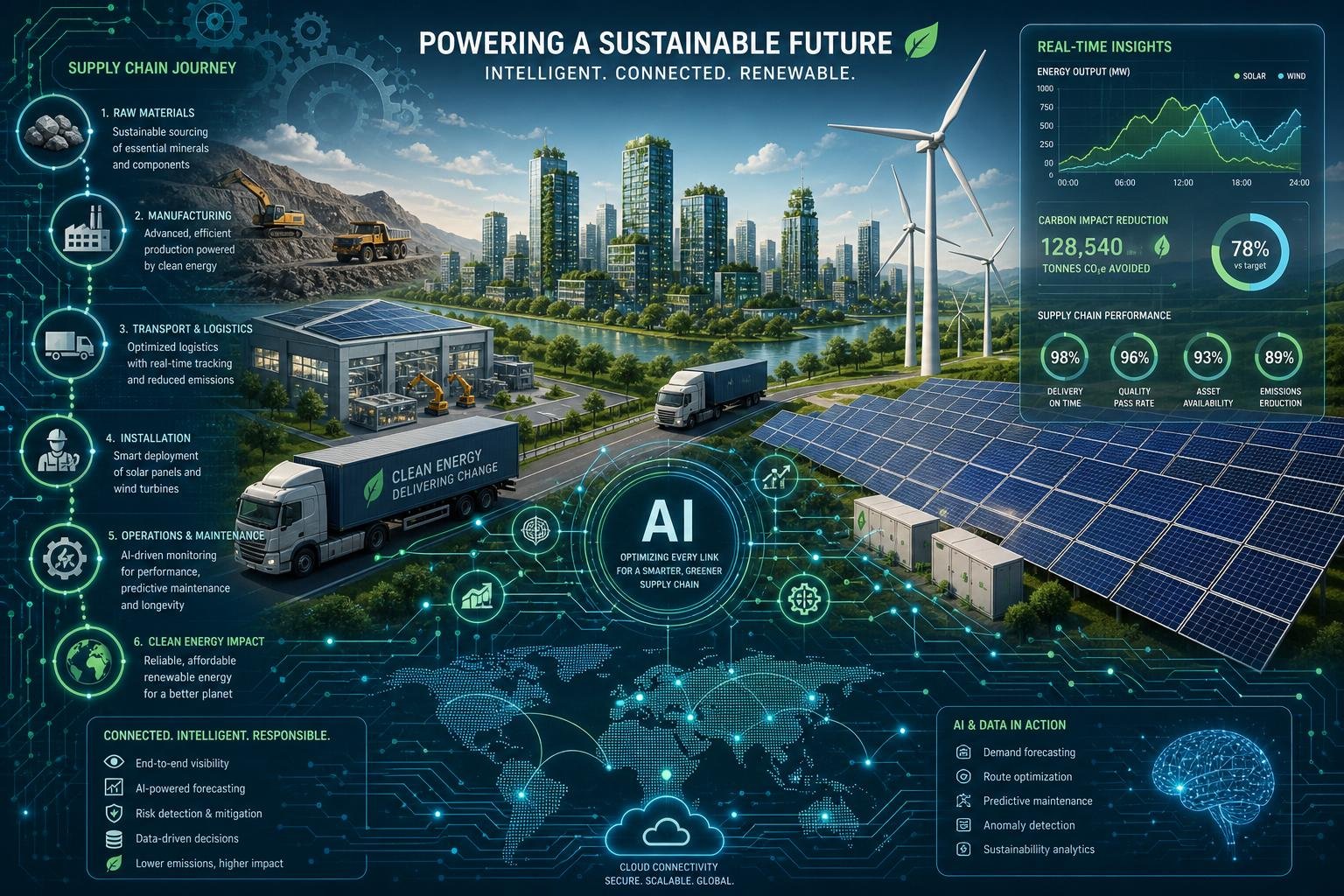
Schneider Electric is casting its global supply chain as a central part of the energy transition, arguing that the company’s role is no longer limited to making and moving equipment but extends to helping customers navigate a period of surging electricity demand, rapid digitalisation and pressure to cut emissions.
In a recent company article, Schneider Electric said it now sees itself as an energy technology business, not simply an industrial manufacturer. That framing matter...
Continue Reading This Article
Enjoy this article as well as all of our content, including reports, news, tips and more.
By registering or signing into your SRM Today account, you agree to SRM Today's Terms of Use and consent to the processing of your personal information as described in our Privacy Policy.
s because the group’s supply chain reaches more than 160 factories and 75 distribution centres and serves customers in over 100 countries. The company says that scale gives it both a responsibility and an opportunity: to deliver energy technology faster, with greater resilience and lower environmental impact.
The timing is significant. Earlier this year, at the World Economic Forum in Davos, Schneider Electric said AI and energy are becoming inseparable forces reshaping business. The company has also been warning that the growth of AI computing, electrification and industrial digitalisation is putting unprecedented strain on power systems. In the healthcare sector, it has said modern facilities are already facing sharply higher electrical loads, while in the US it has pointed to a widening gap between rising power demand and the speed at which infrastructure can be built.
Against that backdrop, Schneider Electric is pushing a supply chain model designed to move closer to customers and respond more quickly to changing needs. The company says demand is increasingly being shaped by prefabricated and modular data centres, higher power density and shorter deployment cycles for new computing capacity. That, in turn, is shifting more of the value creation upstream, into design, assembly and planning rather than on-site installation alone.
Planning is one area where the company says it is turning more decisively to automation. Schneider Electric says it is moving away from slower, intuition-led cycles and towards decision-making supported by data and algorithms. It argues that artificial intelligence can analyse patterns, forecast demand and recommend actions, while human teams retain oversight and final approval. The company presents this as a way to reduce bias, improve consistency and strengthen sustainability performance.
Speed is another priority. Schneider Electric says it wants its supply chain to operate in weeks rather than months, using digital tools that provide real-time visibility across suppliers, manufacturing and logistics. It has also reorganised parts of its network into regional clusters to stay nearer to customers. Within its factories, it says AI systems are already being used to flag anomalies earlier and prevent downtime before problems escalate.
The company is also betting heavily on what it calls responsible AI deployment. Rather than waiting for perfect data or a finished operating model, Schneider Electric says it prefers to test quickly, learn from live operations and scale successful tools. But it says that approach is paired with strict controls, including governance, clear accountability, cyber security safeguards and data standards. Its use of AI now extends to forecasting, quality checks, energy optimisation and workforce support.
Sustainability remains at the centre of the strategy. In a separate update on its Impact 2030 roadmap, Schneider Electric said it achieved an Impact score of 3.40 out of 10 in the first quarter of 2026, moving towards an annual goal of 4.20. The company says the programme is built around electrifying the world, reinventing industry, unlocking human potential and supporting local communities.
Schneider Electric also says its Zero Carbon Project has helped thousands of suppliers begin cutting emissions, including many that started without a baseline. The company says its efforts with its top 1,000 suppliers have reduced CO₂ emissions by 56%, and that it now operates 195 Zero CO₂ sites and 176 waste-to-resource sites. It also says all of its sites are engaged in biodiversity programmes.
The broader message is clear: Schneider Electric wants its supply chain to do more than keep pace with demand. It wants it to become a strategic instrument for the energy transition, one that is regional, digital, AI-enabled and designed to deliver cleaner, more resilient infrastructure at scale.
Source: Noah Wire Services