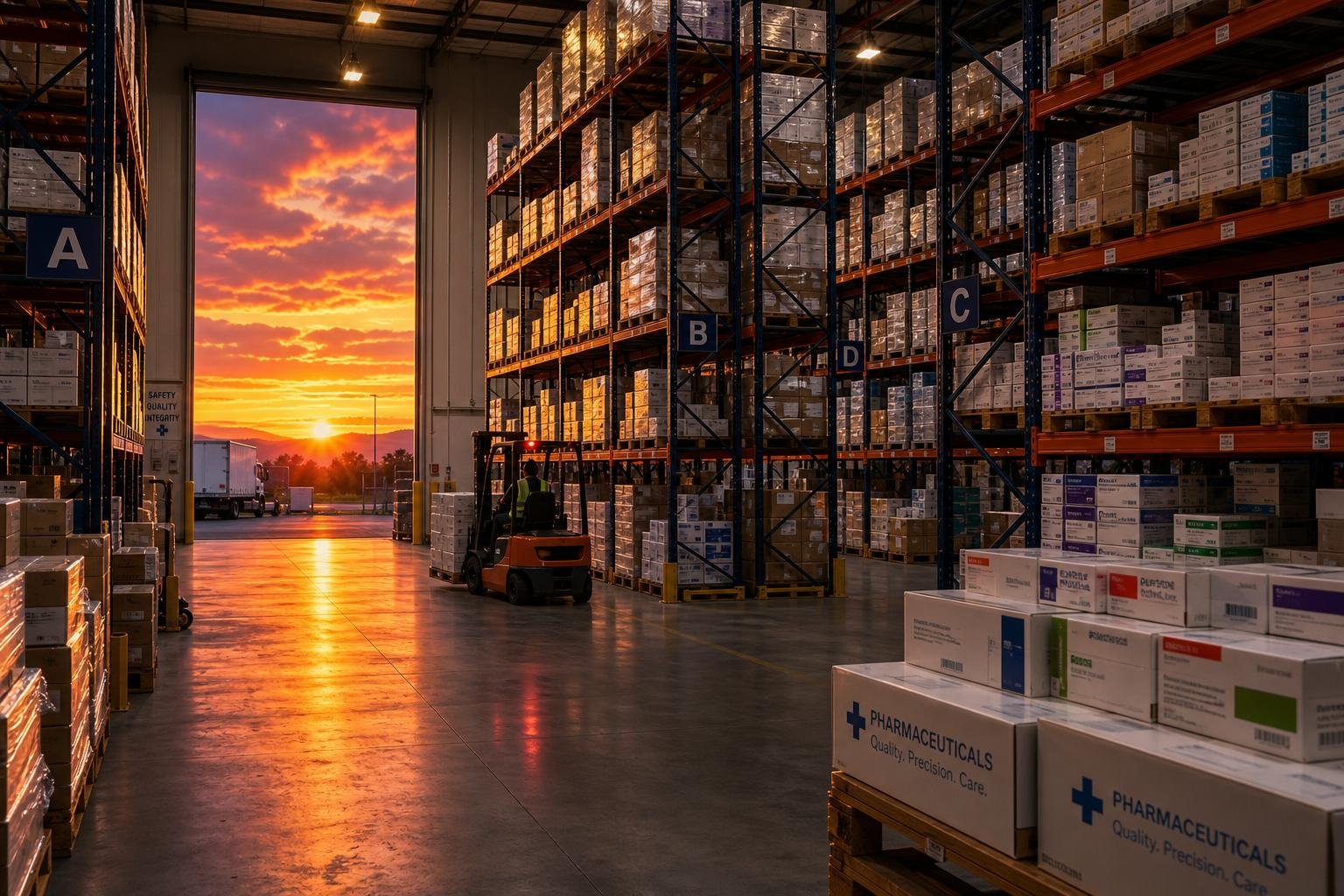
Healthcare supply chains have been under extraordinary strain in recent years, with rising demand, geopolitical shocks and persistent volatility forcing manufacturers to rethink how medicines and vaccines move from factory to patient. For Sanofi, that means treating supply chain resilience not as a back-office function but as a core part of patient care.
Dr Andrea Michael Meyer, head of global supply chain strategy and excellence at Sanofi, has spent more than 13 years with the...
Continue Reading This Article
Enjoy this article as well as all of our content, including reports, news, tips and more.
By registering or signing into your SRM Today account, you agree to SRM Today's Terms of Use and consent to the processing of your personal information as described in our Privacy Policy.
company and says the difference between a merely operational supply chain and a strategic one lies in intent. An operational model is built to execute, he suggests, while a strategic one is designed to create advantage by anticipating disruption, protecting access and helping the business reach patients more quickly.
That perspective reflects a wider shift across the pharmaceutical sector. Supply chains are no longer judged only on cost and efficiency; they are increasingly measured by their ability to support continuity, quality and speed in highly regulated markets. In pharma, that also means closer alignment between supply chain, research and development, and commercial teams, so that demand can be forecast more accurately and production decisions can be made with patient needs in mind.
Sanofi says its own network spans 37 production sites and delivers around 2 billion doses of medicines and vaccines each year. The company says it invests more than €1 billion annually in modernising and digitising operations, with a focus on compliance, quality assurance and faster, more reliable delivery.
A central part of that effort is the use of digital tools. Sanofi says it is applying advanced analytics, automation and artificial intelligence across manufacturing and supply to improve visibility and strengthen resilience. The company has also established Digital Manufacturing and Supply Accelerators in Lyon and Singapore, where it is using AI, digital twins and Internet of Things technology to support production and shorten the time it takes to bring new treatments to market.
The business argues that these changes are not just about efficiency, but about safety and responsiveness. Better data, it says, allows it to spot issues earlier, optimise production more effectively and maintain access to essential medicines in a more uncertain world.
Sanofi is also linking resilience to sustainability. The company says it is working on initiatives aimed at reducing the environmental impact of healthcare systems while making them more robust, including efforts to generate data on decarbonisation across patient care pathways and to build environmental factors into research and development.
Taken together, the message from Sanofi is that the future of healthcare logistics will depend less on isolated operations and more on collaboration, digital integration and long-term planning. In a sector where delays can affect patient outcomes, the supply chain is becoming not just a support function, but a strategic asset.
Source: Noah Wire Services