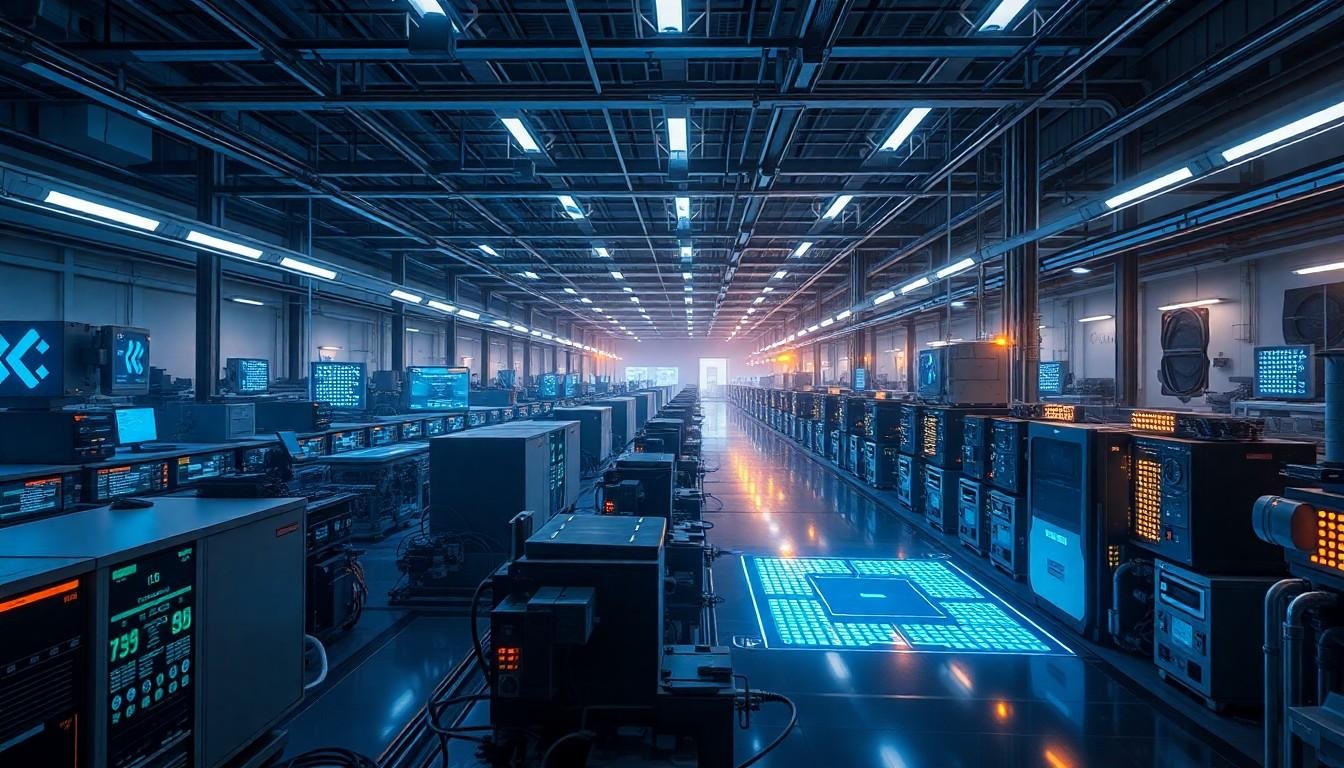
Samsung Electronics is widening access to some of its most closely guarded semiconductor production data as it pushes towards AI-run manufacturing and, eventually, chip plants with no one on the floor.
According to ETNews, the company is operating a platform called DSEP, short for Data Sharing Eco Platform, which now involves more than 60 suppliers and is still adding participants. The system allows Samsung to share selected process data with materials, parts and equipment make...
Continue Reading This Article
Enjoy this article as well as all of our content, including reports, news, tips and more.
By registering or signing into your SRM Today account, you agree to SRM Today's Terms of Use and consent to the processing of your personal information as described in our Privacy Policy.
rs in real time, giving both sides the chance to analyse faults, equipment behaviour and yield issues more quickly than was possible when that information stayed inside the fab.
The move marks a notable shift for a company that has traditionally treated fabrication data as highly sensitive. In the past, data such as error codes and processing times often had to remain on-site for security reasons, meaning supplier engineers would usually visit in person when a machine showed signs of trouble. By contrast, DSEP is designed to let partners examine the same information remotely, identify anomalies sooner and work out the likely cause of a problem without sending staff to the factory floor.
The rationale is partly mathematical. As chipmaking process nodes shrink, each production step generates vast quantities of data. ETNews said a single fab can produce several billion data points, making it difficult for any one company to analyse everything on its own. Samsung’s suppliers, meanwhile, know the internal structure and failure patterns of their own tools and materials, so joint analysis can speed up root-cause identification and improve the response to defects.
Samsung appears to see the platform as one piece of a broader transformation. In a strategy announced earlier this year, the company said it intends to convert its global manufacturing operations into AI-driven factories by 2030, using digital twins, specialist AI agents and more extensive data analysis across logistics, production, quality inspection and shipment. That plan also aligns with Samsung’s longer-term ambition to move its fabs towards 100% unmanned operation by 2030.
The company has already claimed some success in more automated production environments, particularly in packaging. Samsung has said that on parts of its packaging lines already converted to unmanned operation, manufacturing headcount has fallen sharply, equipment failures have dropped and overall equipment efficiency has risen substantially. Those figures relate to packaging rather than wafer fabrication, but they are intended to show what more extensive automation could deliver.
Samsung is also pursuing parallel work with Nvidia on digital twins of its fabs, according to earlier reporting, suggesting the company is building multiple technical routes towards the same goal: a factory that can sense problems, predict them and correct them without relying on large numbers of people inside the plant. DSEP, in that context, looks less like a standalone project than the data-sharing layer of a larger autonomous-manufacturing system.
The expansion of the supplier network suggests Samsung believes the transition will depend as much on collaboration as on internal engineering. As more equipment makers use shared production data to train and refine their own AI tools, the platform could become an important indicator of how quickly the company can move from heavily monitored factories to the lights-out model it is aiming for.
Source: Noah Wire Services