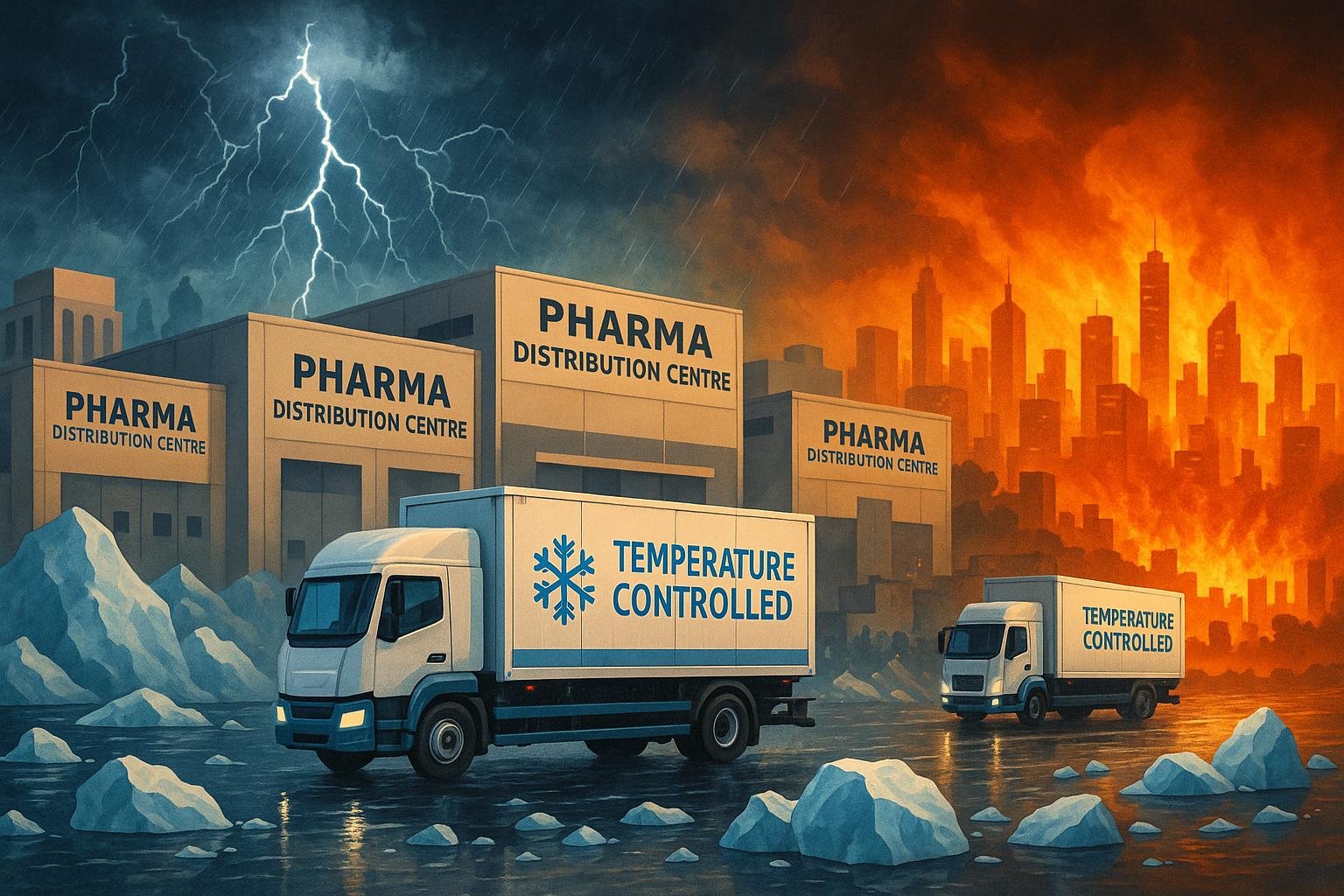
As rising global temperatures and increasingly erratic weather events reshape transport networks, the pharmaceutical sector is confronting a tougher task: keeping temperature-sensitive medicines intact from factory to patient. Vaccines, biologics and other refrigerated therapies rely on uninterrupted cold chains, yet wildfires, floods, storms and heat extremes are now common causes of delays, rerouted shipments and exposure to damaging conditions. According to Pharmaceutical Commerce,...
Continue Reading This Article
Enjoy this article as well as all of our content, including reports, news, tips and more.
By registering or signing into your SRM Today account, you agree to SRM Today's Terms of Use and consent to the processing of your personal information as described in our Privacy Policy.
this trend requires a fundamental rethink of how the industry organises logistics and packaging.
Maintaining product integrity will demand more than incremental improvements. Industry specialists point to three core vulnerabilities: temperature variance during transit, limited real-time visibility and the fragility of single-route distribution. CCPL Logistics highlights that even brief excursions beyond target temperatures can compromise efficacy, while its analysis stresses the need for skilled planning and appropriate technology at each stage of packing and movement. Redundancy in routes and contingency planning are becoming necessary insurance against climate-driven interruptions.
Packaging suppliers are shifting from a supporting role to a strategic one. During the COVID-19 vaccine rollout the importance of robust thermal solutions and reliable monitoring became plain; now packaging providers must be involved at the design and logistics-planning stages so containers and insulation are matched to route-specific risks. Reusable, space-efficient materials can cut emissions and reduce waste, but their environmental benefits must not compromise patient safety, as industry observers caution.
Technology is central to this transition. Multiple trade publications describe a move from passive monitoring to predictive systems driven by artificial intelligence. Traxtech and Lightning Logistics both report that AI and machine learning enable predictive temperature control, route optimisation and demand forecasting that anticipates disruptions before they cascade into product loss. TMA Solutions notes that combining AI with Internet of Things sensors and predictive maintenance improves asset uptime and supports automated decision-making in complex networks.
These capabilities are not yet automatic. Experts warn that gaps in data sharing and integration limit AI’s usefulness, and that models require high-quality, real-time inputs on weather, transport status and cold-pack performance to offer reliable guidance. CCPL Logistics and other commentators emphasise the importance of end-to-end visibility , including RFID and continuous temperature logging , so predictive engines can recommend alternative corridors, adjust container setpoints or trigger rapid interventions when conditions change.
Sustainability must be reconciled with resilience. The sector can lower its carbon footprint through lighter packaging, return-and-reuse schemes and smarter load planning, yet those measures need to be calibrated against the imperative of maintaining therapeutic potency. According to analyses in industry outlets, AI can help strike that balance by forecasting demand more accurately and suggesting the most efficient, least carbon-intensive transport modes that still meet safety constraints.
Building a climate-resilient cold chain therefore requires coordinated action across manufacturers, logistics operators, technology providers and packagers. That means embedding packaging expertise into strategic planning, investing in interoperable monitoring systems, and developing redundant, route-aware logistics that can be switched in real time. Companies that align these elements now will be better placed to protect supply continuity and control costs as the operating environment grows more volatile.
The challenge is systemic and urgent: protecting patient outcomes while limiting the sector’s own environmental impact will depend on collaborative, data-driven solutions that make the cold chain both smarter and more durable.
Source: Noah Wire Services