


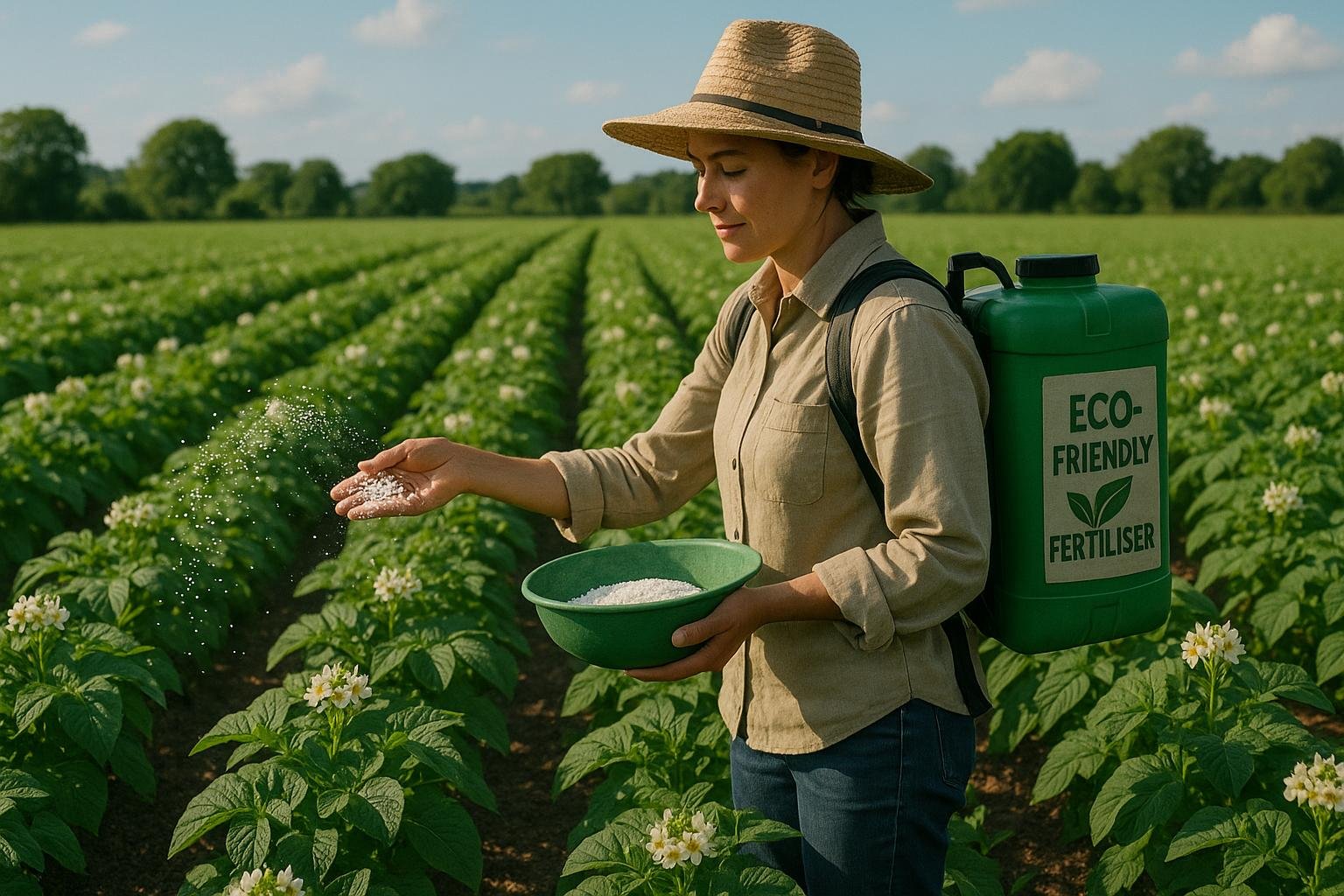
PepsiCo and fertiliser producer Yara have expanded a collaboration to reduce greenhouse gas emissions from nitrogen fertiliser, promising significant environmental benefits and advances in sustainable farming practices across Europe and Latin America.

PepsiCo and fertiliser producer Yara have broadened a commercial and technical partnership designed to cut greenhouse gas emissions from one of agriculture’s most emissions-intensive inputs: mineral nitrogen fertiliser. ...
Continue Reading This Article
Enjoy this article as well as all of our content, including reports, news, tips and more.
By registering or signing into your SRM Today account, you agree to SRM Today's Terms of Use and consent to the processing of your personal information as described in our Privacy Policy.
According to ESG News, early pilots in Europe and Latin America show reductions of roughly 20–40% in emissions per tonne of potatoes, with outcomes varying by production system and the specific fertiliser used. That assessment sits alongside higher estimates promoted by Yara in other briefings, which state that certain low‑carbon fertiliser variants could shrink a farmer’s carbon footprint by 40–60% depending on the product. The differing ranges reflect variation in methods, baselines and the relative share of production versus field emissions in each context.
PepsiCo’s European announcement with Yara commits the buyer to significant procurement volumes. According to a PepsiCo press release, Yara will supply up to 165,000 tonnes of fertiliser a year to PepsiCo, covering about 25% of the company’s crop fertiliser needs in Europe by 2030 and supporting roughly 1,000 farms across some 128,000 hectares. Yara’s public materials confirm the partnership’s initial focus on potatoes, with plans to extend the model to oats, corn and other commodities, and to roll the approach out across several Latin American markets including Mexico, Colombia, Chile and Argentina.
The technical package blends lower‑carbon inputs, marketed under Yara Climate Choice and produced either from renewable hydrogen or from ammonia abated with carbon capture and storage, with soil diagnostics, data‑driven nutrient management and agronomic advice. According to Yara, that combination is intended to improve nitrogen use efficiency so farmers need not sacrifice yields in order to reduce emissions. The companies say digital monitoring supports verification and transparency, delivering the kind of data investors and regulators increasingly demand.
“Without collective action, the global food system is not going to change at the speed and scale needed. Our collaboration with Yara is a powerful example of what can help drive the necessary transformation. We have put farmers at the centre and are helping them scale regenerative practices, reduce emissions and build resilience across agricultural communities,” said Margaret Henry, Vice‑President, Sustainable and Regenerative Agriculture at PepsiCo.
Benoit Lamaison, Senior Vice‑President for Continental Europe and Product Strategy at Yara, framed the tie‑up as an example of how commercial demand can unlock investments in cleaner production. “By introducing low‑emission fertilizer solutions and leveraging innovation, this collaboration helps accelerate progress toward a net‑zero food system while supporting farmer livelihoods and strengthening food security. It is collaborations like this and others that demonstrate how business, government and civil society can work together to deliver systemic change,” he said.
Commercial scale and policy remain central to whether the approach can be replicated widely. Industry and advocacy commentary in the project materials emphasise that procurement commitments reduce investment risk for fertiliser manufacturers contemplating costly retrofits or new plants that use renewable hydrogen or CCS, while regulatory frameworks, permitting timetables and access to low‑cost renewable power will determine project economics in different jurisdictions.
At farm level, the business case depends on ensuring lower‑carbon inputs do not raise net costs or depress yields. The partnership seeks to lower transition risks by coupling product supply with agronomic training and digital tools rather than asking growers to undertake wholesale changes alone. Reporting on the Latin America pilot indicates an initial tranche covering roughly 700 hectares across more than 20 farmers, underscoring the cautious, stepwise scaling planned for the region.
The initiative points to a broader blueprint for food‑system decarbonisation: use buyer demand to create markets for cleaner fertiliser, pair product substitution with technical assistance to secure agronomic outcomes, and deploy monitoring to verify emissions improvements. If the model is replicated across crops and geographies and if enabling conditions for clean ammonia production materialise, the cumulative effect could lessen a major source of agricultural greenhouse gases while maintaining food security.
Nevertheless, the programme’s long‑term climate contribution will hinge on independent verification of emissions savings, the pace of industrial decarbonisation in ammonia production and the degree to which farmers adopt and sustain efficiency practices. The early results are promising but present a range of estimates; transparent, standardised measurement and wider deployment will be necessary to confirm whether the approach can shift agriculture’s emissions trajectory at scale.
Source: Noah Wire Services
Subscribe to Industry Updates

