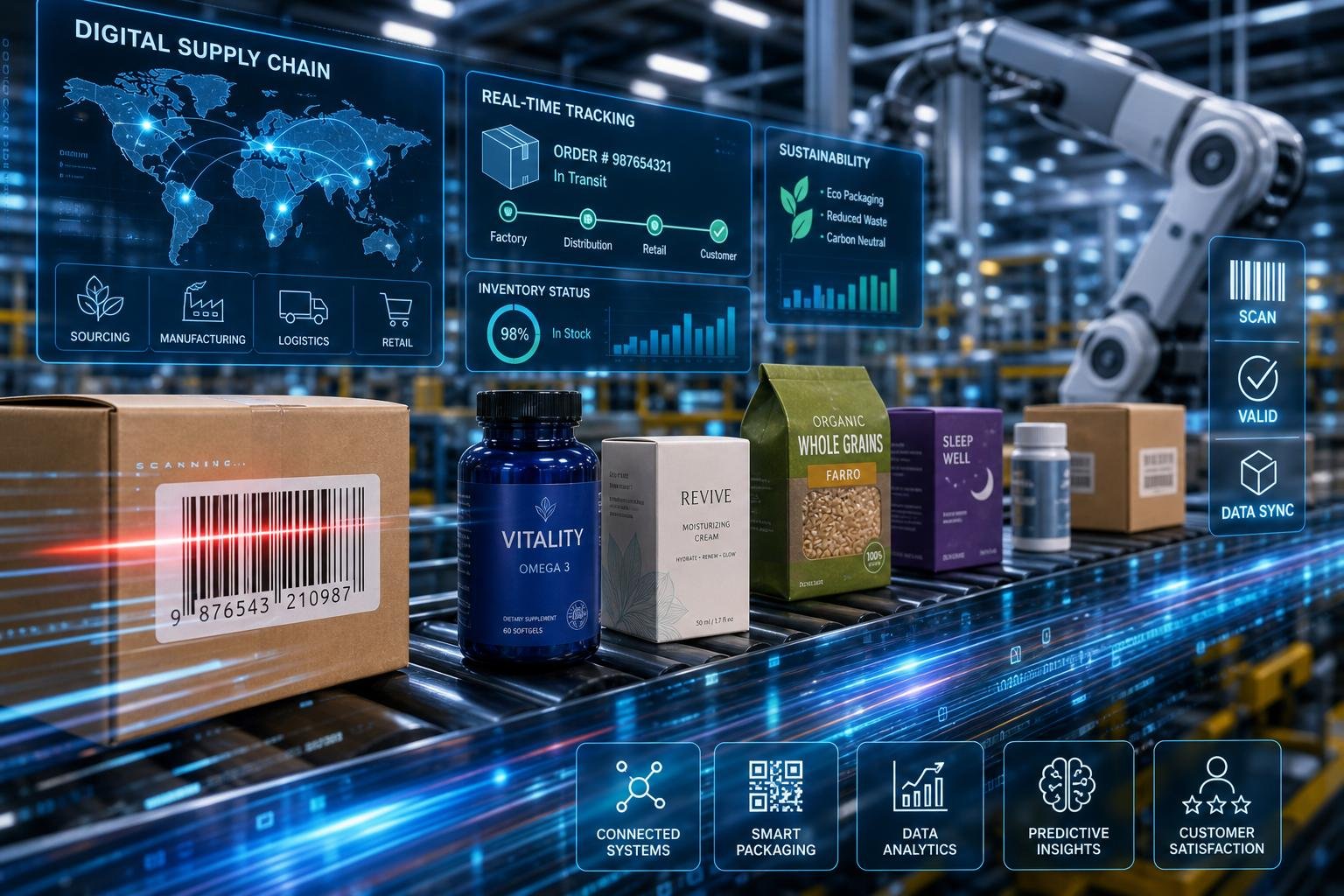
Nestlé’s effort to trace a stolen KitKat has brought a fast-moving corner of supply chain technology into sharper focus: it is now possible to give an individual product a digital identity, follow it through the network and even create a live interaction with it. But while item-level tracking has advanced, ensuring that the same product data remains accurate across suppliers, plants and logistics partners is still a much harder task.
Manufacturers have made significant gains...
Continue Reading This Article
Enjoy this article as well as all of our content, including reports, news, tips and more.
By registering or signing into your SRM Today account, you agree to SRM Today's Terms of Use and consent to the processing of your personal information as described in our Privacy Policy.
in visibility. Many can now generate scannable codes, link them to product information and monitor movement through the chain. Yet, as soon as a product leaves a single controlled environment, that consistency often begins to fray. Requirements are interpreted differently by separate systems, data is re-entered manually and compliance details can be recreated again and again downstream. A packaging change introduced in one market may fail to appear in another, while regulatory updates can take weeks to reach every partner.
That gap between seeing a product and governing its identity is where much of the waste now sits. Mismatched specifications can trigger delays. Inconsistent labels and packaging can force rework. Missing or incomplete data can create compliance exposure. As TechTarget has noted in its coverage of supply chain traceability, fragmentation, weak standards and difficulty verifying supplier data remain among the most persistent obstacles to end-to-end transparency.
The problem becomes more pronounced in heavily distributed networks. A single item may pass through contract manufacturers, packaging specialists and transport providers, each using its own tools and processes. Alignment is often maintained through email chains, spreadsheets and local workarounds, which increases the risk of duplication and error at every hand-off. Even small variations can compound as products move from one site to the next.
Extreme transport conditions can add yet another layer of complexity. SupplyChainConnect has reported that temperature swings, moisture and corrosive environments can degrade the data associated with inventory, making specialised packaging, sensors and protective measures necessary to preserve traceability. In other words, the challenge is not only about creating data, but about protecting it as products travel.
That is why connected packaging, while useful, is only part of the answer. QR codes and other digital carriers can improve traceability, support consumer engagement and allow post-sale updates. But they do not, on their own, solve the deeper issue of how product identity is defined, shared and controlled across an entire network.
In a more connected model, identity is established once and then maintained consistently across trading partners. Changes are pushed through the chain in a controlled way, so every participant works from the same current version rather than a local interpretation. That reduces the need for repeated re-keying, cuts the scope for error and can shorten the time needed to implement product changes across regions.
The benefits are not just operational. As regulatory requirements become more demanding, companies need continuous alignment rather than periodic clean-ups. The same applies to speed to market: the more manual the coordination, the slower a change takes to reach production, packaging and distribution. A synchronised approach gives companies better control over execution, rather than simply reacting when something has already gone wrong.
The KitKat example is striking because it makes the technology visible. It shows what can happen when a single product can be identified and engaged with in real time. The larger challenge is scaling that level of consistency across millions of items and a web of external partners, each with its own systems and constraints.
For supply chains, the next stage will not be defined by how precisely a company can locate one product at one moment. It will be defined by how reliably it can keep product identity accurate, aligned and executable everywhere that product goes.
Source: Noah Wire Services