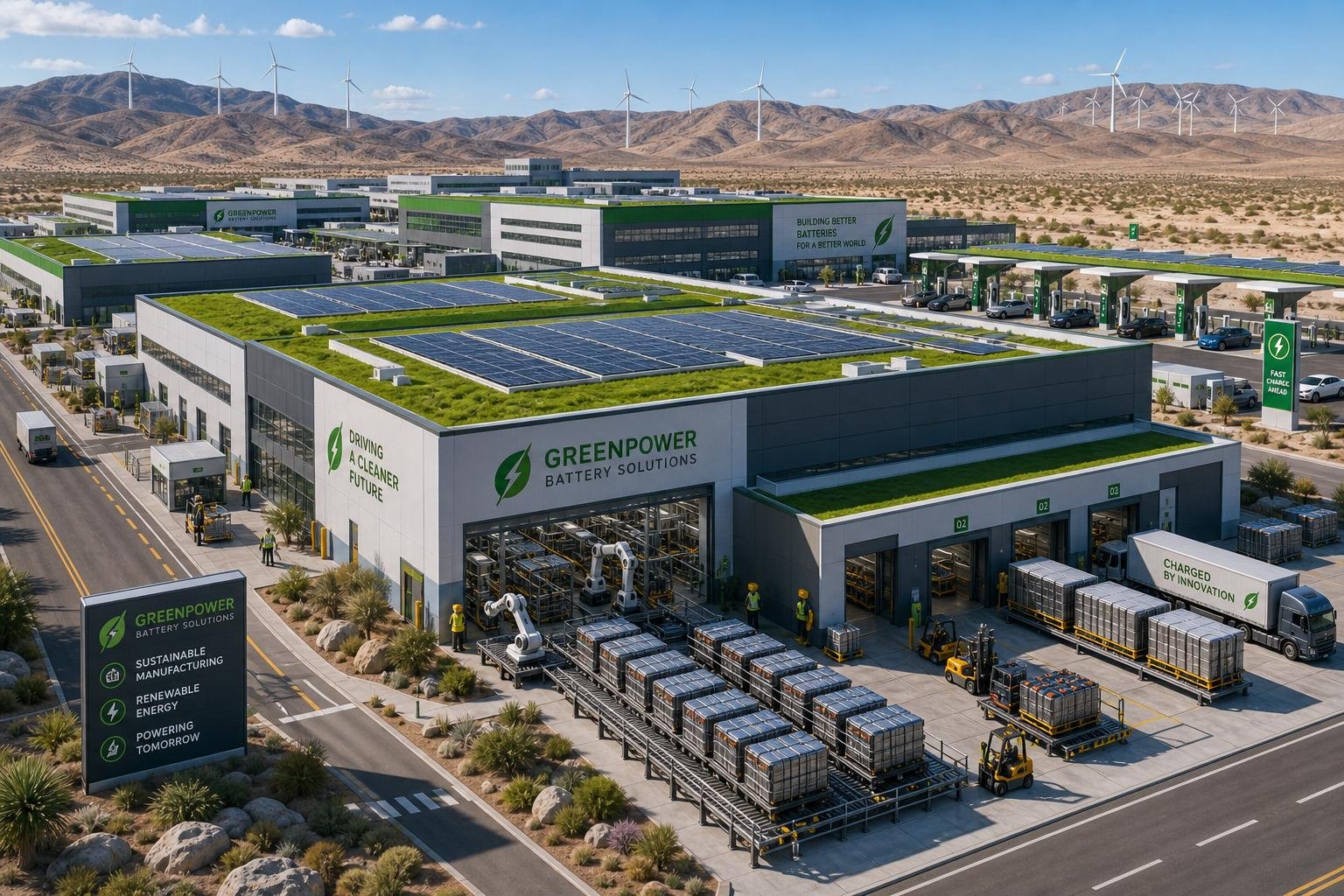
The electric vehicle boom is increasingly being shaped not just by battery chemistry or consumer appetite, but by a new generation of long-term industrial partnerships that bind automakers, cell makers and materials suppliers together for years at a time.
At the centre of this shift is the gigafactory supply deal: a broad, capital-intensive agreement designed to lock in battery output, raw materials and manufacturing capacity at a scale traditional car-making contracts rarely c...
Continue Reading This Article
Enjoy this article as well as all of our content, including reports, news, tips and more.
By registering or signing into your SRM Today account, you agree to SRM Today's Terms of Use and consent to the processing of your personal information as described in our Privacy Policy.
ontemplated. These arrangements now underpin the industry’s push towards mass electrification, with companies seeking not only volume but also certainty in a market where battery availability can determine whether a vehicle line succeeds or stalls.
Tesla’s early gigafactory model showed how powerful vertical integration could be, but the current wave of deals is more complex. General Motors, for instance, announced a $19 billion agreement with LG Chem that is intended to secure more than 500,000 tonnes of cathode materials from 2026 to 2035, a sign of how far battery sourcing has moved beyond simple component purchasing towards multi-year resource planning. Such contracts are increasingly central to automakers’ strategies as they try to reduce exposure to price swings in lithium, nickel, cobalt and aluminium.
The scale of the commitments also reflects how much money is now being tied up in the sector. GM’s Ultium Cells joint ventures with LG Energy Solution have already involved investments of more than $6 billion across several sites, illustrating the size of the bets required to build a credible EV supply chain. Ford, meanwhile, has continued to reshape its battery strategy, including the termination of a $6.5 billion supply deal with LG Energy Solution for 75 gigawatt hours of battery cells, a move that highlights how quickly automakers are re-evaluating plans as product line-ups and demand forecasts change.
That flexibility is becoming a defining feature of the market. While some partnerships are being scaled back or reworked, others are moving ahead rapidly. American Battery Factory has said it secured offtake agreements covering 4.5GWh of output from its planned LFP plant in Arizona, a crucial step towards financing the project and evidence of rising appetite for domestic battery production. In another sign of the sector’s continuing expansion, Tesla and LG Energy Solution have reportedly agreed a $4.3 billion project to build an LFP battery cell plant in Michigan for energy storage systems.
Geography now plays a major role in these agreements, with governments in the United States and Europe pushing hard for local manufacturing. Companies are responding by placing facilities closer to assembly plants and in regions where they can qualify for subsidies or other incentives. That trend has also encouraged a more tightly integrated model in which battery makers, automakers and suppliers work in tandem rather than at arm’s length.
The result is a supply chain that is far more interconnected than the one that supported the internal combustion era. Some deals now run directly into the mining sector, securing raw materials from multiple regions and reducing dependence on volatile spot markets. Others are being structured to allow changes in battery chemistry as technology evolves, with contracts increasingly built around innovation rather than simply price and delivery.
There are risks in this model. Ford’s retreat from one battery arrangement and the wider adjustments across the sector suggest that these long-term agreements can be expensive to unwind if market conditions shift. Yet the underlying logic remains clear: in the race to electrify transport, control over battery supply is now as strategically important as the vehicles themselves.
Source: Noah Wire Services