


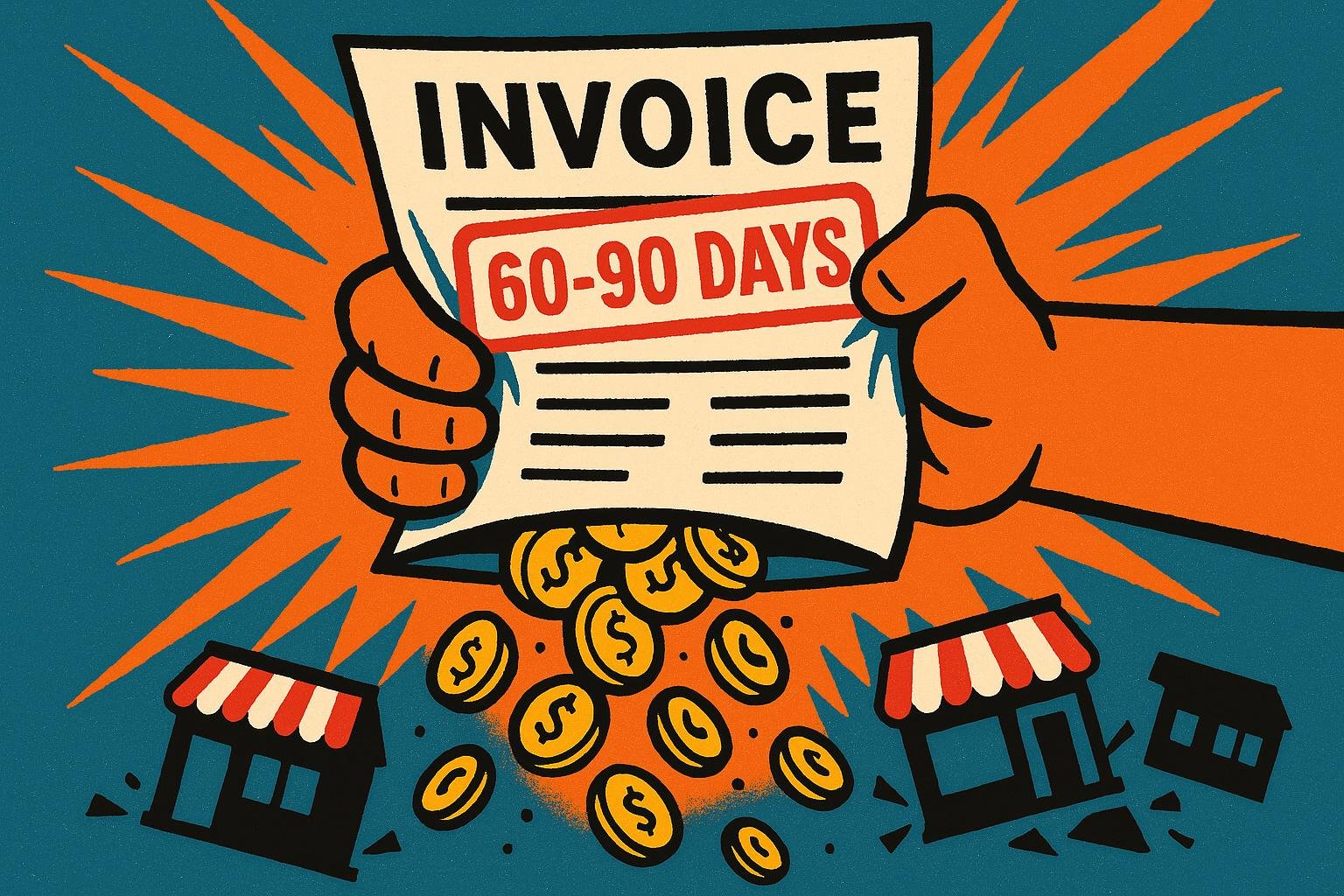
The increasing use of 60–90 day invoice terms by big buyers has become a systemic tool that transfers liquidity risk to small and medium enterprises, imperilling jobs and supply‑chain resilience. Experts and campaigners say urgent measures — including a 30‑day statutory maximum, automatic compensation for late pay, public reporting of buyer performance and better supply‑chain finance — are needed to stop large firms effectively subsidising their working capital at the expense of suppliers.

In boardrooms worldwide, a seemingly routine procurement choice has quietly hardened into a powerful lever: extended invoice terms. As Dr Emmanuel Okoroafor argued in BusinessDay, the practice of offering 60‑ to 90‑day payment windows to small and medium enterprises is not merely bad cash management but, in his words, a form of “slow, systemic strangulation” that transfers liquidity risk from large buyers to the smallest links in supply chains.
The scale is material. According to the World Bank, SMEs account for roughly 90% of businesses globally and provide more than half of employment, with formal SMEs contributing up to around 40% of GDP in many emerging markets. Yet persistent financing gaps and limited access to bank credit leave these firms vulnerable when major customers delay payment. The result is predictable: missed payrolls, unmet tax and pension obligations, higher borrowing costs, fractured supplier relationships and, in too many cases, insolvency.
Hard numbers underline the systemic drag created by late payment cultures. Intrum’s 2024 European Payment Report estimates some €10.5 trillion in outstanding receivables and finds that businesses spend the equivalent of about 73 working days a year chasing unpaid invoices. In Latin America, a recent industry survey by Coface documents rising late payments and longer average delays — often measured in months and, in extreme instances, exceeding 150 days — with clear consequences for liquidity and solvency.
Why firms push extended terms is obvious: preserving working capital and artificially improving reported cash flow. But the hidden costs are real and often ignored. Boston Consulting Group warns that lengthening payment terms can prompt supplier price increases, undermine supplier resilience and damage long‑term competitiveness. Their analysis urges procurement leaders to look beyond the short‑term working‑capital benefit and adopt governance, supplier segmentation and financing mechanisms — such as reverse factoring — that protect supplier cash flow while meeting corporate liquidity objectives.
There are policy precedents and tools for change. The EU’s Late Payment Directive sets a legal floor — typically a 30‑day default period for business‑to‑business transactions and the right to statutory interest and compensation when payments are late — and requires member states to provide redress mechanisms. Yet implementation varies and enforcement gaps persist. In the UK, a parliamentary inquiry by the Business, Energy and Industrial Strategy Committee documented how long retention practices and stretched payment terms damage small firms, noting that voluntary initiatives such as the Prompt Payment Code have had limited impact without stronger sanctions.
Given that combination of economic importance and market failure, the policy case for intervention is compelling. Practical reforms should include, at minimum, a statutory maximum invoice term for SMEs (a 30‑day benchmark is already used in parts of the EU), automatic interest and compensation on overdue amounts, and mandatory public reporting of large buyers’ payment performance. These measures would create predictable consequences for poor behaviour and empower trade associations and regulators to act.
But regulation alone will not fix the problem. Corporates must accept that stewardship of their supply chains is part of responsible business practice. The BCG playbook offers useful corporate measures: map supplier dependency, apply differentiated terms based on supplier criticality and financial health, and pair any extension of payment terms with financing solutions that do not shift risk to vulnerable suppliers. Reverse factoring or supply‑chain finance programmes, if carefully structured and transparent, can ease supplier cash‑flow pressures while allowing buyers to manage working capital — but such programmes must not be a fig leaf that legitimises otherwise punitive terms.
Technology can help, too. The World Bank highlights digital payments, improved credit reporting and tailored financial products as ways to close SME funding gaps. Faster invoicing, automated reconciliation and interoperable payment rails reduce friction and make enforcement of agreed terms easier. Public procurement is another lever: governments can set standards by insisting on prompt payment of contractors and by publishing compliance data.
Accountability matters. Where large firms tout environmental, social and governance credentials, delayed payment should be seen as an ESG risk: a company that benefits from supplier value today while deferring payment for months is, at best, managing its balance sheet at the expense of others. As Dr Okoroafor put it in BusinessDay, many large firms are guilty of a “pay when convenient” culture that belies their responsibility claims.
Policymakers, business associations and corporate leaders must therefore act in concert. Legislation should set the minimum standard and provide tools to enforce it. Regulators should publish performance data and apply penalties where necessary. Corporates should adopt stewardship‑oriented procurement practices and deploy financing options that protect supplier liquidity. And SMEs should be supported with better access to affordable finance and faster payments infrastructure so they are not forced to underwrite the cash‑flow of their larger customers.
The economic logic is simple: thriving SMEs underpin jobs, innovation and resilient supply chains. Letting the largest players effectively subsidise their cash‑flow by squeezing smaller partners is bad economics and, increasingly, bad governance. If governments and industry do not address the problem, the cost will be felt in fewer jobs, weaker growth and more fragile value chains — outcomes no responsible society should accept.
Source: Noah Wire Services

