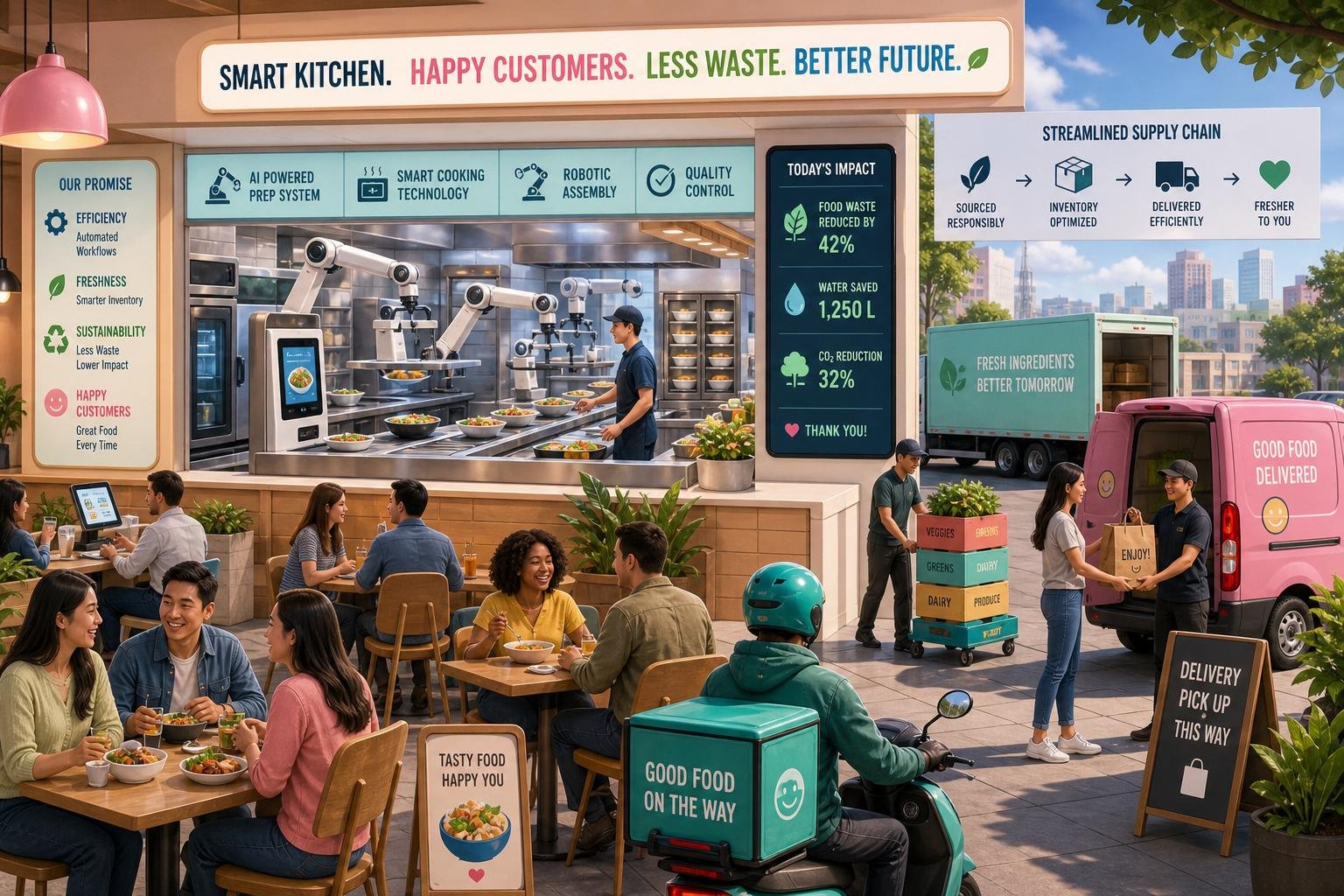
Running a restaurant has long been about more than keeping shelves full. In an industry where margins are tight and costs can move quickly, the way ingredients, packaging and cleaning supplies are ordered, tracked and replenished has become central to profitability. According to several inventory management guides, food costs typically absorb around 28% to 35% of revenue, leaving little room for inefficiency.
That is why the old model of paper logs and rough estimates is increa...
Continue Reading This Article
Enjoy this article as well as all of our content, including reports, news, tips and more.
By registering or signing into your SRM Today account, you agree to SRM Today's Terms of Use and consent to the processing of your personal information as described in our Privacy Policy.
singly being pushed aside. Manual stock counts are still common in many kitchens, but operators and software providers alike say those methods are slow, inconsistent and prone to error. When purchasing decisions are based on incomplete figures, restaurants risk over-ordering perishables, running out of key items during service or losing cash through shrinkage and waste.
The financial impact can be significant. Restaurant launchpad notes that disciplined inventory controls can cut food costs by as much as 3% to 8%, while US Tech Automations says automated systems can reduce food waste by 15% to 25% and often pay for themselves within three to six months. Growyze, a supply management platform, says poor stock control can erode the value of inventory by 4% to 10%, a reminder that losses often accumulate quietly rather than through a single dramatic mistake.
Technology is increasingly filling the gap. Live stock tracking, automated reorder alerts and usage forecasting give managers a clearer view of what is moving, what is stale and what needs replacing. That visibility matters not only for purchasing accuracy but also for labour efficiency, because staff spend less time counting, checking and searching for misplaced items. In a busy kitchen, those saved minutes can translate into faster service and fewer disruptions.
Supplier relationships are also becoming more strategic. Restaurants are no longer choosing partners purely on price. Reliability, communication and the ability to respond to sudden changes in demand now count heavily, particularly when deliveries must support both dine-in and takeaway trade. A dependable supplier can help a business avoid shortages, while weak coordination can quickly undermine service and customer satisfaction.
Sustainability is shaping those decisions too. Many operators are trying to reduce packaging waste, favour longer-lasting equipment and buy only what they are likely to use. That approach supports both cost control and environmental goals. In practice, it also reduces the amount of spoiled stock heading into the bin, which is one of the most direct ways to protect margin.
As delivery and takeaway remain important revenue streams, the pressure on supply systems is unlikely to ease. Restaurants need packaging, disposables and ingredients to be available at the right time and in the right quantity, without tying up too much cash in excess stock. The businesses that manage that balance well are better placed to keep service smooth, reduce waste and protect profits in a market where every small inefficiency is felt quickly.
Source: Noah Wire Services