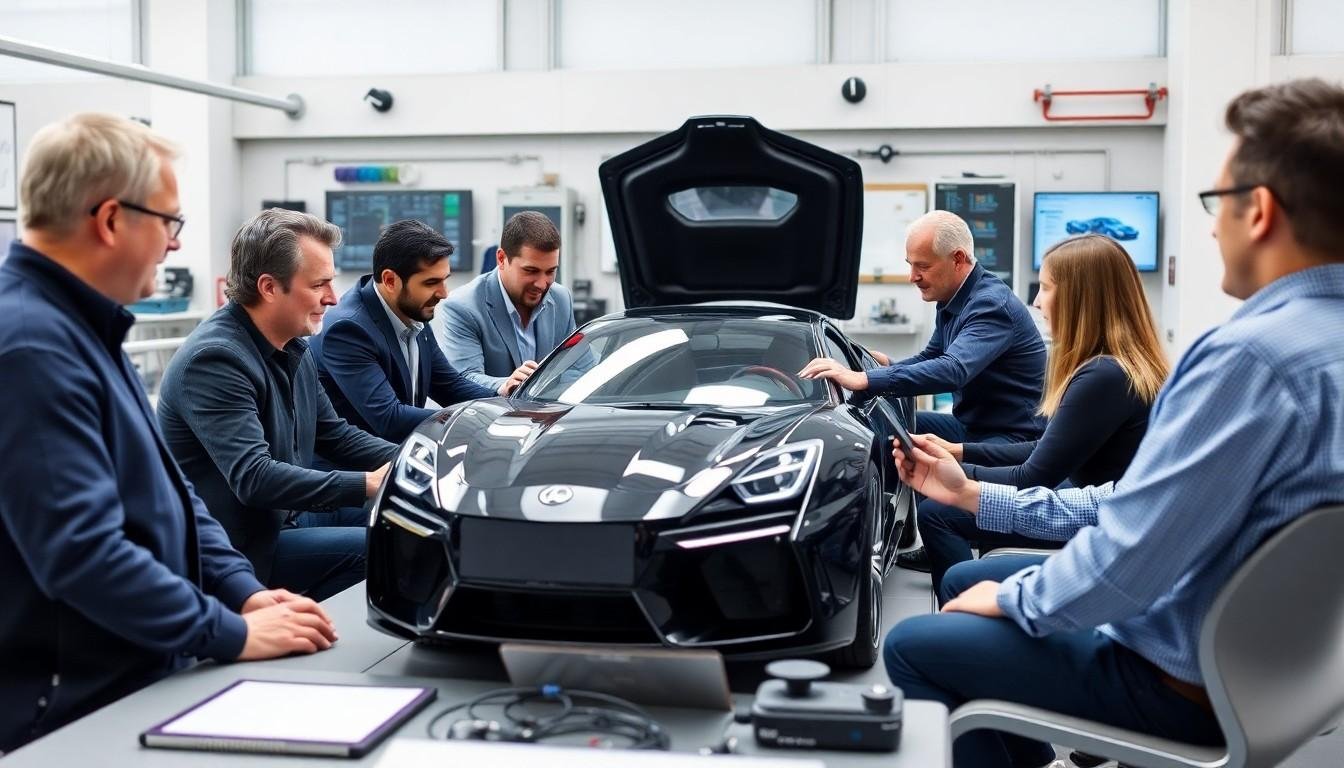
Honda and Nissan are edging towards a narrower form of cooperation that would focus on shared technology rather than a full corporate tie-up, according to reports from Japan and India. The two carmakers are said to be discussing joint work on standard electronic control units, a move that would help them cut development costs as they race to build software-defined vehicles.
The talks come after merger negotiations between the Japanese manufacturers fell apart earlier this year....
Continue Reading This Article
Enjoy this article as well as all of our content, including reports, news, tips and more.
By registering or signing into your SRM Today account, you agree to SRM Today's Terms of Use and consent to the processing of your personal information as described in our Privacy Policy.
Instead of pursuing a more ambitious integration, both groups now appear to be favouring project-by-project collaboration in areas where they can quickly gain scale and reduce duplication. That shift reflects the growing pressure on established carmakers as Chinese rivals expand and vehicle software becomes a more important battleground.
Honda and Nissan first set out their interest in strategic cooperation in March 2024, when they announced a memorandum of understanding to examine a partnership centred on electrification and intelligence. In August 2024, Mitsubishi Motors joined the discussions, broadening the scope of the original plan to include a wider framework for smarter and more electrified vehicles.
The latest reports suggest that standardising core components such as ECUs, and potentially the operating systems that support in-car software, could be among the first practical outcomes. For both companies, common architectures would not only reduce engineering costs but could also speed up development cycles and make future models more competitive in a market increasingly defined by software capability.
India is emerging as a potentially important piece of that strategy. Honda has already identified the country, alongside China, as a key sourcing base because of its supplier network and cost advantages, while also acknowledging that its previous India approach fell short. Nissan, meanwhile, still sees India as a significant manufacturing hub despite the unravelling of its alliance with Renault. It continues to build cars there under contract manufacturing and has renewed attention on the market with the Magnite, while preparing to launch the Tekton SUV on 9 July as part of its growth push.
Recent comments from Nissan chief executive Ivan Espinosa have also pointed to a more open attitude towards partnerships, including with Honda, to strengthen the company’s Indian presence. That has added to expectations that any deal could extend beyond engineering cooperation and into sourcing or localisation, even if no India-specific programme has yet been confirmed.
Honda has also deepened its India technology links through joint AI research with the Indian Institutes of Technology in Delhi and Bombay, aimed at advancing its cooperative intelligence work. Taken together, these steps suggest that the company is treating India not just as a sales market, but as a strategic base for future mobility development.
For now, the proposed Honda-Nissan collaboration remains at an early stage. But the direction is clear: after abandoning merger ambitions, the two companies are trying to build a more flexible alliance around software, procurement and selective technical development.
Source: Noah Wire Services