


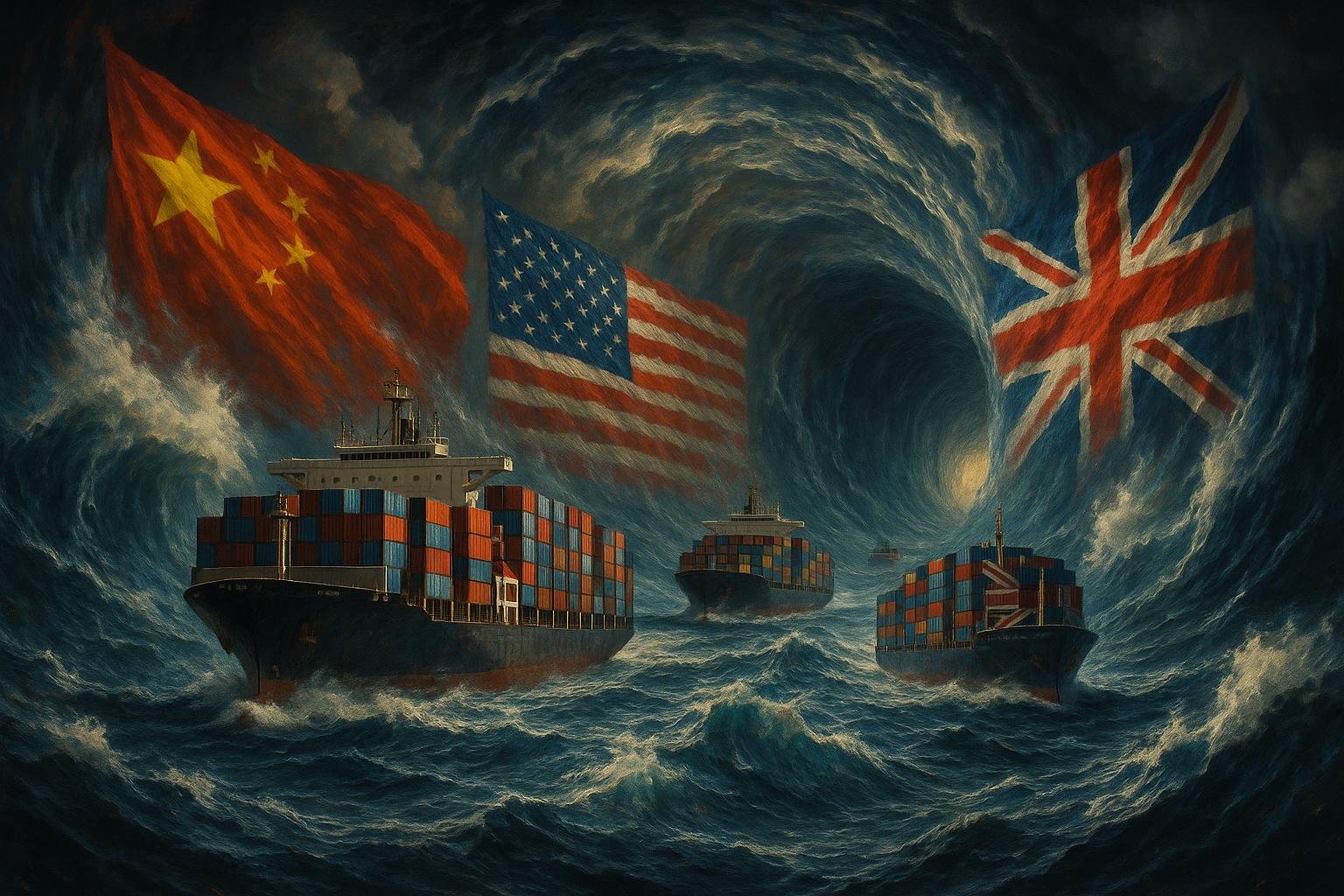
As geopolitical tensions and regional trade initiatives intensify, logistics leaders must adapt to a fragmented freight landscape characterised by new corridors, regionalisation, and evolving risks, shaping the future of international supply chains in 2026.

The global freight landscape that logistics leaders once plotted by capacity, schedules and port congestion now runs on geopolitics as much as geometry. According to the original report by Freightgate’s chief execu...
Continue Reading This Article
Enjoy this article as well as all of our content, including reports, news, tips and more.
By registering or signing into your SRM Today account, you agree to SRM Today's Terms of Use and consent to the processing of your personal information as described in our Privacy Policy.
Geopolitical tension and a fragile Trans‑Pacific
The uneasy truce between the United States and China has relieved immediate pressure but not resolved structural risk. Industry moves in 2025 , including concurrent port fees imposed by China and the U.S. that disrupted cargo flows and pushed spot rates higher in October 2025 , underscore how policy shifts can force rapid network realignment. According to market reporting, the Shanghai Containerized Freight Index rose materially after those measures, while major carriers re‑routed sailings to avoid new fees. Industry data shows carriers including Maersk, Hapag‑Lloyd and CMA CGM adjusted services to manage capacity and cost impacts.
Implications:
- Expect muted utilisation and downward price pressure in normal periods but frequent, sharp oscillations when policies change.
- Shippers should model “China +1” sourcing scenarios and include clauses for tariff reversals and export‑control shocks in long‑form freight contracts.
- Forwarders that can rapidly reallocate slots and pre‑position capacity in alternative Asian sourcing hubs (Vietnam, India, Indonesia) will gain advantage when demand swings.
Regionalisation, new corridors and modal diversity
Regional trade blocs and large infrastructure programmes are accelerating localisation of trade. The IMF in October 2025 urged Asian economies to cut non‑tariff barriers and deepen regional integration to offset tariff pressures, and United Nations regional reporting in November 2025 highlighted continued trade growth in Latin America despite U.S. tariffs , both signals that trade flows are diversifying.
Implications:
- Rail‑sea hybrids such as the emerging India‑Middle East‑Europe corridor (IMEC) can shorten transit times and bypass maritime chokepoints; one commercially viable sea‑rail corridor could divert a measurable share of Asia‑Europe volumes in 2026.
- Logistics providers must build multi‑bloc capability: customs know‑how, digital compliance for different platforms, and local partnerships.
- Those who invest early in corridor assets and regional inventories will capture disproportionate early volumes.
Energy security, fuel costs and contract design
Energy policy and regional refining capacity have become freight cost drivers. Refinery closures and shifts in refined fuel supply chains in the Indo‑Pacific increased bunker and diesel volatility in 2025, and industry commentary from carriers warned that proposed port and ship fees could further exacerbate operating margins. As Hubert recommended, fuel must now be treated as a geostrategic risk.
Implications:
- Contractual frameworks should include dynamic fuel‑surcharge mechanisms, explicit hedging options and surge‑price triggers tied to observable energy events.
- Providers with access to alternative‑fuel assets (LNG, bio‑diesel) will command premium terms where buyers seek fuel‑resilient routes.
Chokepoints, route risk and preparedness
The Suez, Malacca and Panama chokepoints remain acute vulnerabilities. Real‑time risk monitoring and pre‑agreed alternative routings are no longer optional. Recent rerouting to avoid port fees showed how quickly transit efficiency and capacity can be impaired by policy or physical disruption.
Implications:
- Embed alternative‑route readiness into planning , quantify insurance, lead‑time and cost deltas for rail‑sea, land‑bridge and extended‑voyage options.
- Expect carriers to test “route‑risk” surcharges when disruptions raise insurance and operational expense; premium routing will become standard for time‑sensitive or high‑value cargo.
Compliance, data sovereignty and carbon liability
Regulatory fragmentation is accelerating. Technology platforms face export controls and data‑localisation rules in major jurisdictions, and carbon‑border regimes are moving from reporting to financial liability. The EU’s move to operationalise carbon border adjustments has direct implications for freight invoices and service offers.
Implications:
- Integrate embedded‑emissions tracking into rate origination and shipment documentation; anticipate carbon‑certificate components appearing on EU‑bound freight invoices.
- Build data‑governance and regional hosting strategies to meet local sovereignty requirements; treat tech vendors as strategic partners for compliance and reporting.
Practical actions for resilience and opportunity
- Diversify route portfolios and pre‑position inventory in multiple sourcing hubs.
- Insert explicit geopolitical and energy‑shock clauses in freight and procurement contracts.
- Invest in real‑time intelligence for chokepoint, tariff and fuel risks; use scenario stress‑testing regularly.
- Partner early with technology and emissions‑reporting specialists to offer integrated compliance services.
- Build modal flexibility , contracts and networks that can switch between sea, rail and road with minimal friction.
Conclusion
Freightgate’s guidance that 2026 will be a year of managed instability is borne out by recent policy actions and multilateral economic signals through late 2025. For logistics executives the imperative is clear: move beyond efficiency optimisation to embed strategic resilience in route design, contracting and technology stacks. Firms that adapt their commercial terms, strengthen regional capabilities and integrate emissions and data compliance into their core offer will both protect margins and capture new flows as the global freight map fragments and reconfigures.
About the analysis
This piece retains the lead analysis by Martin Hubert and incorporates contemporaneous reporting and institutional commentary from late 2025 to sharpen the operational and contractual recommendations for 2026.
Source: Noah Wire Services
Subscribe to Industry Updates

