


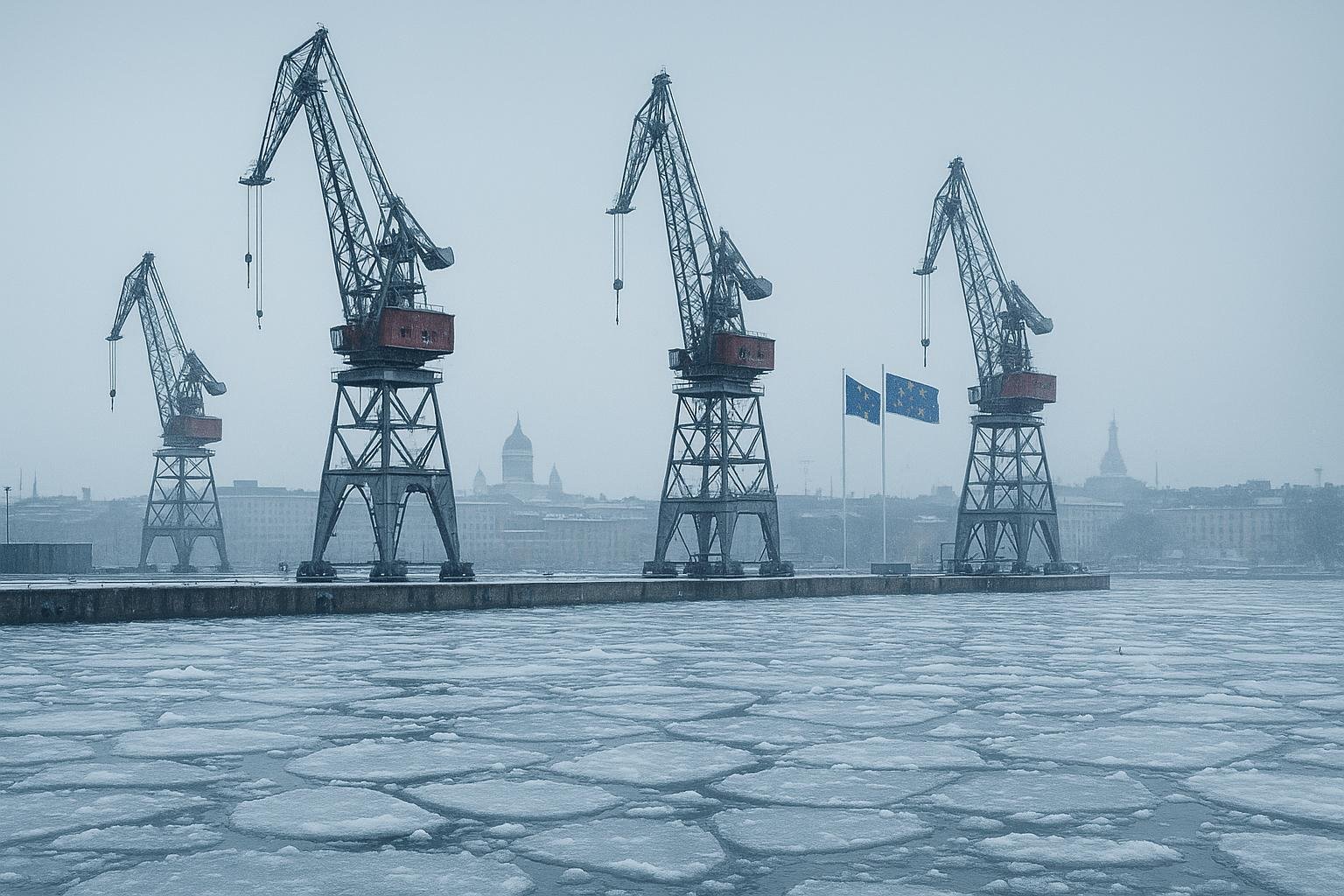
Finland and Sweden propose a comprehensive EU sanctions package to tighten restrictions on Russian energy exports, luxury goods, and maritime routes, signalling a significant escalation in efforts to weaken Moscow’s revenue streams amidst ongoing geopolitical tensions.

Finland and Sweden have jointly proposed a tougher EU sanctions package aimed at further eroding Russia’s ability to finance its war in Ukraine, renewing calls for measures that would hit energy e...
Continue Reading This Article
Enjoy this article as well as all of our content, including reports, news, tips and more.
By registering or signing into your SRM Today account, you agree to SRM Today's Terms of Use and consent to the processing of your personal information as described in our Privacy Policy.
The proposals, presented at the Rikskonferensen security conference in Sweden on 12 January 2026, would raise customs duties on all products and services imported from Russia, widen export restrictions , including tighter limits on luxury goods , and impose a full ban on ships transporting oil, gas or coal from Russian ports to EU ports, Swedish Foreign Minister Maria Malmer Stenergard said at the conference. Finnish Foreign Minister Elina Valtonen argued the pressure must continue irrespective of any ceasefire or peace agreement, describing the Russian threat as long-term and saying the measures aim to “significantly weaken” Russia’s revenue streams.
According to the Anadolu Agency and Anadolu’s syndicated reporting, the package also targets fertiliser imports from Russia , a sector that provides substantial export income , with Swedish ministers estimating a Russian loss in the order of €1.4 billion if imports were halted. The ministers urged the EU to step up substitution measures, boosting domestic production and sourcing alternative suppliers to limit disruptions to European agriculture while depriving Moscow of revenue.
The initiative builds on sanctions the EU has already adopted. Government press releases note that the EU’s fourteenth package was adopted on 24 June 2024 and the fifteenth package on 16 December 2024; both rounds expanded restrictions on Russia’s maritime evasion tactics and included bans on certain Russian LNG imports to EU terminals not connected to the pipeline system. According to the Swedish government, those earlier measures targeted elements of the so-called “shadow fleet” used to circumvent price caps and trade controls.
Advocates say the new proposals would close remaining loopholes by curbing both the direct trade in fossil fuels and the ancillary flows that fund Moscow’s military operations. Critics and some EU members, however, face a difficult trade-off: Finland’s prime minister has acknowledged that sanctions have exacted a heavy economic toll on his country, with near-collapse of bilateral trade and large investment losses since the land border closure, according to reporting by the Finnish Times. That admission underscores the uneven burden of escalation within the bloc, particularly for states with historically strong economic ties to Russia.
Beyond economics, seaports and maritime routes have become a focal point for enforcement and risk. Reporting in Le Monde in October 2025 characterises a growing “ghost fleet” of poorly documented tankers and ageing vessels that have been used to obscure cargo origins and, in some cases, have been linked to sabotage, undersea cable damage and environmental incidents. Such accounts bolster Stockholm’s argument for targeting not only commodities but the transport mechanisms that enable sanction evasion.
EU diplomats say the Finnish–Swedish proposals are likely to be tabled for consideration as part of forthcoming sanctions deliberations in Brussels. If adopted, the measures would mark a significant escalation: moving from targeted asset freezes and trade restrictions towards broad fiscal instruments , higher import duties , and a maritime embargo on Russian energy shipments to EU ports.
Industry data and government statements show the potential policy effects would be wide-ranging. Cutting energy exports to the EU would strike directly at a major source of Russian state revenue, while tighter controls on fertilisers and luxury goods would aim to constrict alternative revenue streams. EU officials will need to weigh enforcement capacity, the legal basis for sweeping customs increases, and mechanisms to shield member states and sectors that would face immediate disruption.
Finland and Sweden present the package as part of a long-term strategy to reduce European dependence on Russian supplies and to diminish Moscow’s means to prosecute the war. Whether the rest of the European Union will accept the scale and speed of the measures remains to be seen; Brussels’ next sanctions package discussions will reveal how far the bloc is prepared to go in pursuit of economic pressure on Russia while managing political and economic fallout at home.
Source: Noah Wire Services
Subscribe to Industry Updates

