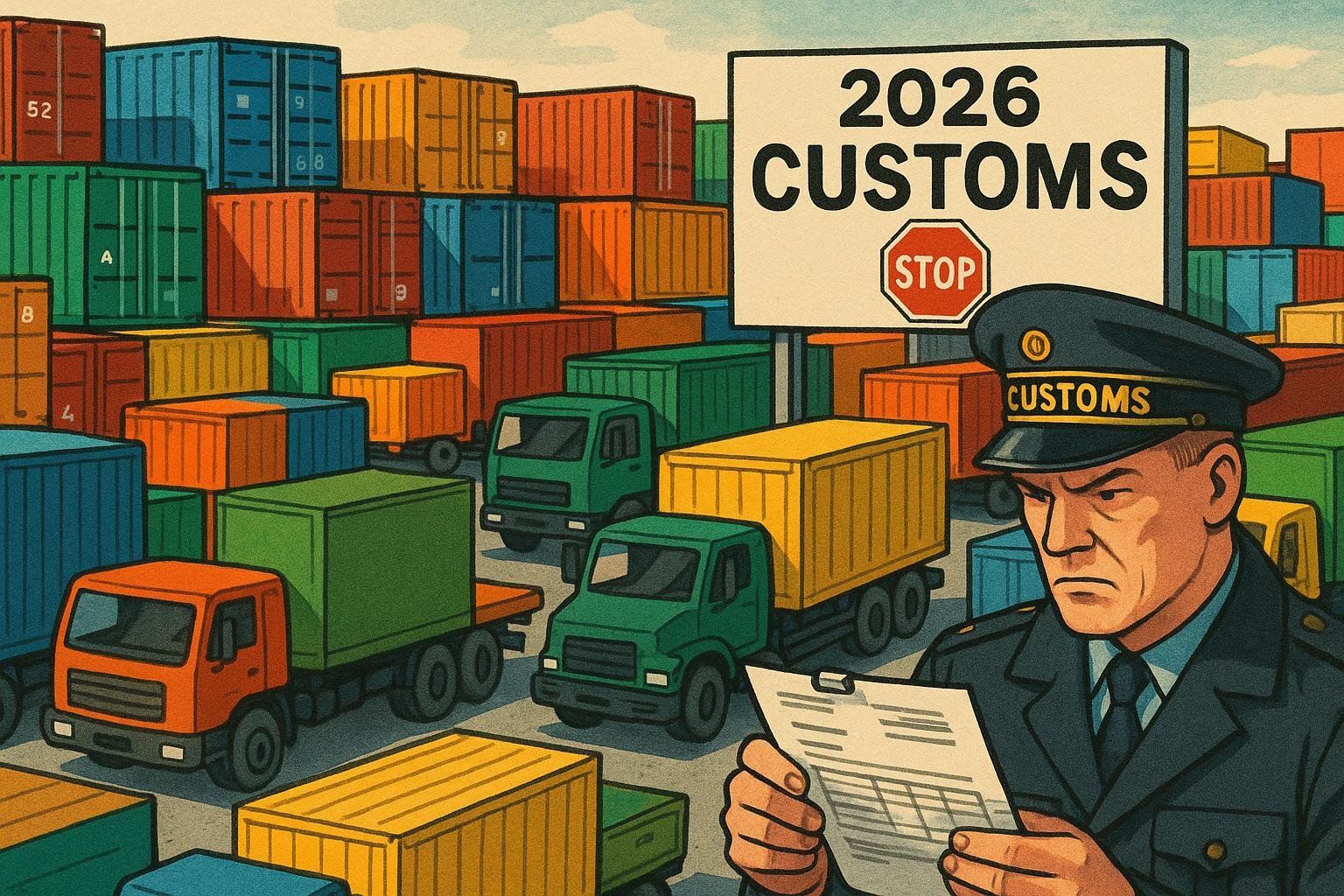
Companies engaged in international trade are adapting to a wave of tighter border regulations and digital compliance measures set to fully take effect in Europe by 2026, demanding meticulous data management and integrated logistics systems to prevent delays and penalties.

Sometimes a single inaccuracy in paperwork or data can ripple through a supply chain, stalling consignments, prompting inspections or adding unforeseen costs. With regulations tightening across borders...
Continue Reading This Article
Enjoy this article as well as all of our content, including reports, news, tips and more.
By registering or signing into your SRM Today account, you agree to SRM Today's Terms of Use and consent to the processing of your personal information as described in our Privacy Policy.
The most immediate operational shift for traders into the European Union is the full implementation of the Import Control System 2. According to the European Commission, ICS2 requires economic operators to submit safety and security data through an Entry Summary Declaration before goods arrive in the EU, enabling risk-based targeting of high‑risk consignments. The system went live for maritime and inland waterway traffic on 3 June 2024 and has been progressively extended to other modes; an updated list of prohibited or sensitive terms used in screening was published by the Commission on 2 February 2026. Industry guidance and carrier advisories make clear that a complete ENS , including commodity codes, shipment value, origin and precise transport details , must be accurate and filed in good time to secure a Movement Reference Number and clearance to load. According to Swire Shipping, customs assess ENS submissions within 24 hours of receipt in the Shared Trader Interface, and cargo may not be cleared for loading until a valid MRN is issued.
The roll‑out to road and rail has been staggered but uncompromising. The European Commission extended ICS2 to road and rail from April 2025, obliging road and rail carriers, postal and express operators and other logistics parties to provide pre‑arrival ENS data. The International Road Transport Union says several member states decommissioned the previous ICS1 system on 1 January 2026 and that further national rollouts followed on 1 June 2026; the IRU warns there is no enforcement grace period. Some countries did grant temporary postponements during 2025, according to AJOT, but those derogations were time‑limited and full compliance is now expected.
Beyond the EU, the border environment has moved decisively from paper toward machine‑to‑machine exchange. National systems such as France’s Enveloppe Logistique Obligatoire require pre‑arrival digital information for cross‑Channel movements, and customs administrations increasingly expect automated interfaces between logistics platforms and governmental systems. The effect for shippers and forwarders is straightforward: manual or inconsistent document flows raise the risk of delays and fines, while integrated digital processes reduce friction.
A corollary of digitalisation is that data quality itself has become a regulatory concern. Customs authorities are focusing less on abstract descriptions of what is being carried and more on whether records across invoices, classification, valuation and origin statements reconcile perfectly. Inaccurate commodity codes, mismatched values or inconsistent origin declarations can trigger extra checks, audits or penalties. Businesses are therefore being urged to invest in master‑data governance, consistent SKU classification and end‑to‑end reconciliation between commercial and customs systems.
Operational compliance is widening to include the vehicles, crews and handling procedures that move freight. Road operators must prepare for smart tachograph requirements for lighter vans engaged in international operations; many EU rules affecting vehicles between 2.5 and 3.5 tonnes take effect from July 2026, increasing enforcement of driving and rest time rules. Air cargo continues to face heightened screening and tighter chain‑of‑custody protocols, with regulators and carriers enhancing rules for the handling of dangerous goods and the tracking of sensitive shipments from origin to destination.
Sustainability and transparency are also rising up the regulatory and commercial agenda. The EU’s Corporate Sustainability Reporting Directive imposes more demanding disclosure obligations on companies, with a growing expectation that environmental impacts and emissions across supply chains will be reported in a verifiable way. Customers and commercial partners increasingly seek shipment‑level emissions data to inform procurement choices. Firms that can demonstrate measurable emissions reductions, optimised route planning, uptake of alternative fuels or consolidated, low‑waste packing stand to gain commercially and to be better placed for further regulatory tightening.
For companies that rely on third‑party logistics providers, adapting to the 2026 environment means reassessing partnerships. The market now prizes partners able to provide compliant, digitally integrated customs filings, rigorous data validation and demonstrable sustainability metrics. Freight forwarders and carriers that present technical connectivity to customs systems, robust data‑quality controls and clear audit trails will reduce the burden on shippers and mitigate delay risk.
KG Logistics positions itself as a specialist with capabilities across sea, road, rail and air freight and a network of international partners to support compliance and documentation management. According to the announcement on its website, the firm offers services intended to help customers navigate the heightened regulatory landscape and secure timely transit of goods.
As regulatory demands intensify, the practical steps available to businesses are consistent: confirm system‑to‑system connectivity with customs and carriers; ensure ENS and other pre‑arrival filings are complete, accurate and submitted within the required windows; align commercial and customs data fields to avoid inconsistencies; update vehicle and crew compliance programmes where relevant; and gather verifiable sustainability data to satisfy both regulators and buyers. With those measures in place, companies are better positioned to keep goods moving despite an increasingly exacting compliance environment.
Source: Noah Wire Services
Subscribe to Industry Updates