


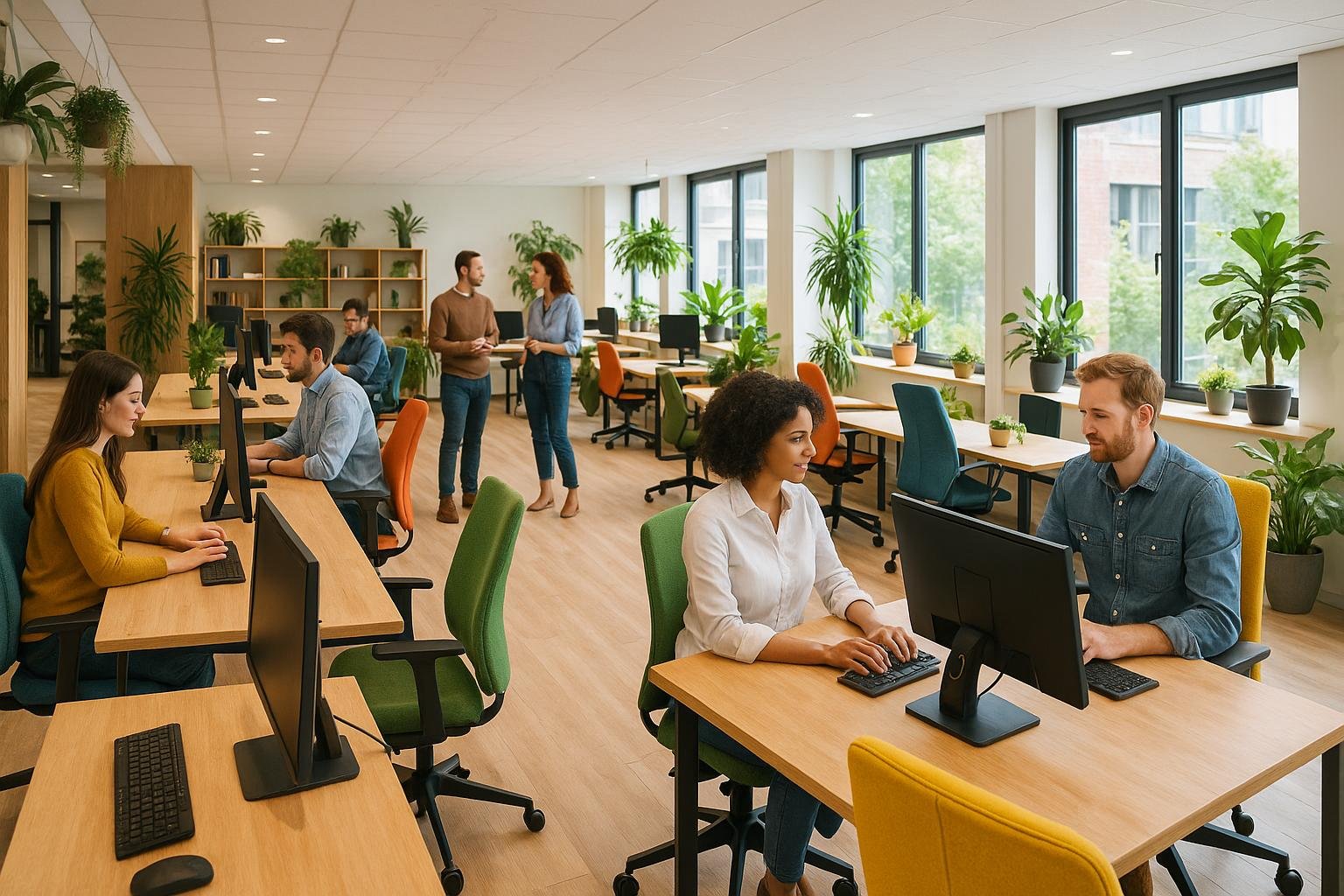
Organisations are increasingly treating seating as a strategic component of workforce management rather than a simple facilities expense. Rising rates of musculoskeletal complaints, growing scrutiny of workplace wellbeing, and the measurable costs of absenteeism and compensation claims have pushed HR and procurement teams to put ergonomic chairs at the centre of office-fitout decisions. According to the report by educba.com, evidence shows well-designed ergonomic seating can halve bac...
Continue Reading This Article
Enjoy this article as well as all of our content, including reports, news, tips and more.

By registering or signing into your SRM Today account, you agree to SRM Today's Terms of Use and consent to the processing of your personal information as described in our Privacy Policy.
Sourcing the right supplier for a corporate rollout involves more than product aesthetics; it requires evaluating durability, enterprise service capabilities, warranty and logistics, and, for many organisations, environmental credentials. The market remains fragmented, from high-volume, warehouse-led distributors to research-driven premium brands and niche specialists focused on complex ergonomic needs. Below is a synthesis of leading suppliers and the procurement considerations each typically presents.
InStockChairs: operational reliability and scale
According to InStockChairs, the firm’s strength lies in inventory depth and direct distribution from its Eden Prairie, Minnesota warehouse, enabling rapid fulfilment for large orders across the contiguous United States. For organisations that prioritise predictable lead times and simplified purchasing, InStockChairs highlights compliance with ANSI/BIFMA commercial-use standards and a five-year limited warranty on flagship models as central selling points. The company also accepts purchase orders from government agencies and established businesses and offers in-house support for bulk orders, space planning, and limited product customisation, positioning itself as a practical partner for phased workstation rollouts.
Modern Office Furniture: breadth of specification and showroom access
Modern Office Furniture, a sister brand to InStockChairs, stresses a combination of ergonomic options and contemporary design. According to Modern Office Furniture, its catalogue aggregates products from more than 100 manufacturers and includes task, mesh and executive seating as well as collaborative solutions. The firm’s Eden Prairie showroom and free shipping across the lower 48 states make it convenient for procurement teams that want to trial chairs before committing to large purchases or that require staged, department-by-department fitouts.
Herman Miller and Steelcase: research-led premium options
At the premium end, Herman Miller and Steelcase remain benchmarks for evidence-based seating design. According to Herman Miller, models such as the Aeron and Embody have been developed from longitudinal research into posture and comfort and are often deployed where employer brand and talent retention are strategic priorities. Herman Miller notes reported improvements in user comfort and productivity within weeks, though the company’s commercial sales approach and higher per-unit pricing typically require procurement negotiation that weighs upfront cost against total cost of ownership.
Steelcase positions its Leap and Gesture chairs as responses to evolving work behaviours. According to Steelcase, the Gesture was created after research showing workers adopt numerous distinct sitting positions during the day; its LiveBack and adaptive features aim to support movement rather than force a single posture. For multi-site enterprises seeking standardisation and robust account management, Steelcase’s global delivery and professional services are important considerations.
Humanscale and sustainability credentials
For organisations where environmental reporting and material circularity are procurement drivers, Humanscale offers an explicitly sustainability-focused proposition. According to Humanscale, designs such as Freedom and Liberty reduce part counts and simplify maintenance, improving longevity and lowering lifecycle impact; the company also points to Cradle to Cradle certifications and commitments around material recovery. Humanscale’s self-adjusting mechanisms, which use body weight rather than complex manual settings, can also benefit hot-desking environments and shared-seat arrangements.
Haworth: integrated workspace solutions
Haworth’s offering is aimed at teams planning wider workspace transformations. According to Haworth, chairs such as the Fern provide dynamic back support that follows spinal movement, and the company complements seating with a broader ecosystem of workstations, collaborative furniture and movable partitions. For projects where HR and facilities wish to procure a coherent furniture strategy rather than isolated chairs, Haworth’s dealer network, account-management and space-planning services can streamline specification and installation.
BodyBilt: specialist ergonomics for high-demand roles
BodyBilt occupies a specialist niche, focusing on users with prolonged seated exposure or pre-existing ergonomic needs. According to BodyBilt, its contoured, modular systems, derived in part from aerospace engineering principles, are intended to distribute load and reduce pressure points for people who sit for long shifts. The company highlights remote fitting services to personalise configurations without in-person measurement, a capability of interest where workforce dispersion or remote-first policies complicate traditional fitting programmes.
Procurement priorities and practical trade-offs
Selecting a supplier requires matching workplace strategy to supplier capability. For high-volume, time-sensitive deployments where predictable logistics and purchase-order processing matter, a warehouse-centric supplier emphasising stock and rapid fulfilment may be the most efficient choice. For organisations placing a premium on employee experience, research-backed adjustability and brand signalling can justify higher initial spend if long-term retention and lower health claims are demonstrable. Where environmental reporting is material to stakeholders, supplier transparency on materials, certifications and end-of-life recovery should figure into contractual terms.
Organisations should also build specification and acceptance criteria into vendor agreements: commercial-use certifications, minimum warranty terms, on-site or remote fitting services, and post-installation support all mitigate roll-out risk. Industry data and supplier statements suggest that combining a durable, adjustable chair with a structured ergonomics support programme, training, fit assessments and monitoring, yields the greatest return on investment.
Conclusion
As work patterns and expectations continue to evolve, seating procurement is increasingly a strategic decision with measurable effects on health, productivity and employer value proposition. The suppliers summarised here each address different procurement priorities, speed and scale, design flexibility, research-backed biomechanics, sustainability or specialist ergonomics, and buyers should align those strengths with corporate objectives. For many HR and facilities teams, balancing total cost of ownership, warranty and service levels with employee-centred outcomes will determine which supplier best meets the organisation’s long-term needs.
Source: Noah Wire Services
Subscribe to Industry Updates

