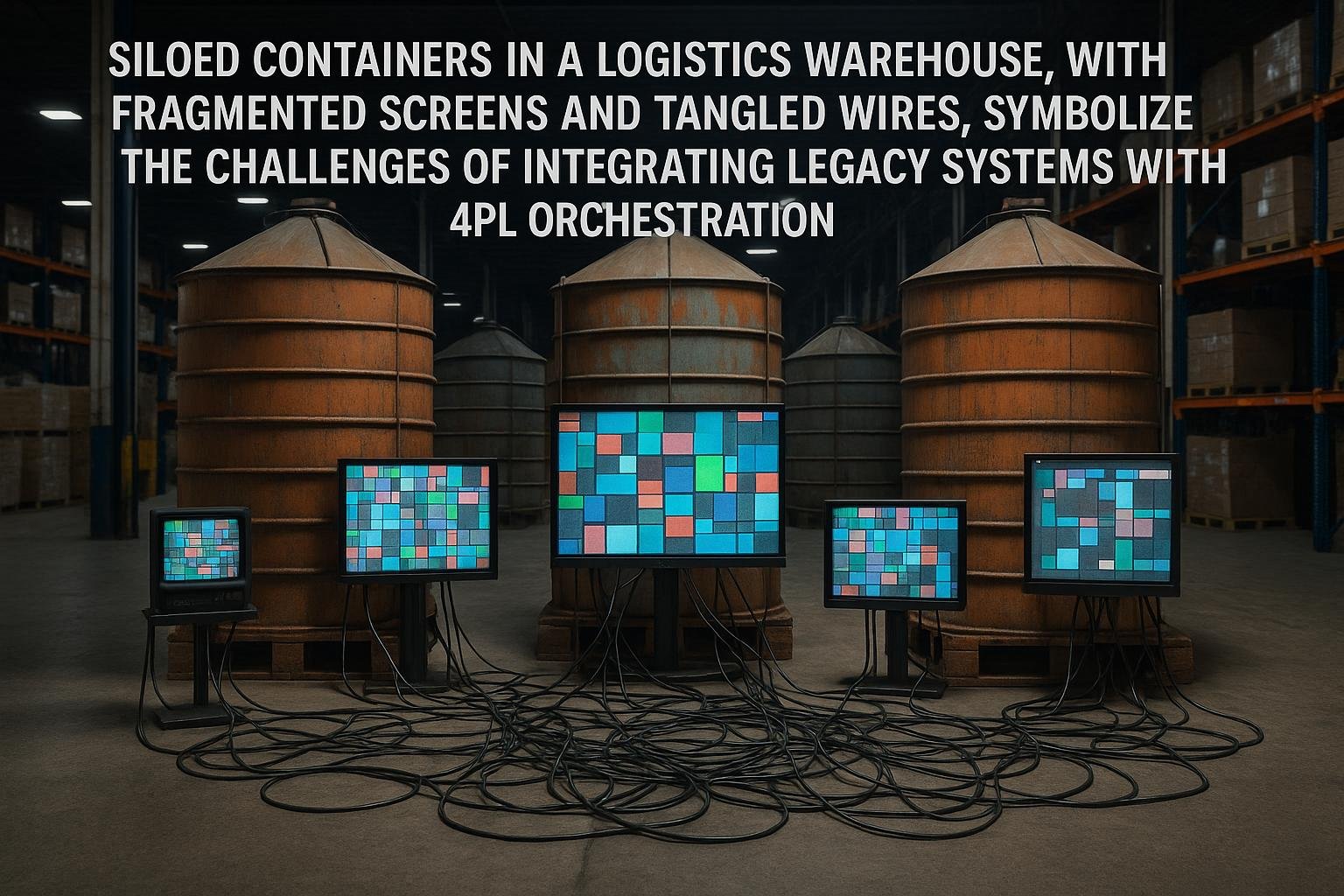
As fourth-party logistics providers evolve into central nodes of complex supply chains, organisations focus on incremental integration, real-time data, and stringent security protocols to harness orchestration benefits amid legacy system challenges.

Fourth‑party logistics providers are increasingly positioning themselves as the nerve centre of complex supply chains, yet the shift from traditional logistics models to full orchestration exposes firms to technical, organ...
Continue Reading This Article
Enjoy this article as well as all of our content, including reports, news, tips and more.
By registering or signing into your SRM Today account, you agree to SRM Today's Terms of Use and consent to the processing of your personal information as described in our Privacy Policy.
According to SAPinsider, many organisations are addressing the tension between centralised control and fragmented legacy landscapes by inserting a neutral orchestration layer that aggregates data without forcing wholesale replacement of existing systems. Practitioners interviewed for that piece argue the pragmatic route is incremental integration using APIs, middleware and validation layers that progressively unify orders, inventory, capacity and event signals. Early wins, they say, typically come from use cases that produce measurable improvements in service, cost or resilience and thereby build internal momentum for deeper change.
That technical prescription is echoed across industry commentary. Clickpost’s analysis notes that seamless connections between ERP, warehouse and order management systems are essential to avoid operational disruption when adopting 4PL services. Global Village Space highlights compatibility problems between older ERPs and modern API‑first 4PL platforms and warns that staff resistance to new workflows remains a common obstacle. Vendors and consultants therefore stress the need to stabilise master data ownership and define clear decision rights so planning systems and execution platforms do not operate on different realities.
The gap between planning and execution is particularly acute in SAP environments. SAPinsider identifies fragmented master data and asynchronous event flows as primary causes of disconnects between SAP IBP planning and S/4HANA execution. Industry practice now points to near‑real‑time event streaming, tighter alignment of KPIs and exception logic, and using SAP BTP or direct APIs rather than batch interfaces to close the loop so plans are executable by design and continuously refined by actual outcomes.
Security and governance are central prerequisites, not afterthoughts. SAPinsider recommends establishing data ownership, role‑based access controls, environment separation and continuous monitoring at the outset of any 4PL engagement, together with contractual provisions that limit processing to necessary information. Clickpost and other analysts stress additional controls such as incident response playbooks, change management protocols and comprehensive audit logging to protect operational and commercial data shared across multiple stakeholders.
The commercial landscape is also evolving as e‑commerce accelerates consumer demands for real‑time visibility and flexible delivery. SAPinsider observes a strategic shift from episodic, cost‑centric coordination toward continuous, customer‑facing orchestration. Deliver and other industry commentators recommend investing in IoT, AI and advanced analytics to detect disruptions early, automate exception handling and enable proactive interventions across fragmented carrier and last‑mile networks.
Technology vendors are responding with platforms designed to provide the single source of truth orchestration advocates describe. According to OIA Global’s announcement, its Orkestra platform consolidates disparate data to monitor freight continuously, anticipate disruptions and surface intervention opportunities, illustrating how vendors are packaging monitoring, alerting and coordination capabilities into cloud services that plug into existing enterprise landscapes.
For companies contemplating a move to 4PL orchestration, the practical priorities are clear: establish a neutral integration layer that respects existing investments; resolve master data and planning‑to‑execution ownership; adopt real‑time interfaces and event streams; and put in place robust governance, security and contractual guardrails before sensitive data is exchanged. Equally important is a phased approach that delivers early, measurable outcomes to overcome organisational resistance and justify further rollout.
When these elements come together, 4PLs can deliver the agility and visibility modern commerce requires. When they are neglected, the promise of strategic orchestration can be delayed or degraded by incompatible systems, unclear responsibilities and avoidable security exposure.
Source: Noah Wire Services
Subscribe to Industry Updates