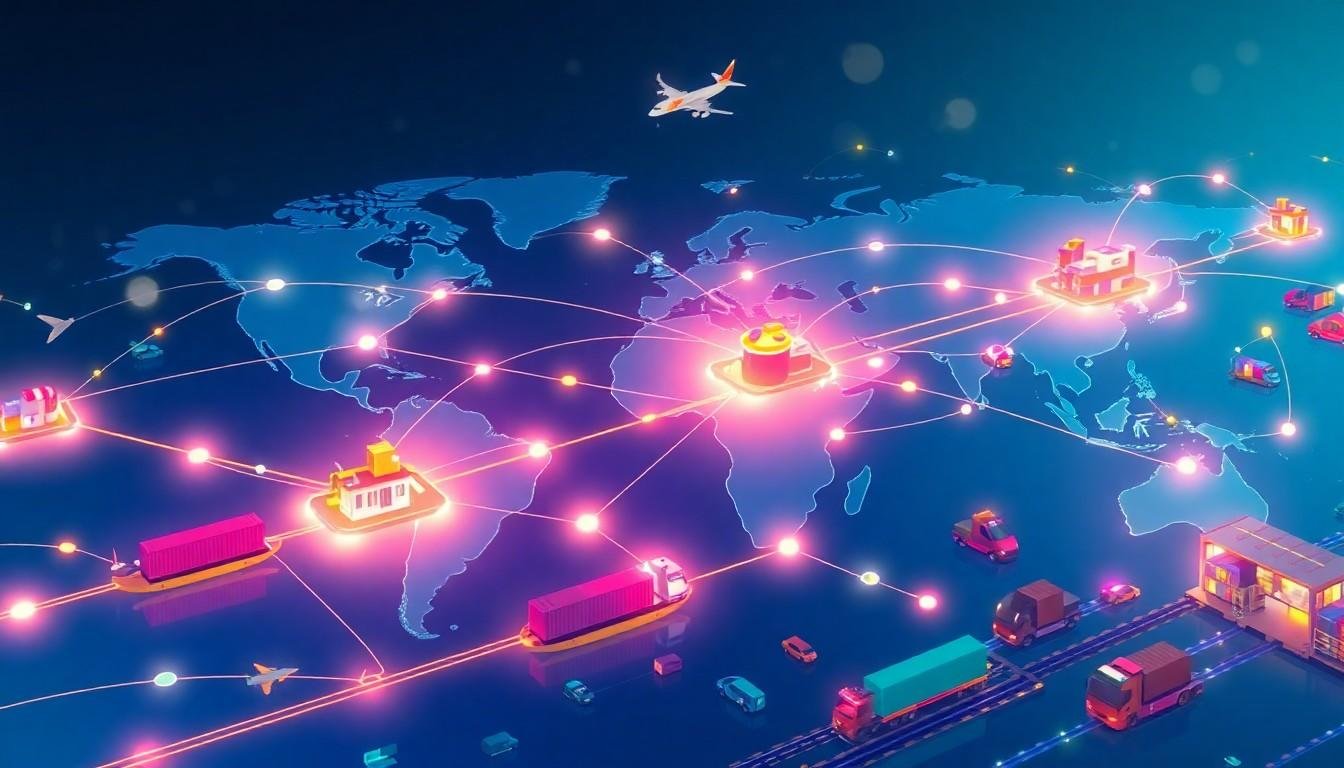
E2open’s main point of difference is not that it offers another supply chain system for one company to use in isolation, but that it is designed to help organisations act across the wider network in which modern supply chains actually operate.
That matters because much of the decision-making that shapes supply performance sits outside a single enterprise. Suppliers, carriers, logistics providers, contract manufacturers, distributors and customers all influence whether goods m...
Continue Reading This Article
Enjoy this article as well as all of our content, including reports, news, tips and more.
By registering or signing into your SRM Today account, you agree to SRM Today's Terms of Use and consent to the processing of your personal information as described in our Privacy Policy.
ove on time, at the right cost, and in line with demand. According to E2open’s own platform materials, its approach is built around connecting those parties through a multi-enterprise environment that brings together planning, global trade, logistics, visibility and execution.
The company says its supply chain orchestration platform links every stage of the journey from planning through to delivery, using a network that spans manufacturing, logistics and distribution partners. It describes that network as the world’s largest multi-enterprise supply chain network, with the aim of creating end-to-end visibility and harmonising data in real time so that decision-making is faster and more coherent.
That emphasis on orchestration is becoming more important as supply chains shift from static planning to event-driven response. A disruption rarely stays within one function. A late supplier shipment can affect production, transport capacity, inventory policy and customer commitments at the same time. In that environment, a platform that can coordinate across trading partners may be more useful than a system that merely reports a problem.
E2open’s supply application suite is intended to support that broader model by giving businesses visibility across multiple tiers of supply and manufacturing. The company says it includes tools for purchase order collaboration, supply forecast collaboration and supply inventory collaboration, alongside other functions meant to automate information exchange between internal teams and external partners. The objective, according to the company, is to reduce supply risk while improving quality and efficiency.
The network underpinning that model is E2net, its cloud-based multi-enterprise network. E2open says it connects more than 500,000 manufacturing, logistics and distribution partners and creates what it calls a digital twin of the physical supply chain. In practical terms, that means the company is positioning itself not simply as a software provider, but as the owner of a data and collaboration layer intended to give trading partners a shared operational picture.
Its offering also extends into global trade management, where the company says it provides automated capabilities for import and export operations, customs self-filing and compliance support based on trade content data. E2open argues that these tools can help companies use trade agreements and duty-saving programmes to reduce costs, while also simplifying a process that is often fragmented across jurisdictions and functions.
On the logistics side, E2open says its global logistics orchestration product is designed to provide visibility into inbound shipments across modes, legs and providers, with a particular focus on helping businesses manage inventory replenishment more reliably. The company claims this enables customers to react quickly to changes, control costs and improve resilience by using one system to view and coordinate inbound flows.
Still, the breadth of such a platform can be both its strength and its challenge. The more functions a system covers, the more important it becomes that the underlying workflows, responsibilities and data structures are well defined. Without that discipline, broad visibility can become noisy rather than useful. That is why buyers are likely to look not just at how many partners a platform can connect, but at whether it can convert network data into better decisions and faster execution.
That question sits at the heart of E2open’s strategy. In a supply chain world increasingly shaped by volatility, the company is arguing that value lies less in isolated optimisation and more in the ability to coordinate action across the enterprise boundary.
Source: Noah Wire Services