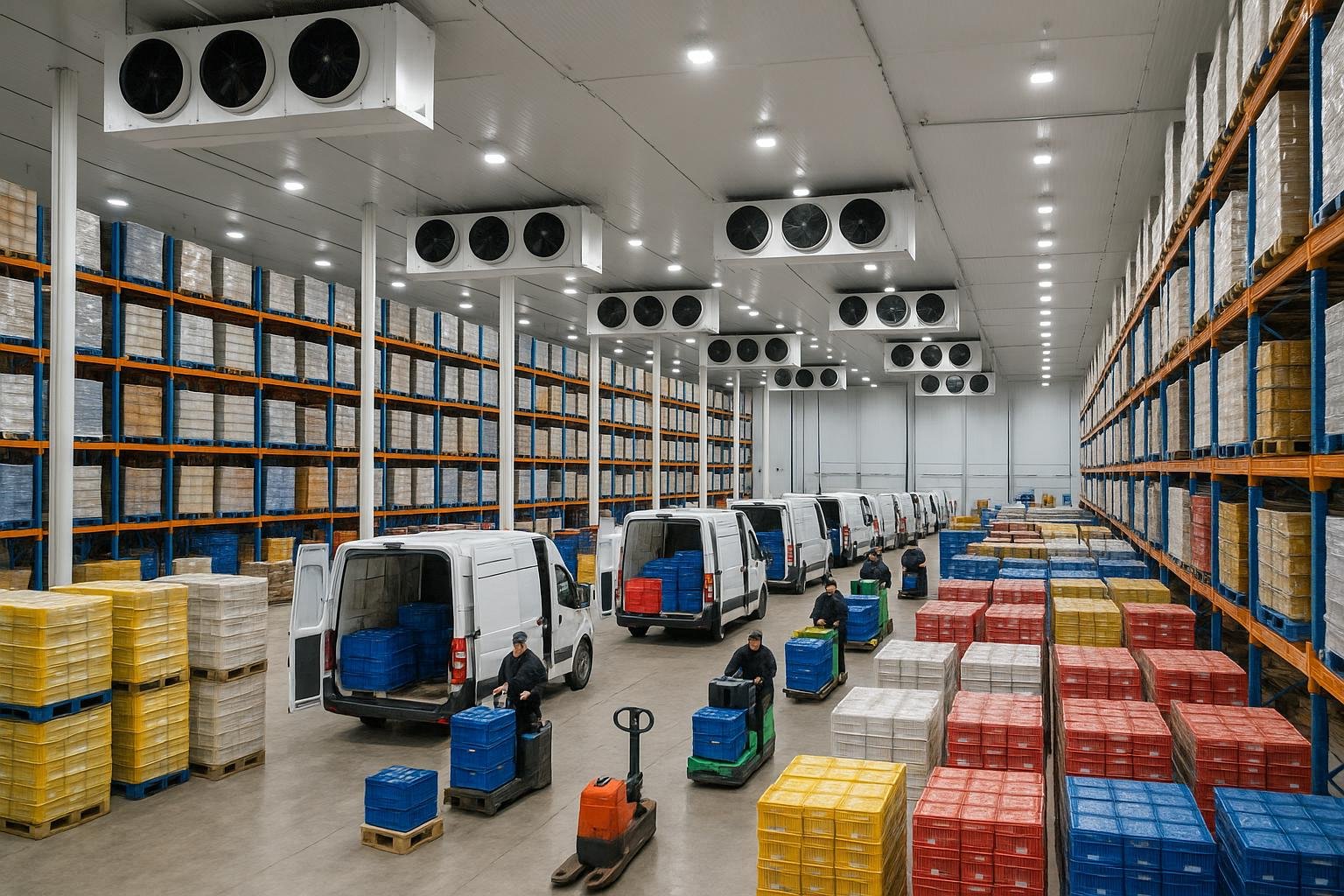
DHL Supply Chain and RLCold have signed an agreement to develop over five million square feet of temperature-controlled warehousing across North America, aiming to meet increasing online grocery demand and modernise cold-chain infrastructure.
DHL Supply Chain and RLCold have agreed to collaborate on a major expansion of temperature-controlled warehousing across North America, signing a memorandum of understanding to develop in excess of five million square feet of cold ...
Continue Reading This Article
Enjoy this article as well as all of our content, including reports, news, tips and more.
By registering or signing into your SRM Today account, you agree to SRM Today's Terms of Use and consent to the processing of your personal information as described in our Privacy Policy.
storage and distribution capacity.
According to a DHL press release and a statement from RLCold, the alliance pairs DHL’s logistics operations and customer-facing know‑how with RLCold’s specialism in design, project management and construction of food‑grade facilities. The two firms say they will target multi‑temperature distribution centres equipped to handle the varying cold‑chain requirements of the food and beverage sector.
Planned facilities will be built to support U.S. Food and Drug Administration Food Safety Modernization Act programmes and will incorporate multiple temperature zones, humidity control and enhanced air quality systems. The partners also highlight features intended to raise storage efficiency and automation readiness: high‑clearance, dense racking, airtight building envelopes, advanced refrigeration controls and sustainable energy measures designed to lower operating costs and shrink carbon emissions. The developments will include both single‑tenant and multi‑tenant sites to give customers seasonal and channel flexibility, with DHL’s IT platforms providing inventory visibility and food‑safety management capabilities, the companies said.
The move comes as shippers and retailers seek larger, more modern cold networks to serve rising demand for online grocery and home delivery. Industry commentary referenced by the partners notes that the U.S. cold‑storage stock is ageing, the average facility is roughly three decades old, creating pressure for new, automation‑ready buildings in key markets.
Initial locations are slated to enter design and predevelopment in 2026, with construction and handovers staged according to customer commitments and regional needs, the statements said.
The alliance also aligns with broader investments by DHL Group in temperature‑controlled logistics. In 2025 the company announced a multiyear plan to direct significant capital into health‑logistics and cold‑chain capabilities, including new GDP‑certified pharma hubs, expanded refrigerated capacity and low‑carbon initiatives. Separately, DHL Supply Chain has moved to open carbon‑neutral warehousing in Europe, illustrating an organisational emphasis on sustainability as it scales operations.
While the MOU outlines the partners’ shared ambitions and technical specifications, it is a framework rather than a binding development contract; precise site selections, funding profiles and construction timetables will depend on subsequent agreements and customer commitments, the companies acknowledged.
Source: Noah Wire Services