


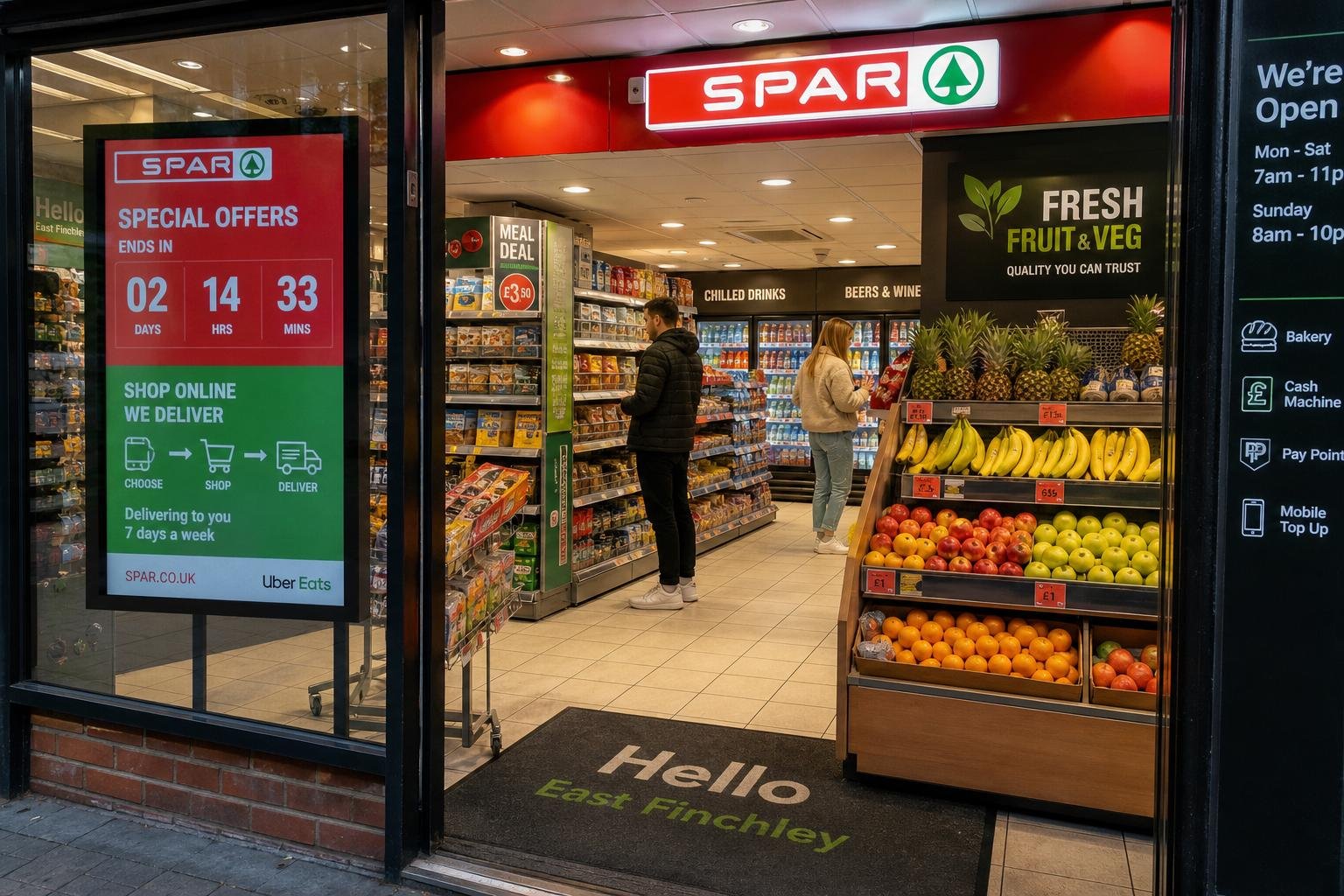
A quiet but consequential shift is reshaping UK grocery retail: convenience is no longer a supporting act, but the format driving much of the sector’s growth. Retail Economics, in research undertaken with DHL, says convenience now accounts for about one-fifth of grocery sales, while the Institute of Grocery Distribution expects the channel to keep expanding and reach £56.2bn by 2030.
That momentum is being fuelled by inflation, changing shopping habits and a more purposeful approach to food buying. The old weekly stock-up is giving way to smaller, more frequent trips, with shoppers increasingly choosing outlets that fit their day rather than planning around a single big shop. Convenience retailers have responded with meal solutions, food-to-go ranges and services such as parcel collection and over-the-counter medicines, turning many stores into broader daily-use hubs.

The channel is also being reshaped by quick commerce. Younger shoppers, especially Gen Z, have become accustomed to digital-first, rapid-delivery expectations, and that has raised the pressure on store networks to act as miniature fulfilment points as well as retail outlets. In that environment, shelf availability is emerging as a decisive factor.
Retail Economics and DHL found that one in three consumers now consider product availability more important than price when deciding where to shop. That matters particularly in convenience, where availability tends to lag behind supermarkets because stores have less storage space, leaner staffing and narrower product ranges. The same research suggests convenience outlets account for almost half of all spend lost to stock-outs, even though they represent only around a fifth of grocery sales.
For operators, that makes supply chain performance a commercial issue, not just an operational one. Logistics is increasingly being treated as a growth engine, with retailers and franchise partners wanting assurance that stock will arrive accurately, on time and in the right quantity. DHL says it handles around 5,000 tailored deliveries a day across its convenience networks, with drivers effectively serving as front-line brand representatives as well as logistics staff.
Franchising is becoming another route to scale. Fit-outs can be completed in days rather than months, making the format far quicker and cheaper to roll out than a new supermarket. For independent retailers, meanwhile, alliance with a major grocer can bring stronger buying power, own-label ranges, loyalty schemes and data-led category insight at a time when margins are under pressure.
The channel’s expansion is not without strain. IGD says rising operating costs and the long-term decline of tobacco sales could weigh on growth, even as the broader market proves resilient. Its latest outlook suggests convenience remains well placed, but only for businesses able to adapt to local shopping patterns, urbanisation and the demand for faster, more precise execution.
That is pushing retailers towards a more data-driven model. Industry reports suggest field sales teams are becoming more important in converting strategy into in-store results, particularly as EPOS data, loyalty information and warehouse systems are linked more closely together. The aim is to improve forecasting, reduce wastage and sharpen replenishment, all while protecting the availability that now underpins customer loyalty.
The next stage of competition in convenience is likely to be won less by store count alone than by the quality of the supply chain behind each shop. Those that can deliver reliability, visibility and speed are likely to set the pace in a channel that is growing more complex, more fragmented and more central to UK grocery retail.
Source: Noah Wire Services

