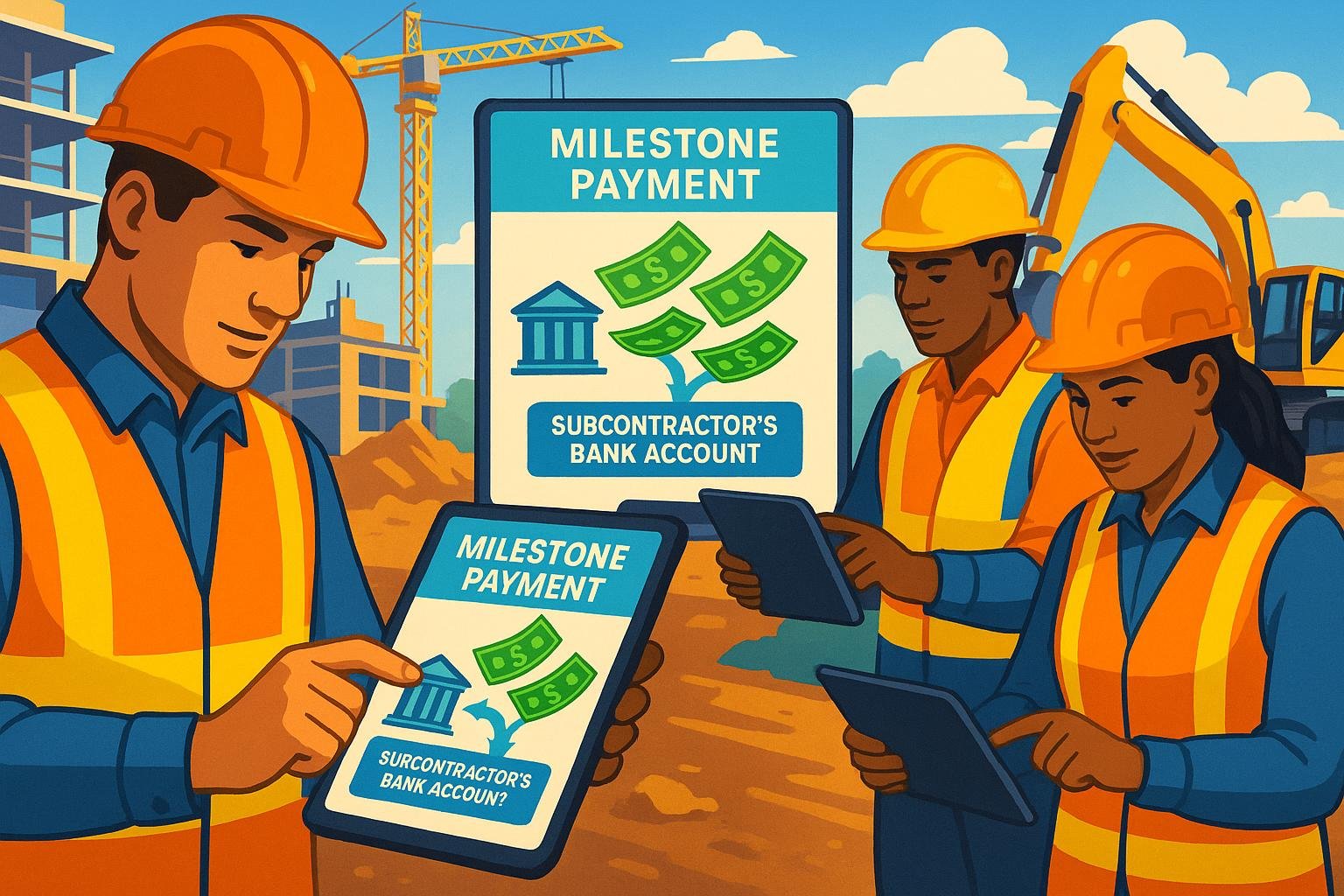
Construction payment processes are changing as firms look for ways to keep subcontractors funded without drowning project teams in paperwork. The underlying problem is familiar: delayed approvals, fragmented records and slow bank transfers can all interrupt cash flow on site. Industry payment platforms from Procore and GCPay to Zepth and ProjectBase are all pushing the same idea in different ways: when billing is tied more closely to verified progress, subcontractors get paid faster a...
Continue Reading This Article
Enjoy this article as well as all of our content, including reports, news, tips and more.
By registering or signing into your SRM Today account, you agree to SRM Today's Terms of Use and consent to the processing of your personal information as described in our Privacy Policy.
nd disputes fall.
One of the clearest shifts is away from broad monthly billing toward milestone-led payment. Rather than waiting for an end-of-month draw, contractors can link disbursement to an inspected and confirmed stage of work. That approach creates a cleaner audit trail, especially when photographs, timestamps and field notes sit alongside the invoice. Onsite, for example, says its software is designed to align payment with executed quantities and verified milestones, reducing the risk of overbilling and scope creep.
A second change is the move to digital compliance checks. Lien waivers, insurance certificates and other payment conditions have long held up subcontractor pay because they require manual chasing and paper signatures. Procore says its platform brings payment requirements, waiver templates and invoice tracking into one workflow, while GCPay similarly focuses on automating payment applications and waiver handling. The practical benefit is fewer back-and-forth delays and a clearer view of which subcontractors are ready to be paid.
Digital tools are also improving measurement and retention management, an area that has traditionally caused friction between contractors and trade partners. ProjectBase says unclear measurements, disconnected bill-of-quantities records and scattered evidence are common sources of delay and dispute. By digitising records and linking them to billing, contractors can reduce arguments over what has been completed and how much should be withheld. That is particularly important where retention is involved, because even small inconsistencies can stall the next payment cycle.
Speed matters most on smaller sums, where waiting days for a transfer can create knock-on problems for labour, materials and reimbursable expenses. Instant payment rails such as Real-Time Payments and FedNow are increasingly relevant here, particularly when a foreman has covered an urgent purchase or a specialist trade needs funds without delay. ACH still remains suitable for larger progress payments, but the broader direction of travel is clear: construction finance is becoming more immediate, more data-rich and more closely tied to what has actually been built.
For subcontractors, the upside is better liquidity and less reliance on credit to bridge gaps between work completed and money received. For general contractors, the benefit is more than administrative convenience. Faster, better-controlled payment systems can strengthen relationships, lower the cost of risk and help projects move with fewer interruptions. In an industry where timing is everything, the firms that modernise payment flow are likely to gain the most reliable partners on site.
Source: Noah Wire Services