


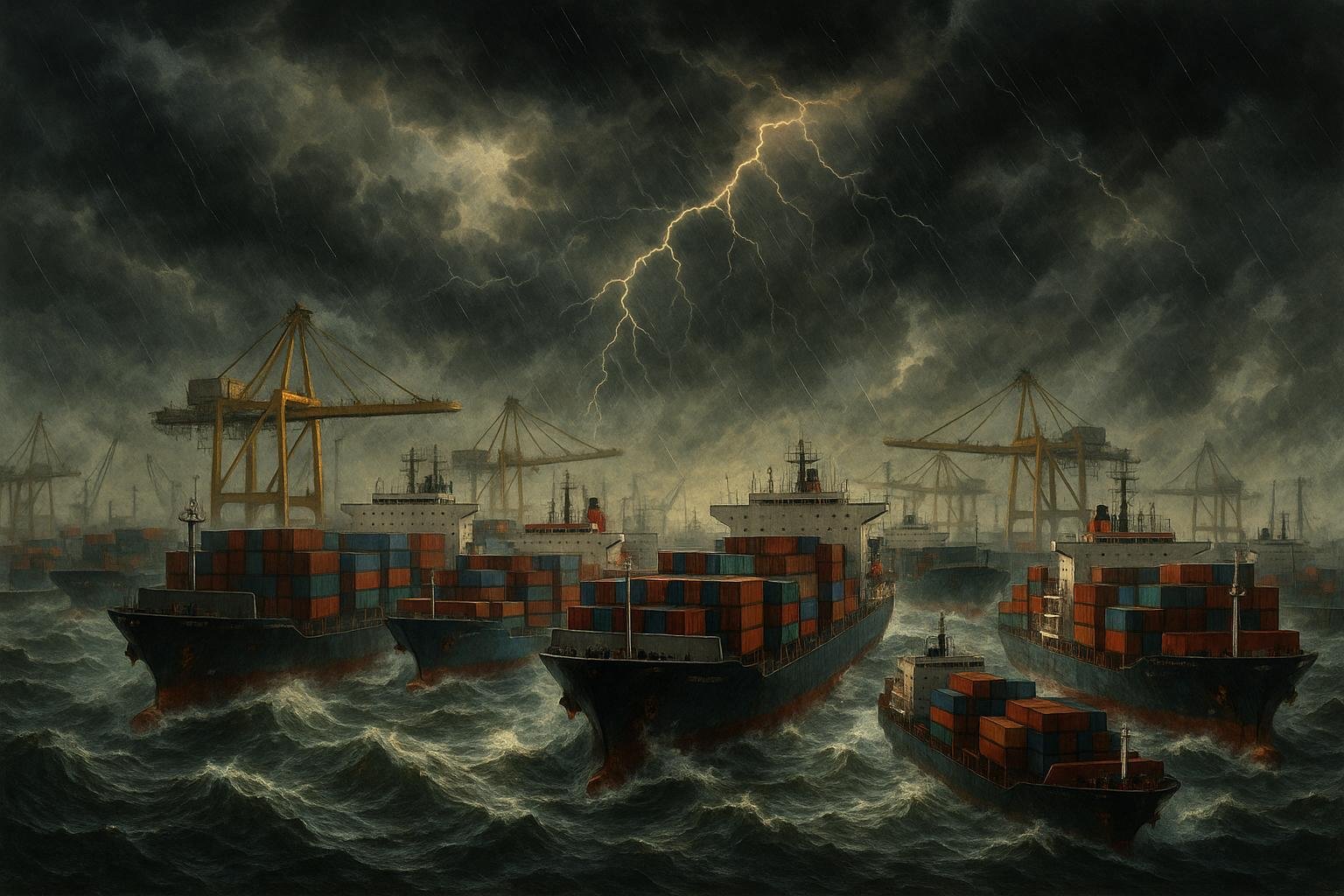
As climate-related disruptions intensify, ports and ocean freight are shifting from intermittent issues to systemic risks, urging firms to rethink infrastructure and operational strategies to safeguard global supply chains.

Ocean shipping has shifted from an episodic operational headache to a central, persistent risk for global supply chains as the climate crisis intensifies. What were once intermittent weather delays now cascade through sourcing, production, inventory ...
Continue Reading This Article
Enjoy this article as well as all of our content, including reports, news, tips and more.
By registering or signing into your SRM Today account, you agree to SRM Today's Terms of Use and consent to the processing of your personal information as described in our Privacy Policy.
Ports sit at the heart of this vulnerability. Located along exposed coastlines, many major gateways contend with rising seas, stronger storms and heavier precipitation that can flood terminals, knock out cranes and close access roads. According to the United Nations Conference on Trade and Development guidebook on resilient maritime logistics, while port designs often allow for tidal variability, adjacent infrastructure such as roads, rail links and storage areas are far more susceptible to sea-level rise and storm surge. Those secondary failures can bring cargo movement to a standstill even where berths themselves remain intact.
The operational consequences extend well beyond immediate damage. Industry analysis shows ports handle roughly 80% of global trade volumes, making them critical nodes whose disruption propagates rapidly. A study published in Nature Climate Change estimates that climate-related interruptions at ports put about US$81 billion of global trade and at least US$122 billion of economic activity at risk each year. The same research cites routine examples of wind- and storm-driven downtime: operations at Shanghai and Ningbo are disrupted for several days annually because of extreme wind, and historical events such as Hurricane Katrina demonstrate how prolonged closures can stall entire regional economies.
Disruptions materialise in predictable logistical frictions. Vessels delayed or rerouted increase transit times and unsettle tightly synchronised, low-inventory supply models; port shutdowns produce container imbalances, demurrage costs and longer lead-time variability; and inland transport schedules , rail and trucking , become unreliable. Maersk warns that the spectrum of climate impacts is wide, from flooding of landside infrastructure to heatwaves that reduce the capacity of land transport and increase refrigeration needs, all contributing to acute supply-chain volatility.
Adapting to this new normal requires both physical and digital investment. Upgrading terminals , higher quay walls, reinforced structures and improved drainage , reduces exposure to storm surge and coastal erosion, a concern underscored by the Food and Agriculture Organization’s reporting on how stronger waves and winds accelerate coastal damage to integrated “Blue Ports”. Equally critical are non-structural measures: real-time visibility tools, predictive meteorological analytics and dynamic scheduling platforms give operators and shippers the lead time to choose alternate routings or staging points. As UNCTAD emphasises, resilience in ports must combine infrastructure with operational flexibility.
Strategic network choices also matter. Diversifying arrival points, maintaining regional distribution hubs and strengthening intermodal connections , notably rail and inland waterways , create alternative pathways when a primary gateway is compromised. Firms may need to rethink inventory policies: carrying higher safety stock or pre-positioning critical items increases resilience, even though it conflicts with traditional lean-cost objectives.
The economic stakes for port infrastructure are substantial and quantifiable. A JP Morgan analysis reported by S&P Global estimates an annual median expected value-at-risk for port infrastructure of US$7.6 billion, and warns that projected sea-level rise of up to 40 cm between 2020 and 2050 could threaten major hubs including Houston, Antwerp and Shanghai. In the United States, observers note a rise in hurricanes, heavy rainfall and flooding that increasingly strain coastal terminals and hinterland connections, amplifying domestic supply fragility.
Risk management must therefore be embedded across procurement, carrier selection and capital planning rather than treated as an afterthought. The objective is not to eliminate every disruption , an impossible goal , but to create supply networks that absorb shocks without losing continuity. That requires cross-functional planning, investments that combine hard engineering with digital early-warning systems, and contractual and operational arrangements that reward flexibility.
Competitive advantage is increasingly determined by how swiftly organisations anticipate and adapt to maritime climate risks. For supply-chain leaders, the choice is stark: continue prioritising short-term efficiency or recalibrate toward systems designed to withstand the growing frequency and severity of climate-driven events. The resilience of marine transportation is no longer solely a concern for ports and shipping lines; it is a supply-chain imperative that will shape trade flows and economic security for decades to come.
Source: Noah Wire Services
Subscribe to Industry Updates

