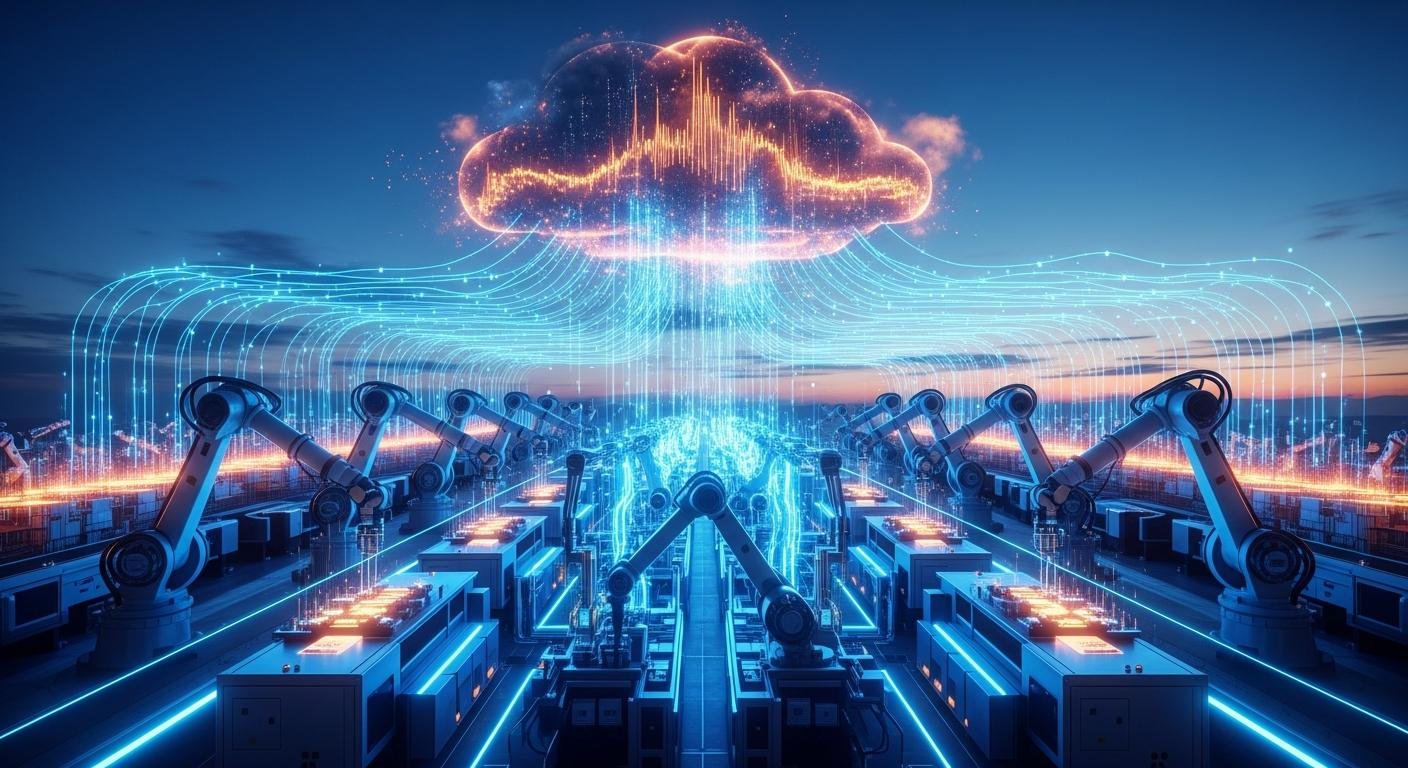
Cisco and Rockwell Automation are pushing a new manufacturing model built around software, data and security, as industrial firms race to make plants more adaptable to artificial intelligence and autonomous operations.
The two companies this week outlined a Full-Stack Software-Defined Manufacturing approach designed to connect plant-floor systems more tightly with cloud-based tools, while reducing the friction that often comes with bridging information technology and operationa...
Continue Reading This Article
Enjoy this article as well as all of our content, including reports, news, tips and more.
By registering or signing into your SRM Today account, you agree to SRM Today's Terms of Use and consent to the processing of your personal information as described in our Privacy Policy.
l technology. In Cisco’s description of the initiative, the aim is to replace rigid production environments with a more flexible architecture that can support faster decisions, greater visibility and more resilient operations.
The announcement comes as manufacturers face mounting pressure from shorter product cycles, changing customer demand and the need to scale without piling on complexity. Deloitte has argued that software-defined manufacturing is emerging as a way to unify data, automation and the workforce, giving factories a more agile operating model that fits the broader shift towards Industry 5.0.
Cisco and Rockwell say their joint approach combines networking, automation and industrial security rather than treating them as separate layers. That matters because many factories still struggle with siloed systems and difficult IT/OT integration, problems that can slow down modernisation efforts and make it harder to deploy AI at the edge.
Rockwell has separately said the collaboration is intended to support manufacturing modernisation in India, where the companies have introduced a reference design and a demo environment at Rockwell’s Gurugram facility. The Indian rollout suggests the partnership is being positioned not just as a concept, but as a practical template for industrial customers looking to build more connected plants.
The pitch also reflects a broader industry move towards software-defined infrastructure. Intel has highlighted the value of consolidating workloads, centralising management and using general-purpose compute to link IT and OT systems more efficiently, all of which echoes the logic behind the Cisco-Rockwell model.
For the vendors, the message is clear: the next stage of industrial automation is not simply about more machines or more sensors, but about creating a software-led foundation that can learn, scale and respond to changing conditions.
Source: Noah Wire Services