


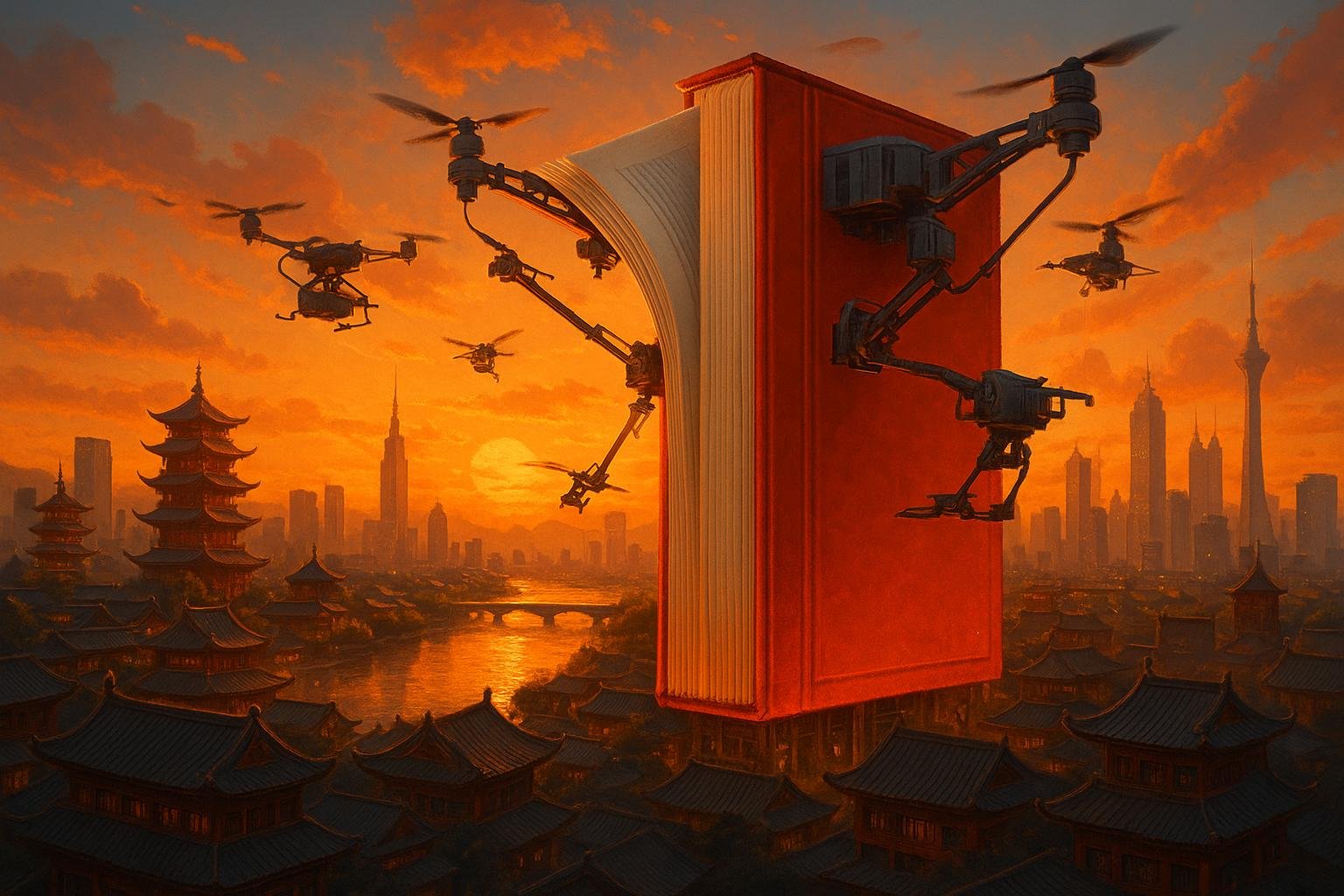
China’s domestic market growth, technological innovation, and strategic international efforts are accelerating its rise to become the dominant force in global publishing within the next decade, reshaping cultural and scientific narratives worldwide.

If the trajectory of current trends continues, China is poised to become the preeminent force in the global publishing industry within the coming decade. This ascendancy is underpinned by a combination of robust domest...
Continue Reading This Article
Enjoy this article as well as all of our content, including reports, news, tips and more.
By registering or signing into your SRM Today account, you agree to SRM Today's Terms of Use and consent to the processing of your personal information as described in our Privacy Policy.
China’s domestic book market has burgeoned into one of the largest worldwide, buoyed by hundreds of millions of active readers and rising disposable incomes. This demand spans both print and digital formats, with platforms such as Dangdang and JD Books continuously expanding their offerings. In parallel, audiobook and mobile reading applications have witnessed explosive adoption. Intriguingly, physical bookstores continue to flourish alongside digital options, illustrating the breadth and diversity of China’s reading culture.
This vast consumer base grants Chinese publishers ample financial leeway to innovate with formats, marketing tactics, and distribution channels. Such capabilities enable a nimbleness that many Western publishers struggle to emulate, allowing for agile experimentation and refinement. Over the next decade, this domestic strength is expected to catalyse greater international content exports, enabling China to exert increasing cultural influence in global markets.
While the sector faces headwinds, including intense price competition and demographic shifts affecting the children’s book segment, its innovative drive remains undeterred. Chinese publishers have been particularly adept at leveraging new retail models such as short-video e-commerce platforms exemplified by Douyin , the mainland Chinese equivalent of TikTok. These platforms serve as potent sales channels that connect publishers instantly with vast, digitally native audiences.
Cultural nationalism also plays a pivotal role in this surge. There is growing pride and demand for high-quality, original content that fuses traditional Chinese stories with contemporary themes. Publishers are aggressively pursuing the export of copyrights and forging international cooperation deals, resulting in a steady stream of translated Chinese literary and non-fiction works reaching global readers. This expansion is shifting the cultural axis of mainstream literature worldwide.
Artificial intelligence (AI) is a focal point of investment among major Chinese publishing houses. AI-assisted editing, translation, and market analysis tools accelerate manuscript identification, tailor reader recommendations, and trim production expenses, magnifying China’s competitive edge in the digital publishing landscape.
This expansion is strategically aligned with government objectives. China has set the explicit goal of becoming a “cultural powerhouse” by 2035, and the global proliferation of Chinese narratives through translations, copyright exports, and co-publishing agreements is integral to this soft power endeavour. Major state-owned conglomerates like the China Publishing Group Corporation and China International Publishing Group spearhead these efforts, leveraging their considerable resources to broadcast China’s cultural output in multiple languages across more than 180 countries.
In addition to bolstering trade publishing, China’s scholarly publishing sector is undergoing a profound transformation propelled by massive public and private investments in research and development. China has already overtaken the United States in the number of highly cited academic papers, a testament to its rising scientific clout. This surge in research output necessitates an expansive and sophisticated publishing infrastructure, which China is rapidly developing.
Academic reforms promoting open access policies, data sharing, and enhanced transparency further solidify China’s scholarly publishing capacity. The government’s push for world-class, domestically managed academic journals complements investments in digital knowledge platforms. This concerted effort aims to reduce reliance on Western academic publishing houses, positioning China not as a follower but as a competitor on the global stage, especially in high-impact fields such as engineering, medicine, and environmental science.
The growing soft power ambitions of Chinese publishing are exemplified by cultural diplomacy initiatives linked to the Belt and Road Initiative. Through book translation projects, reading festivals, and academic exchanges, China is cultivating deep ties with emerging markets across Asia, Africa, and Latin America. These collaborations facilitate co-publishing ventures and long-term distribution agreements that extend Chinese literature’s reach and foster intellectual partnerships, thereby shaping global knowledge ecosystems for years to come.
The online literature segment is a particularly dynamic arena driving China’s publishing ascendancy. By 2024, the industry boasted 575 million domestic users, almost half the nation’s population, and a rapidly growing international readership of 352 million across more than 200 countries. Revenues from overseas markets surged by over 16% year-on-year, with Japan registering astonishing growth of 180%. This sector capitalises on genre fiction, including fantasy, romance, historical epics, and urban adventures that blend Chinese cultural motifs with universally appealing narratives. Major companies like Tencent-backed China Literature have successfully adapted popular online works into television series, films, and games, further broadening their cultural imprint.
The digital revolution is transforming reading habits with mobile-first platforms designed for rapid consumption. Features like vertical scrolling, bite-sized chapters, gamification, and interactive feedback loops foster a participatory culture where authors and readers engage dynamically. Monetisation models such as microtransactions, VIP subscriptions, and in-app tipping support creative diversity and commercial sustainability. Translation quality has also advanced substantially, aided by AI tools, enhancing accessibility for international audiences.
Financially, China’s largest publishing groups reflect this vigorous expansion. Phoenix Publishing and Media Inc, for instance, has maintained its position among the world’s top ten publishing companies for the third straight year. With operating revenues nearing $2 billion in 2022 and substantial profits, Phoenix exemplifies the commercial robustness underpinning China’s publishing ascendancy. Wider digital publishing revenues also reached record highs in 2024, highlighted by rapid growth in emerging sectors like online gaming, education, and animation.
Government data underscores a boom in digital reading, with over 570 million users in China and industry revenues growing at double-digit rates annually. The demographic focus of readers aged 19 to 45 underscores the market’s future vitality. In total, online literature generated nearly $7 billion in revenue in 2024, showcasing the sector’s monumental scale.
As China’s publishing industry blends its vast domestic market, cutting-edge technological adoption, and strategic government support, it is crafting a formidable global presence. This coordinated effort is reshaping the flow of cultural narratives and scientific knowledge internationally. For global publishers, the pressing question is not if but how swiftly they can adjust to this profound shift in influence and market dynamics. If current trends persist, China will not merely participate in the future of global publishing, it will lead it.
Source: Noah Wire Services
Subscribe to Industry Updates

