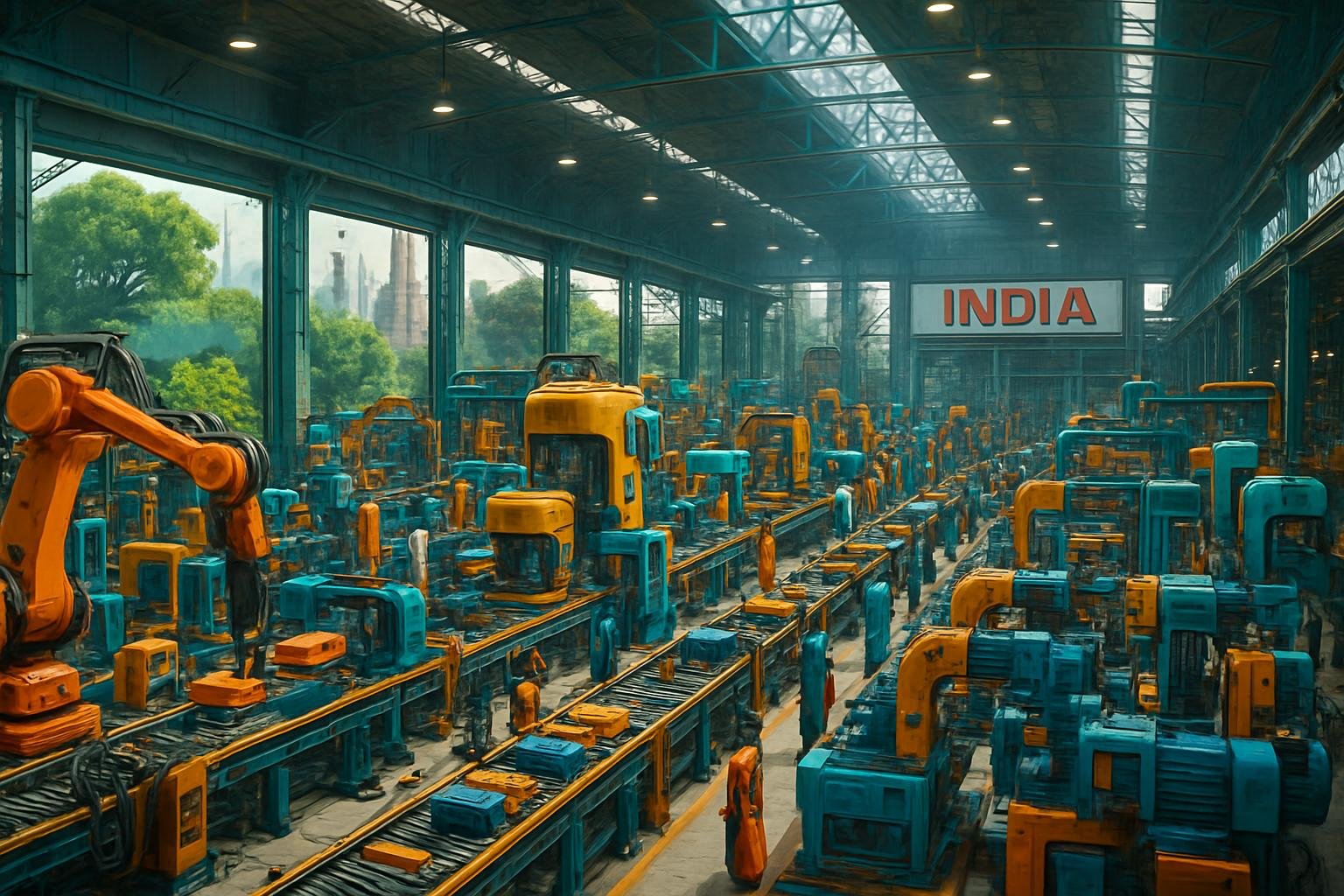
As companies diversify sourcing away from China amid geopolitical and pandemic shocks, India emerges as a key beneficiary, prompting a strategic reorientation and a new focus on supply chain resilience and workforce development.

Global manufacturers are rethinking decades-old sourcing models as firms seek to reduce concentration risk and build more robust supply chains. What began as a cost-driven reliance on China is evolving into diversified footprints under the so-ca...
Continue Reading This Article
Enjoy this article as well as all of our content, including reports, news, tips and more.
By registering or signing into your SRM Today account, you agree to SRM Today's Terms of Use and consent to the processing of your personal information as described in our Privacy Policy.
The impetus for change is clear. Multiple shocks, trade tensions, pandemic lockdowns, port congestion and rising compliance expenses, exposed the vulnerability of overly centralised production networks. According to a McKinsey report, more than 90% of global companies experienced supply‑chain disruptions between 2020 and 2022, prompting firms to prioritise resilience alongside cost management. Business schools present these developments as live case studies in strategic risk management and operational redesign.
How companies are responding varies. Many retain manufacturing in China while simultaneously establishing capacity in one or more additional countries to spread operational risk. That approach is producing more regionalised supplier networks, shorter logistics corridors and larger investments in contingency planning, digital tracking and scenario forecasting. Industry coverage shows Southeast Asian nations such as Vietnam and Indonesia have been early beneficiaries, with firms moving production there to reduce exposure to Chinese concentration. CNBC reports Southeast Asia is now the most attractive alternative for many multinationals.
India figures prominently in this reorientation, buoyed by its demographic advantages, comparatively lower labour costs and a burgeoning consumer market. Government initiatives including Make in India and production‑linked incentive schemes have been cited as catalysts for increased electronics, automotive and textile output. The Times of India projects that India’s exports could nearly double to about $835 billion by 2030 as it captures a larger share of global manufacturing flows.
Yet several analyses caution that opportunity is not automatic. Reports from Drishti IAS underline structural constraints that have limited India’s early gains under China‑Plus‑One, pointing to high logistics costs, infrastructural bottlenecks and complex regulatory procedures. These assessments recommend targeted reforms, streamlining approvals, upgrading ports and roads, and improving ease of doing business, to convert potential into sustained investment. Independent commentators also highlight sectoral nuance: pharmaceuticals, metals, IT/ITeS and renewables are among the industries best placed to expand rapidly if policy and capacity gaps are addressed.
Corporate strategies reflect the diversity of responses. Prominent global brands are redistributing production: Apple has accelerated iPhone assembly in India, Samsung has expanded capacity in Vietnam and India, and Nike is broadening its supplier base across Southeast Asia. More radical moves have been reported in the technology hardware space; for example, a technology trade outlet has reported plans by a major U.S. firm to shift certain device and data‑centre production out of China by 2026, illustrating how geopolitical pressure can prompt near‑term reconfiguration of supply networks.
For supply‑chain professionals the implications are profound. The role now demands a blend of strategic judgement, cross‑border coordination and analytical fluency. Modern hiring needs emphasise demand forecasting, digital supply‑chain analytics, supplier risk assessment, compliance with environmental and social standards and negotiation across jurisdictions. Business faculties stress that graduates who combine operational know‑how with data skills and an understanding of policy dynamics will be in high demand.
Institutions positioning themselves as gateways to these careers underscore industry engagement and practice‑oriented learning. Some universities promote specialised modules in operations and supply‑chain management, hands‑on projects with corporate partners, and training in analytics and decision‑making to prepare students for the complexity of multi‑country sourcing strategies.
While diversification is accelerating, experts stress this is an evolution rather than a one‑way exodus from China. Most corporations continue to balance Chinese capacity with new locations, aiming to protect price competitiveness while reducing systemic exposure. The immediate challenge for India is to convert international interest into durable investment by closing infrastructure and regulatory gaps and rapidly scaling skilled workforce pipelines.
As global supply chains rearrange, the interplay between corporate strategy, national policy and talent development will determine which markets capture long‑term industry footprints. For students and managers alike, mastering the strategic trade‑offs of the China‑Plus‑One era has become a practical necessity, not an academic abstraction.
Source: Noah Wire Services
Subscribe to Industry Updates