


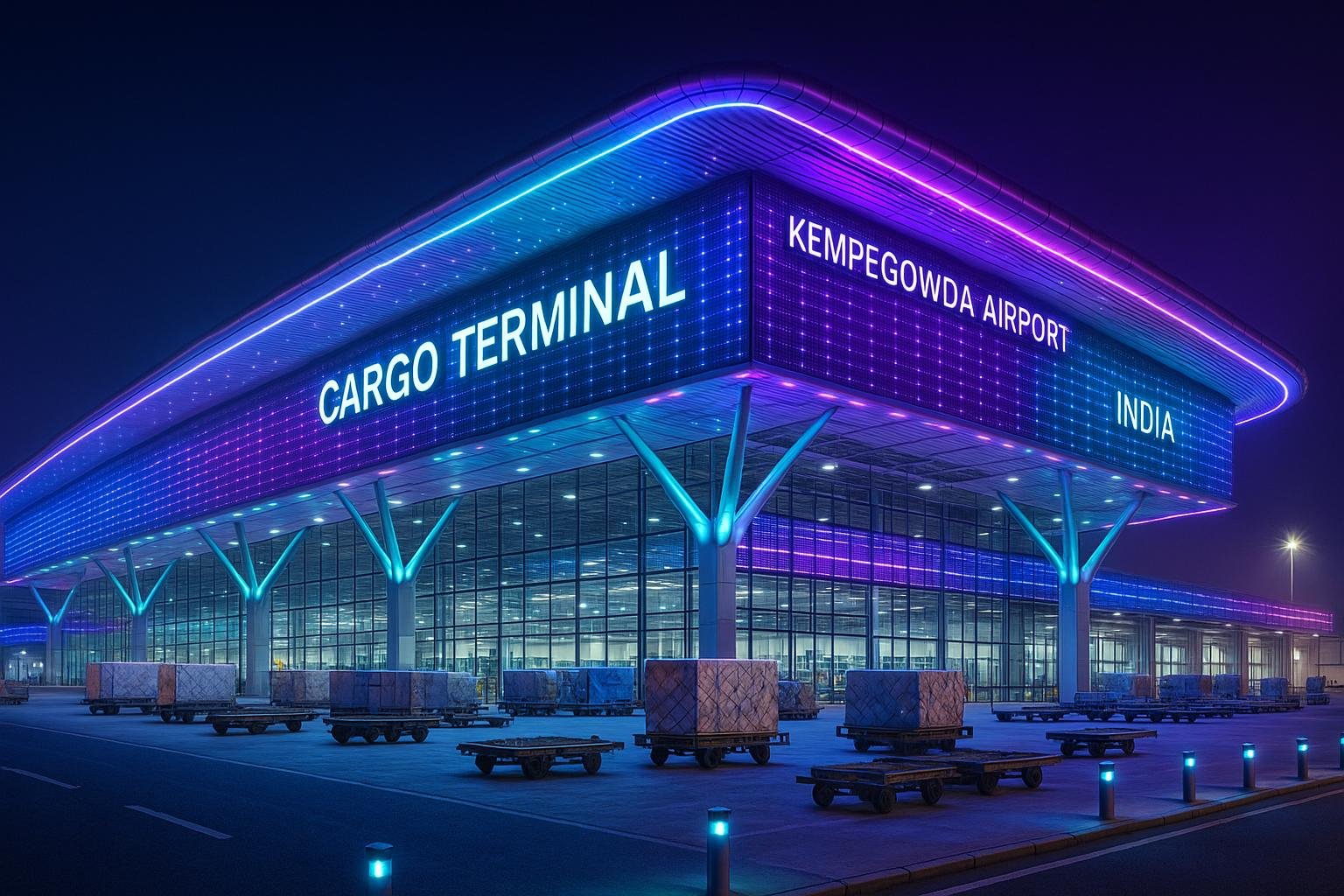
Bengaluru’s Kempegowda International Airport is redefining cargo logistics with a blend of advanced digital systems and infrastructure upgrades, aiming to become a global smart gateway by 2026.

Bengaluru’s Kempegowda International Airport is positioning itself as a next‑generation cargo gateway by pairing heavy infrastructure investment with digital integration and automation, according to industry sources and airport executives.
According to the original r...
Continue Reading This Article
Enjoy this article as well as all of our content, including reports, news, tips and more.
By registering or signing into your SRM Today account, you agree to SRM Today's Terms of Use and consent to the processing of your personal information as described in our Privacy Policy.
The airport and its partners say these digital capabilities are already improving operational metrics. BLR Cargo and Shell India have opened an Airport Truck Management Facility (ATMF) that automates pre‑check in and paperless entry for trucks, manages roughly 1,600 vehicles a day and offers more than 250 dedicated parking bays. The facility has reduced truck turnaround time from nearly four hours to about one hour, with around 78% of trucks reported to wait less than 20 minutes before terminal entry, and includes driver welfare amenities such as dormitories, washrooms and food outlets.
Physical capacity upgrades complement the digital layer. Over recent years the airport has added a new runway and dedicated freighter stands, upgraded airside infrastructure and expanded cargo roads. Partners have invested in temperature‑controlled storage: AISATS Coolport and Menzies Aviation Bobba Bangalore together provide large cold‑chain capacity with multiple temperature zones to support perishables and pharmaceuticals. The airport’s new greenfield Domestic Cargo Terminal, developed with Menzies Aviation, includes around 42 truck docks, over 400 cargo bins, conveyors integrated with X‑ray machines, and handheld terminals and self‑service kiosks for real‑time data capture.
The combined approach , digital unification plus targeted infrastructure , is designed to attract time‑sensitive and high‑value flows. BLR is cultivating strengths in pharmaceuticals, perishables, electronics and e‑commerce by offering end‑to‑end visibility (including secure access to shipment histories and customs status) and faster processing, which industry observers say strengthens trust across the supply chain.
Looking ahead to 2026, BLR Cargo envisages the airport evolving from a leading national hub into a preferred global smart gateway for South India’s manufacturing clusters. The plan emphasises predictive logistics intelligence: analytics that consolidate operational touchpoints to anticipate surges, allocate docks and deploy manpower and equipment before bottlenecks form.
The airport is also pursuing stronger multimodal links to reduce first‑ and last‑mile costs and improve predictability. These initiatives align with national plans to enhance logistics connectivity, and the airport’s digital systems are being used to provide integrated tracking across road feeder networks and terminals.
While the airport frames these advances as enhancing India’s competitiveness in global supply chains, industry participants stress the need for continued collaboration across stakeholders , carriers, forwarders, Customs and road operators , to sustain performance gains as volumes grow. Speaking to Cargo Insights, the airport’s aviation business leadership underlined that digital collaboration, coupled with infrastructure and partner investment, is central to maintaining resilience through freight market volatility.
The result is a cargo ecosystem that combines automated truck flows, expanded cold‑chain and handling capacity, and real‑time data to sharpen efficiency and reliability , a strategy BLR Cargo says will help secure its place as one of India’s most seamlessly connected, future‑ready cargo gateways.
Source: Noah Wire Services
Subscribe to Industry Updates

