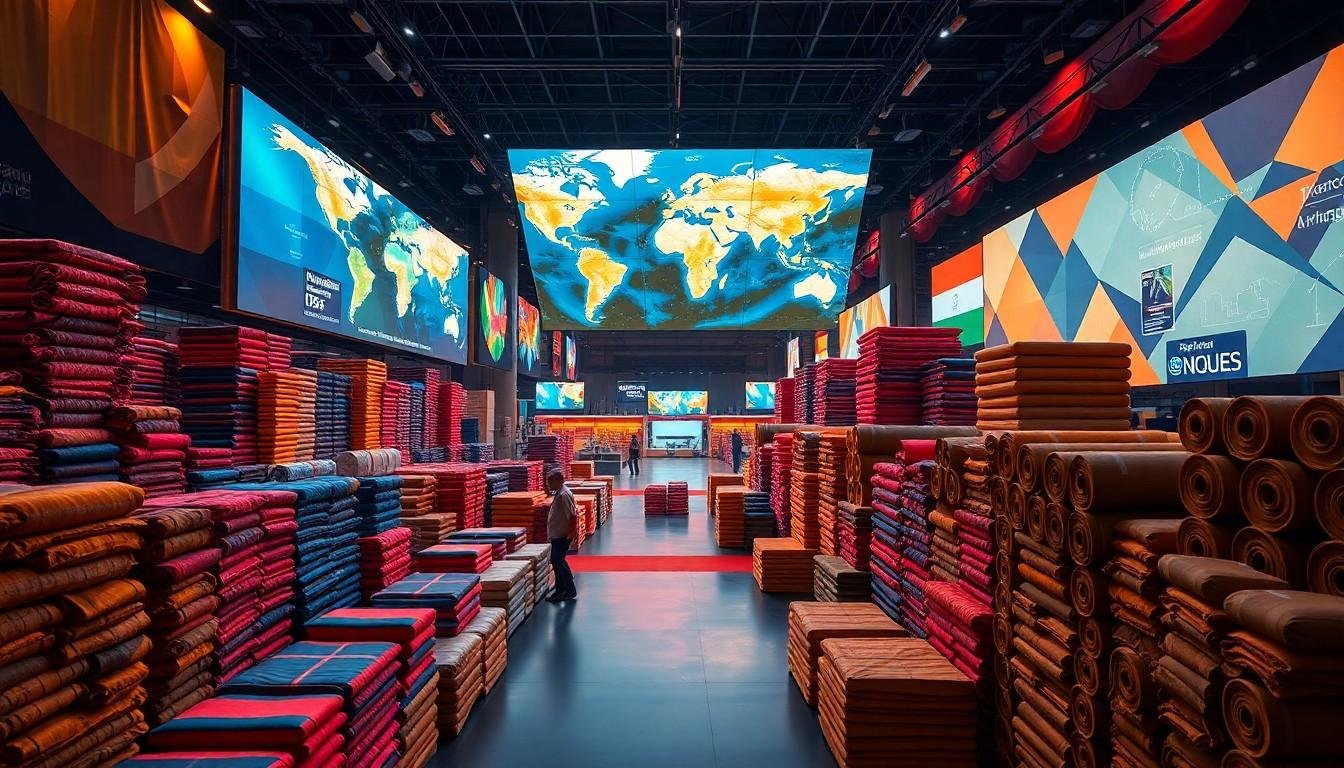
As CEMS-Global’s four-day textile exhibition in Dhaka drew to a close on Saturday, 5 September, industry figures used one of its main side events to argue that Bangladesh and India should stop treating their textile sectors as separate markets and start operating as a shared production base. The case put in Dhaka was that Bangladesh’s move into higher-value clothing will be easier if it can source yarns, fabrics, dyes and other inputs from India with fewer delays at the border and...
Continue Reading This Article
Enjoy this article as well as all of our content, including reports, news, tips and more.
By registering or signing into your SRM Today account, you agree to SRM Today's Terms of Use and consent to the processing of your personal information as described in our Privacy Policy.
less friction in customs and transport. (
daily-sun.com)
That argument was aired at a seminar titled “Advancing Bangladesh-India Textile Value Chains through Seamless Logistics and Trade Facilitation”, organised by the India-Bangladesh Chamber of Commerce and Industry with CEMS-Global at the Bangladesh-China Friendship Exhibition Centre in Purbachal. Daily Sun and Apparel Views both reported that the seminar took place on Thursday, 3 September, during the exhibition run, while Textile Focus carried a version dated 5 September that described it as happening “today”. TOB.news also said the session was moderated by Jabed Ahmed, chief consultant of CEMS Limited. (daily-sun.com)
The keynote speaker, Mustazirul Shovon Islam, managing director of Sparrow Group, argued that Bangladesh cannot defend its place in global apparel by relying only on volume. He said the country needed more value-added and higher-value products, and described India as one of the most accessible sources of the quality textile raw materials needed to make that shift. His proposed formula was succinct: “One Supply Chain, Two Countries and One Global Ambition.” He also urged both sides to stop obsessing over which country gained more from trade and instead focus on building a regional chain that could compete internationally. (textilefocus.com)
Other speakers pushed the same theme in more practical terms. Reports on the event said Amit Kumar Tiwari, A.K.M. Saifur Rahman, A.T.M. Altaf Hossain Lotus, Amit Kumar of State Bank of India and Md Faizur Rabbee of Invest Bangladesh all pointed to the same choke points: logistics, customs and the cross-border movement of goods. Their message was that quicker clearance, more predictable transport and less cumbersome paperwork would do as much for competitiveness as any single sourcing deal. Apparel Views said the aim was to build an integrated textile and apparel supply chain; TOB.news went further and called it an “integrated textile ecosystem”. (apparelviews.com)
The setting mattered. The seminar took place inside the 25th Bangladesh edition of the Textile Series of Exhibitions, which combined the 25th Textech Bangladesh 2026 International Expo, the 26th Dhaka International Yarn & Fabric Show 2026 – Summer Edition, and the 53rd Dye+Chem Bangladesh International Expo. According to official CEMS-Global event listings, all three ran from 2 to 5 September at the same Purbachal venue. CEMS-Global describes Textech as Bangladesh’s biggest and oldest international exhibition on textile-apparel technology and machinery, while the yarn and fabric show is pitched at the country’s US$38 billion textile and apparel export industry. The dye and chemical fair is billed by the organiser as Bangladesh’s only international exhibition focused on dyes and fine and speciality chemicals. (cems.global)
That wider exhibition was not a public spectacle so much as a business marketplace. The official Expo Info page said Textech was open to “Business / Trade Visitors, Professionals”, underlining that the event was designed for sourcing, machinery deals and supply-chain matchmaking rather than consumer traffic. Organisers said about 1,475 companies from 37 countries took part across more than 2,245 booths and pavilions, with more than 16,000 trade visitors expected over the four days. (textech-bangladesh.com)
The technological backdrop to the Bangladesh-India pitch was equally clear. UNB reported that a dedicated Digital Transformation Zone in Hall B showcased enterprise resource planning systems, smart factories, the Internet of Things, Industry 4.0 tools, data analytics, cloud computing, cybersecurity, sustainable manufacturing and traceability. The Business Standard, reporting before the fair opened, said organisers believed Bangladesh’s next phase of growth would depend on productivity, innovation, diversification, sustainability, technology adoption and value addition as global sourcing patterns continue to change. (unb.com.bd)
Meherun N Islam, president and group managing director of CEMS-Global USA and Asia Pacific, cast the exhibitions as a way to keep more of that commercial activity inside Bangladesh. Speaking at the opening on 2 September, she said the combined fairs had become important international business platforms for the country’s textile and garment industries. “Businesspeople will no longer need to travel abroad as frequently in search of buyers,” she said, adding that putting buyers, sellers and suppliers in one venue would save “time, money and effort”. UNB also reported that the week’s programme included five seminars, covering subjects from sustainability and wastewater management to industrial architecture and workforce development in the age of artificial intelligence. (unb.com.bd)
For Bangladesh’s manufacturers, the appeal of closer integration with India is straightforward: faster access to nearby raw materials could help factories move up the value chain at the same moment buyers are demanding shorter lead times, better traceability and more technologically advanced production. For India, the attraction is access to one of the world’s largest garment-making hubs. What emerged from the Dhaka seminar was not a formal bilateral policy package, but a clearer industry view of what the two neighbours could gain if they treated logistics and trade facilitation as part of industrial strategy, rather than as an afterthought. (textilefocus.com)
Source: Noah Wire Services