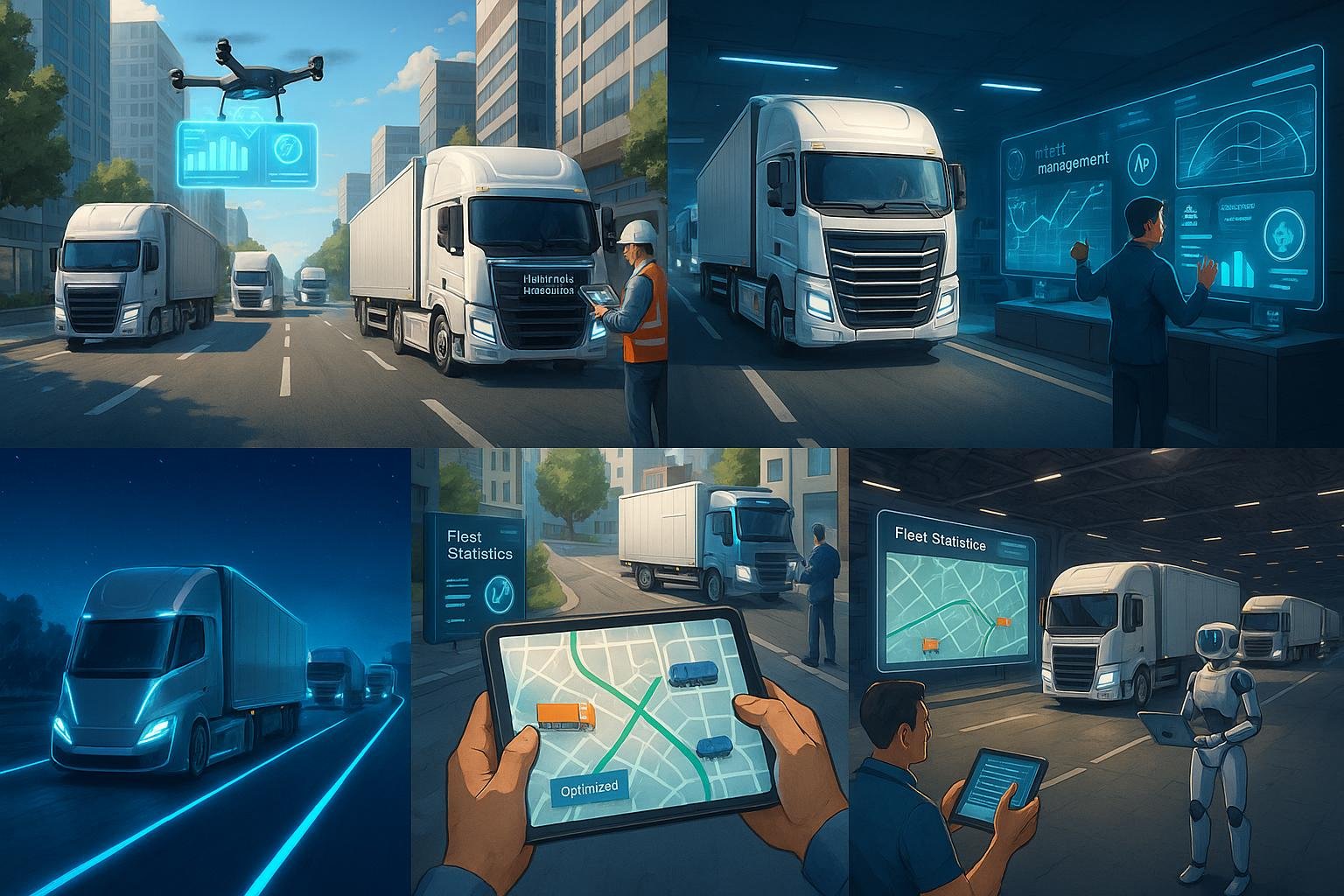
Industry leaders highlight how AI is transforming fleet operations, from predictive maintenance to route optimisation, despite hurdles like data quality and trust concerns.

Artificial intelligence is moving from experimental projects toward becoming an operational partner for fleet managers, promising to automate routine work, prioritise maintenance and surface actionable insights from expanding telematics datasets, industry executives and sector research say.
Sp...
Continue Reading This Article
Enjoy this article as well as all of our content, including reports, news, tips and more.
By registering or signing into your SRM Today account, you agree to SRM Today's Terms of Use and consent to the processing of your personal information as described in our Privacy Policy.
Brianna Perry-Lang, product marketing manager at Fleetio, argued automation can relieve fleets of manual chores and let leaders concentrate on higher-impact decisions. “If software starts to take over some of the manual tasks and process management, it frees fleet leaders to focus on higher-value decisions,” she said. Fleetio has introduced features that extract service data from scanned documents and images to accelerate digitisation, a common first step toward meaningful AI use.
Market-wide data underpins the move. According to Verizon Connect’s 2026 Fleet Technology Trends Report, GPS fleet tracking is now deployed by about 80% of fleets, up 11 percentage points year on year, while the share of fleets using AI-enabled video telematics climbed to nearly half from 36% in 2023. Users report measurable savings: GPS tracking implementations are associated with average reductions of roughly 12% in fuel and labour costs and around 11% lower insurance premiums, the report says.
Independent studies and vendor research suggest further operational gains from AI-driven maintenance and routing. Industry analysis indicates predictive maintenance can cut vehicle downtime by 30–50%, while route-optimisation systems can trim fuel use by up to 15% and improve delivery speeds. Uptake and other maintenance specialists highlight AI’s ability to distinguish normal component behaviour from incipient failure, enabling earlier, less costly repairs and more reliable scheduling.
Despite benefits, adoption is uneven and constrained by practical hurdles. Smaller operators often lack the technical resources and demand clear, rapid returns before investing, while larger fleets move faster thanks to in-house analytics teams. Fragmented legacy data, integration difficulties, connectivity limitations and the so‑called “black box” problem, where users distrust opaque models, remain significant barriers, according to coverage by Automotive Fleet and other sector commentary.
Trust and usability therefore dominate vendor priorities. Fleet managers tell suppliers they need transparent recommendations, confidence scores and traceable data sources rather than ambiguous prompts. Panelists said rigorous validation is essential and that the most effective AI tends to be embedded quietly into workflows so users benefit from insights without confronting the underlying algorithms directly. “The best AI is subtle,” Thompson said. “Very powerful under the hood, but not necessarily in your face in the day to day.”
Not all applications enjoy the same level of confidence. A Fleet Advantage survey cited by industry reporting found only about 19% of fleets felt comfortable using AI to make procurement decisions, reflecting persistent worries over data quality and model reliability. Conversely, interest is strongest in maintenance, uptime management and safety: Verizon Connect found 71% of video telematics users prioritise driver safety, and many fleets point to reductions in accidents and insurance costs as key outcomes.
Vendors argue that democratization of AI-powered tools is lowering entry barriers for smaller operators. Platforms that standardise and clean maintenance records, automate routine scheduling and offer conversational guidance through large language models are widening access to predictive insights once confined to large enterprises, Uptake and other providers note.
As connected vehicles and telematics continue to proliferate, executives expect AI to play a central, supportive role rather than supplant human judgement. By filtering noise, prioritising critical alerts and recommending concrete actions, the technology aims to help managers cope with complexity and make faster, more informed decisions while preserving the oversight and contextual judgement that experienced fleet leaders provide.
Source: Noah Wire Services
Subscribe to Industry Updates