


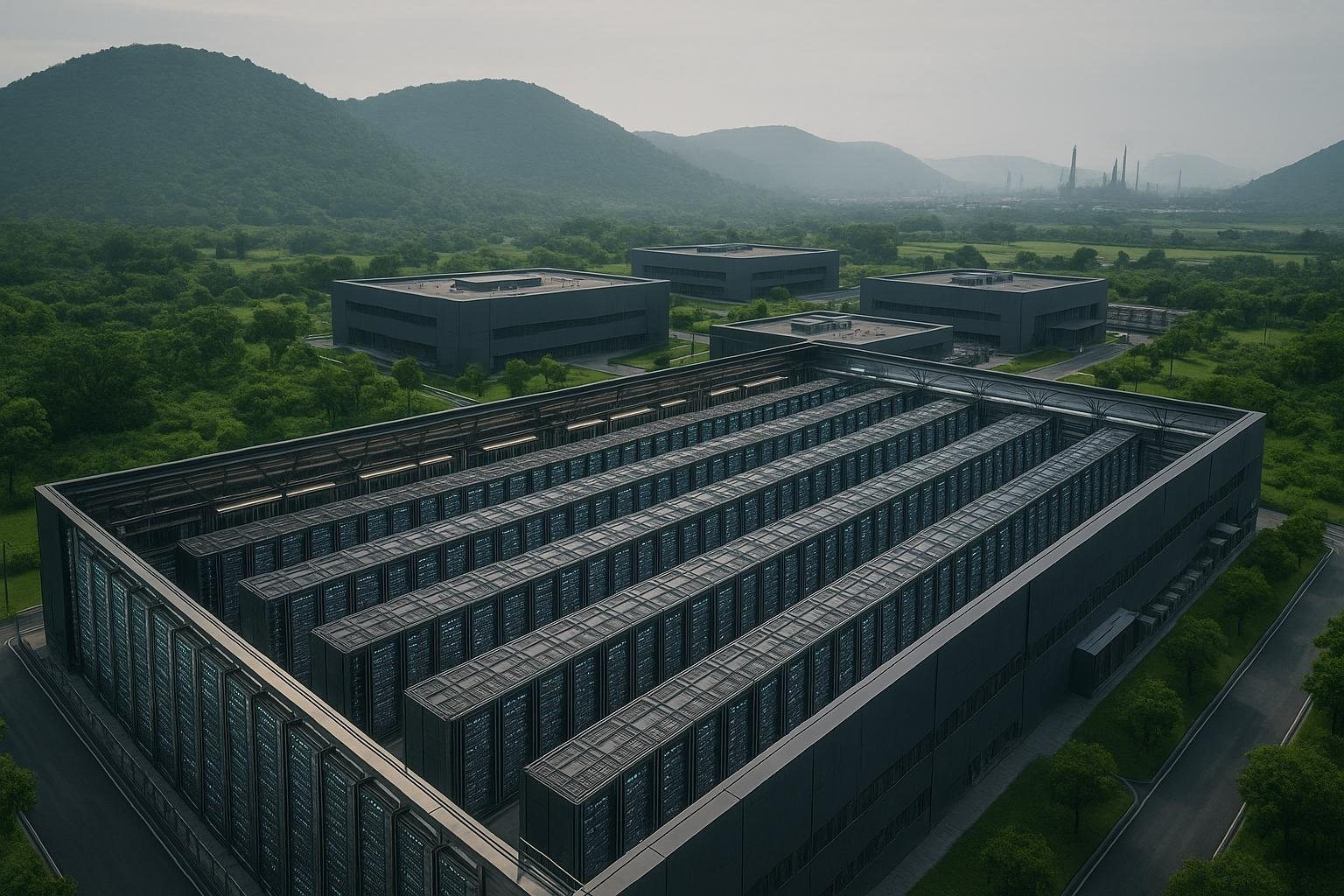
The Adani Group’s $5 billion investment in Google’s new AI data‑centre in Visakhapatnam signifies a major expansion in India’s data infrastructure, raising opportunities and challenges for energy and sustainability policies.

According to the original report in Carbon Credits, the Adani Group will invest up to US$5 billion through its joint venture AdaniConneX in Google’s new AI data‑centre campus in Visakhapatnam, Andhra Pradesh, a project that forms...
Continue Reading This Article
Enjoy this article as well as all of our content, including reports, news, tips and more.
By registering or signing into your SRM Today account, you agree to SRM Today's Terms of Use and consent to the processing of your personal information as described in our Privacy Policy.
The campus is being presented as an integrated build‑out that goes beyond server halls: plans include renewable power generation, high‑capacity transmission and energy storage, subsea cables and other network infrastructure designed to meet the intense electricity and cooling demands of modern AI workloads. According to Adani’s announcement, the investment is intended to support both large‑scale cloud computing and advanced AI services while stimulating local economic activity. Gautam Adani said: “The Adani Group is proud to partner with Google on this historic project that will define the future of India’s digital landscape. This is more than just an investment in infrastructure.” The company framed the project as a generational opportunity for AI capability and bilateral economic ties with the United States.
Industry data and independent reporting place the Adani–Google scheme in the context of a wider surge of investment into India’s data‑centre sector. Colliers and market reporting show total installed capacity across India’s top markets reached about 1,263 megawatts (MW) by April 2025, and forecasts suggest capacity could expand to roughly 4.5–5 GW by 2030 if current trends continue. Reuters has further chronicled a broader $100 billion build‑out by major conglomerates , including Reliance and Tata , that is adding gigawatt‑scale projects across Andhra Pradesh and other hubs, while also flagging resource constraints in established centres such as Mumbai and Chennai.
That scale carries trade‑offs. S&P Global analysis cited in recent industry reporting estimates data‑centre electricity consumption was near 13 TWh at end‑2024 (about 0.8% of India’s demand) and could rise to roughly 57 TWh by 2030, pushing data centres towards 2.6% of national demand. S&P’s modelling indicates India may need an additional 15–30 GW of renewable capacity to meet projected data‑centre loads , a gap commentators say will require concerted policy action, grid upgrades and rapid renewables deployment if projects are to run on low‑carbon power rather than mainly on coal‑dominated grids.
The commercial and regional implications are significant. Hyperscale campuses of the sort Google and Adani propose can attract ancillary suppliers, create construction and technical jobs, and spur local digital ecosystems, while also drawing international clients seeking AI‑ready compute. At the same time, some market participants urge caution. Public reporting on operators such as Sify Infinit Spaces shows that even firms positioning for the AI boom are pacing investment to avoid oversupply and exposure to a potential market correction.
Editorially, the announcement should be read as both a strategic infrastructure bet by a private conglomerate and a claim about future capacity and sustainability that depends on follow‑through. The Adani press release and Google’s stated US$15 billion programme outline an ambitious pathway; independent forecasts and reporting highlight the scale of grid and water challenges that must be resolved to realise that vision. If policymakers, utilities and investors move in step to expand renewables, transmission and cooling resources, India’s data‑centre expansion could underpin a shift from being primarily a technology consumer to a global supplier of AI infrastructure , but doing so will require coordinated public‑private action to manage resource limits and environmental impacts.
Source: Noah Wire Services
Subscribe to Industry Updates

