


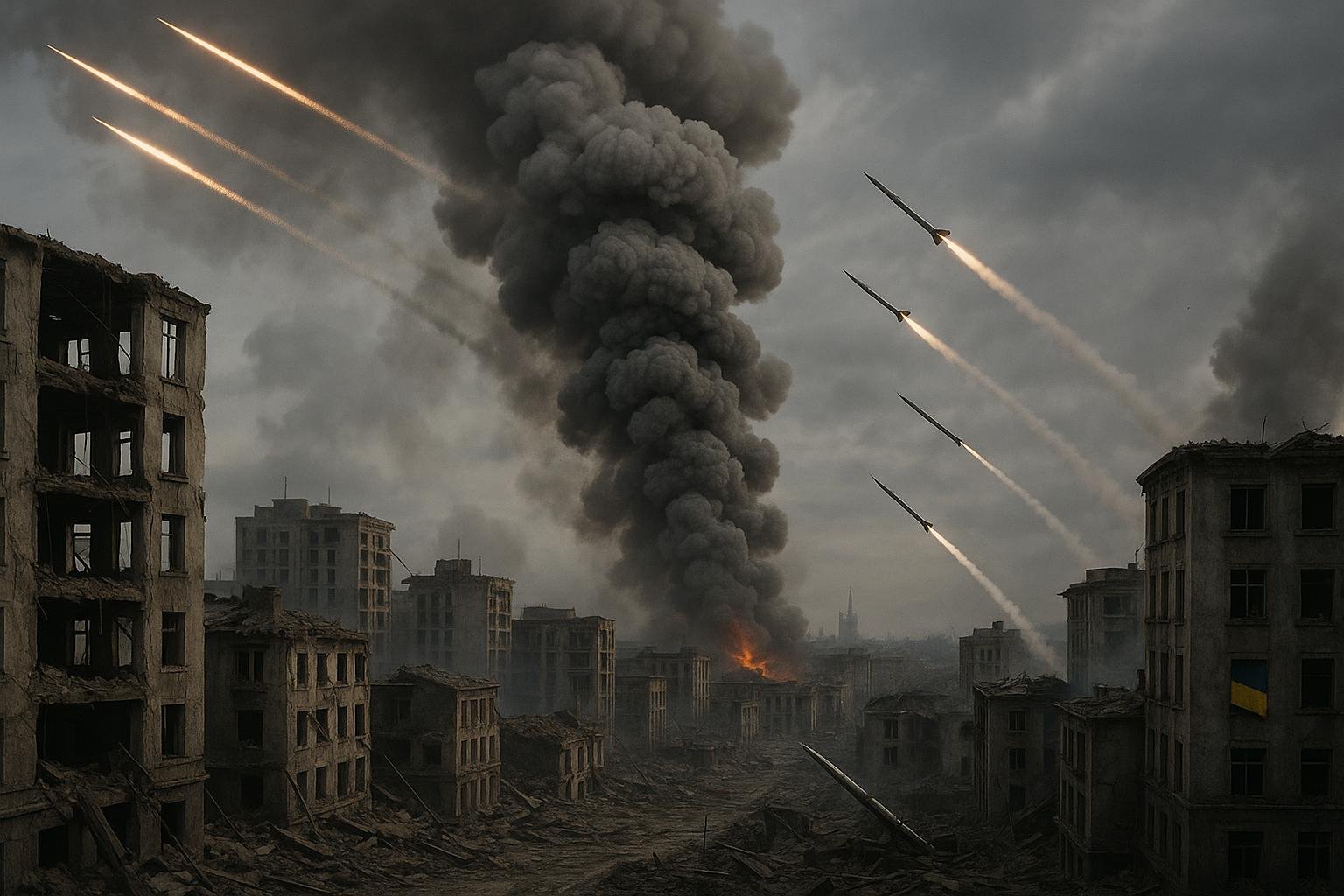
Ukrainian President Volodymyr Zelenskyy calls for accelerated international aid and enhanced air defences to counter Russian attacks, while diplomatic efforts focus on long-term security guarantees and reconstruction funding.

ROMA , Ukrainian President Volodymyr Zelenskyy urged sustained international support for his country’s defence on Sunday, saying continued assistance and a rapid strengthening of air defences were “fundamental” as Russian strikes keep exactin...
Continue Reading This Article
Enjoy this article as well as all of our content, including reports, news, tips and more.
By registering or signing into your SRM Today account, you agree to SRM Today's Terms of Use and consent to the processing of your personal information as described in our Privacy Policy.
“E’ di fondamentale importanza per l’Ucraina che il supporto dei partner continui: assistenza costante alla difesa e rafforzamento della nostra difesa aerea. Quasi ogni giorno, le vite in Ucraina sono minacciate a causa di attacchi e raid russi con vari tipi di armi contro la nostra popolazione. Solo questa settimana, la Russia ha lanciato contro l’Ucraina più di 1.070 bombe aeree guidate, quasi 1.000 droni d’attacco e sei missili. Tutto ciò che è stato concordato con i nostri partner deve essere accelerato il più possibile. Ogni missile per i sistemi di difesa aerea attualmente immagazzinato dai partner può davvero salvare vite umane”. Lo scrive su X il presidente ucraino Volodymyr Zelensky.
According to Ukrainian presidential remarks posted separately, Zelenskyy told a meeting of national security advisers on 3 January that Kyiv had shared “all key documents” with 18 allied advisers and was pressing to finalise a security-assurance framework quickly through coordinated talks in European capitals, Canada, Japan and other coalition partners. The meeting, the presidency said, focused on specific draft documents, sequencing of steps Ukraine would take and the guarantees partner states are prepared to provide.
Western capitals are pursuing arrangements to bind security support to a broader peace effort. The United States has proposed a 15-year security guarantee as part of a draft peace plan, a development Zelenskyy characterised as an important step even as he has publicly favoured a longer commitment, according to reporting by The Associated Press. Negotiations remain fraught, with questions outstanding over troop withdrawals, the legal status of occupied territories and sensitive sites such as the Zaporizhzhia nuclear power plant.
Industry and coalition planning is moving beyond abstract pledges. National security advisers in Kyiv discussed a proposed security structure that would see Ukrainian forces complemented by European deployments and U.S. support, while Ukrainian officials outlined an ambitious reconstruction and stability package that, they say, could total about $800 billion. The AP noted that that figure is being discussed as a framework for rebuilding tied to EU accession reforms, with proponents expecting roughly $500 billion to come from grants and concessional loans, though no final funding sources have been confirmed.
The urgency of such plans is underscored by continuing Russian strikes on civilian areas and infrastructure. Zelenskyy stressed the immediate lifesaving value of munitions for allied air-defence batteries, saying that accelerating deliveries could prevent civilian deaths. His appeal came amid a broader diplomatic push: at Ramstein Air Base last month, Zelenskyy and outgoing U.S. defence officials urged the incoming U.S. administration to maintain military support, warning that any abrupt reduction could embolden Moscow and destabilise global security, according to The Associated Press.
Kyiv’s leadership has also signalled internal changes intended to strengthen security and governance in parallel with allied talks. Officials announced a reshuffle of key ministries and security posts, including nominations to the energy and defence portfolios and the appointment of a new chief of staff, a move the presidency framed as part of bolstering Ukraine’s negotiating and defence capacity.
Meanwhile, cooperation initiatives and bilateral commitments continue to accumulate. The presidency highlighted the PURL initiative, which has drawn 24 countries and declared funding of about $4.3 billion, and said several partners, including Italy, have approved aid packages for 2026 designed to support aviation, air defence, drones, electronic warfare and artillery. Zelenskyy thanked partners for what he called consistent diplomatic and military backing.
Despite diplomatic momentum, scepticism remains over Moscow’s willingness to accept an outcome that preserves Ukraine’s sovereignty. Russians continue to frame talks as taking place from a position of strength, and both sides accuse each other of recent attacks. Zelenskyy has insisted any final peace accord should be endorsed by Ukrainians in a referendum and preceded by at least a 60-day ceasefire, a demand Russia has so far rejected, according to reporting by The Associated Press.
As Kyiv presses allies for concrete deliveries and firmer guarantees, the debate in Western capitals is shifting from whether to support Ukraine to how best to structure long-term assurances that might deter renewed aggression while bringing Kyiv closer to a durable peace. Government figures and coalition statements indicate a two-track effort: accelerate defensive materiel now to protect civilians and finalise legal and political security frameworks that can underpin reconstruction and eventual normalisation.
Source: Noah Wire Services
Subscribe to Industry Updates

