


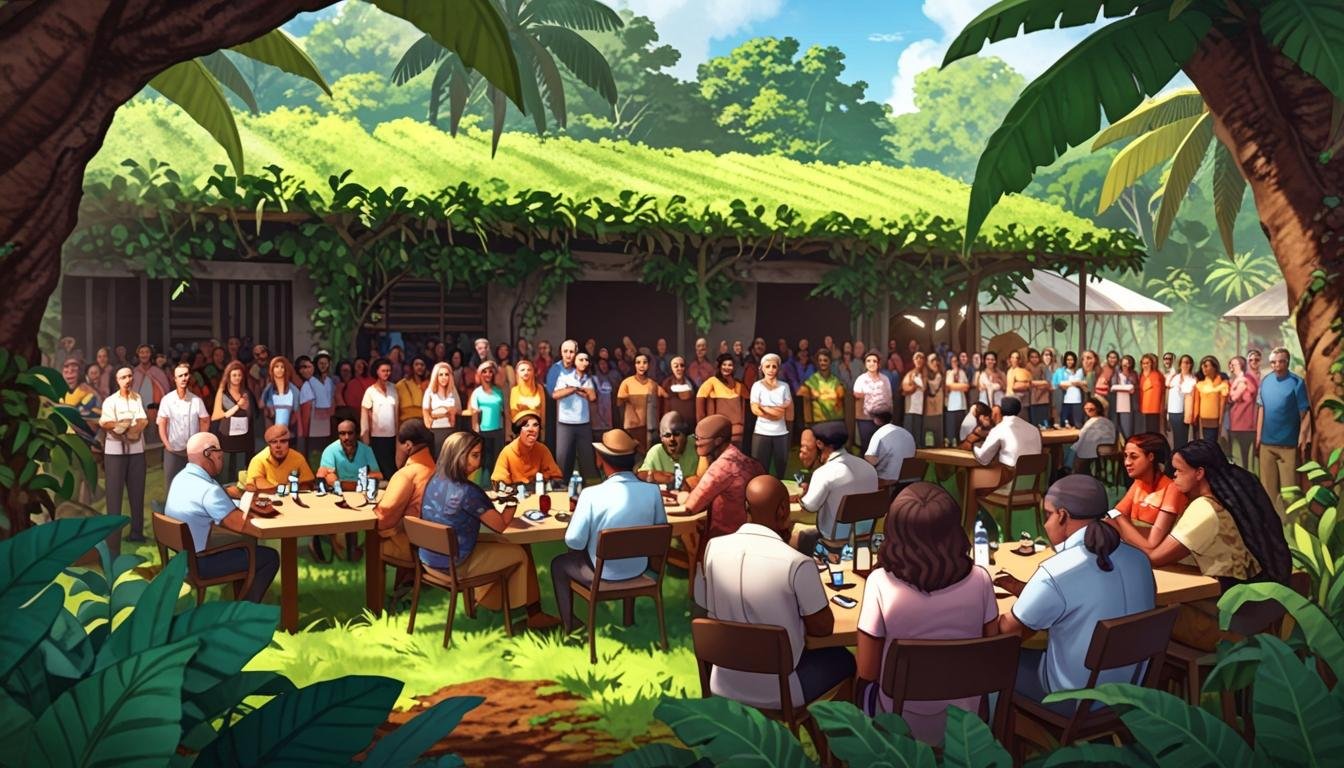
**São Paulo**: The World Cocoa Foundation concluded its largest Partnership Meeting emphasising collaboration amidst market challenges. Nearly 500 leaders discussed sustainability, disease management, and innovative strategies to bolster cocoa production, highlighting the necessity for equitable data sharing and engaging all stakeholders for a resilient future.
On March 20, the World Cocoa Foundation (WCF) concluded its largest-ever Partnership Meeting in São Paulo, Brazil, emphasising the pressing need for extensive collaboration within the cocoa sector amidst a backdrop of market disruption and increasing regulatory challenges. The event, which gathered nearly 500 leaders from around the globe, aimed to foster resilience and sustainable growth by concentrating on crucial topics such as data, research, and disease management.
The two-day summit, themed “Our Future: Resilience Through Sustainability,” brought together representatives from governments, cocoa-growing communities, corporations, civil society, and academia. Speakers highlighted the significant global challenges, including climate change and disease, which have transformed the necessity for a sustainable cocoa sector from a moral imperative into a critical matter for survival. As the industry faces mounting pressures to innovate swiftly and effectively, the focus is shifting towards coordinated strategies for practical implementation.

Chris Vincent, president of the World Cocoa Foundation, shared insights about the current landscape: “Crisis leads to innovation but it can also accelerate collaboration,” he stated. “As the cocoa sector navigates a period of uncertainty and transformation, recent challenges have demonstrated its interconnectedness. The energy and solutions emerging from São Paulo show that the sector is ready to collaborate to achieve resilience through sustainability, to invest in innovation, and to support cocoa communities worldwide.”
A recurring theme among speakers was the need for pre-competitive collaboration to tackle the systemic issues confronting cocoa landscapes and communities. This entails engaging not only within the industry but also including governments and farmers for a sustainable and resilient long-term future.
Hosting the Partnership Meeting in Brazil bolstered South-South collaboration and knowledge exchange. Delegates learned about Brazil’s advancements in agricultural innovation, which encompass crop diversification, regenerative farming, and small-scale mechanisation, all contributing to the country’s goal of doubling its cocoa production by 2030. Field visits and technical sessions underscored practical, scalable solutions in cocoa agroforestry and mechanisation, pertinent for producer countries grappling with similar challenges related to climate and productivity.
Numerous breakout sessions emphasised that data-driven strategies—comprising income tracking, crop forecasting, disease surveillance, and biodiversity—are essential for facilitating adaptation and fostering an entrepreneurial spirit among farmers. Participants underscored the importance of equitable data sharing between origin and consuming countries, which would empower farmers to make informed decisions, thereby boosting productivity and securing their income resilience.
Disease management, a critical challenge threatening the global cocoa supply, was another focal point of the discussions. Panelists advocated for establishing a comprehensive, shared research base regarding diseases and for heightened investment in preventative strategies, including farmer training, enhanced planting materials, and digital technologies.
Discussions also probed the implications of historically high cocoa prices, gauging their potential to incite transformation or exacerbate existing structural issues. A consensus emerged that resilience must be intrinsically connected to productivity, profitability, and farmer wellbeing rather than transient market fluctuations. Participants highlighted the necessity to communicate these principles simply to consumers.
The WCF reaffirmed its role as a platform for pre-competitive collaboration and announced new workstreams focused on regulatory compliance and global disease management. Progress continues with initiatives such as the Cocoa & Forests Initiative, along with joint action plans aimed at addressing child labour in the sector.
As the event concluded, WCF and its partners issued a strong call for collective responsibility and action throughout the cocoa value chain. Vincent noted, “Resilience is not just about surviving disruption. It is about building a system in which farmers, companies, and communities can thrive. The conversations and commitments made here in Brazil will shape the future of cocoa and define the next phase of sustainability in the sector.”
Source: Noah Wire Services

