


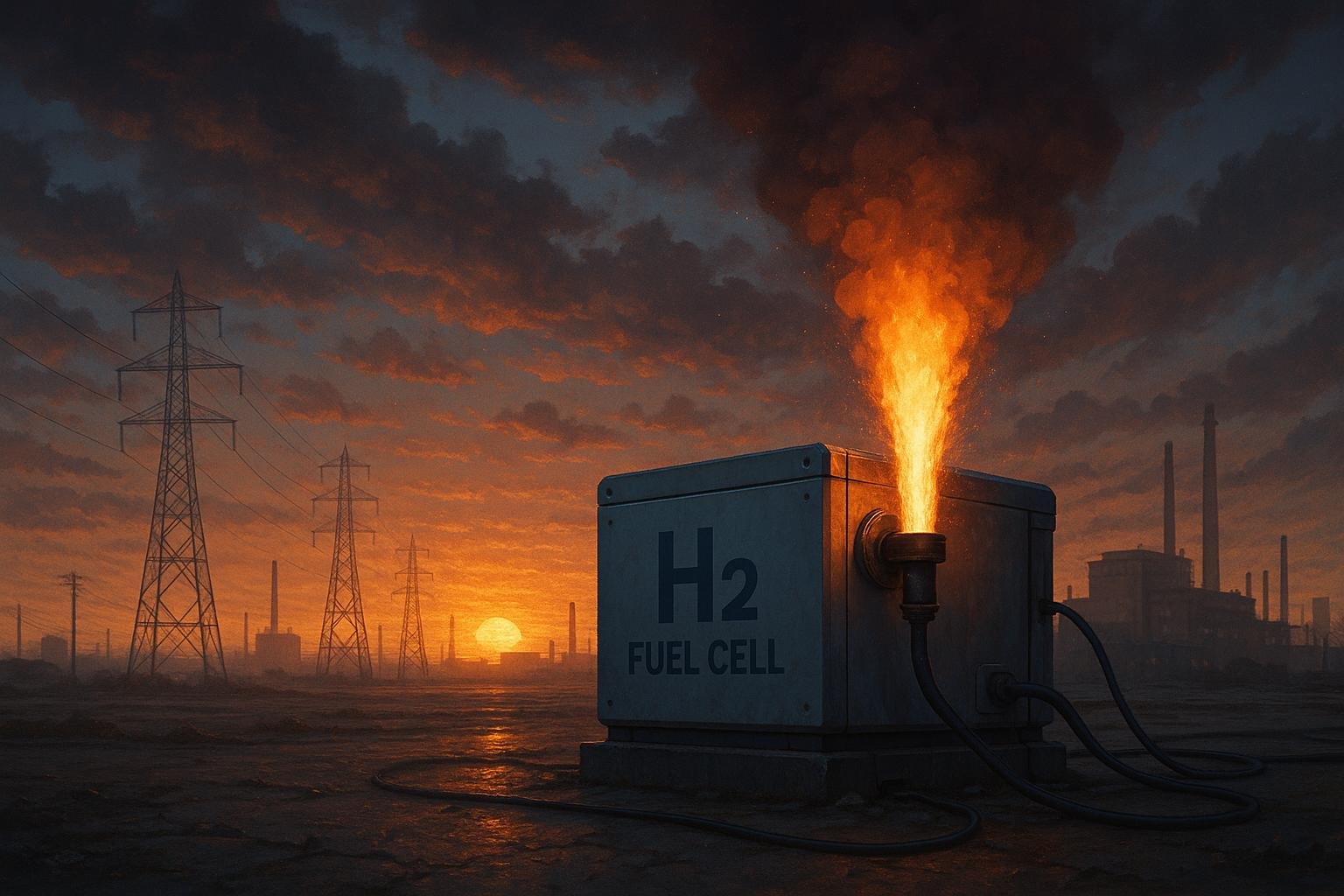
Wood Mackenzie’s latest report predicts 2026 will be a crucial ‘reckoning’ year for the hydrogen sector, as clarifying policies and project setbacks reshape prospects for large-scale deployment and commercial viability.

Wood Mackenzie’s new outlook for 2026 paints the year as a “reckoning” for the hydrogen industry, arguing that the sector is moving from a phase of broad optimism into one in which the economic levers that will actually de...
Continue Reading This Article
Enjoy this article as well as all of our content, including reports, news, tips and more.
By registering or signing into your SRM Today account, you agree to SRM Today's Terms of Use and consent to the processing of your personal information as described in our Privacy Policy.
Central to the analysis is the evolving regulatory landscape in the EU. The European Commission’s Delegated Regulation, published on 8 July 2025, sets out the methodology for assessing greenhouse‑gas emissions savings from low‑carbon fuels, including hydrogen. According to the report, that act , and the Commission’s subsequent decision in November 2025 to open part of the Hydrogen Bank auction budget to non‑RFNBO electrolytic projects , signals a significant shift in tone away from Europe’s strict Renewable Fuels of Non‑Biological Origin (RFNBO) requirements. Industry observers have long criticised RFNBO rules for adding roughly US$1.0–2.0/kg to producer costs and slowing deployment; Wood Mackenzie says the new measures provide long‑awaited clarity for producers of non‑RFNBO hydrogen, including blue routes, and could unlock subsidy support for a broader set of projects. The European Parliament’s briefing on the Delegated Act, published in July 2025, underscored how these technical definitions are material to investor decisions and remain subject to political scrutiny.
That regulatory reprieve will not, however, resolve other structural hurdles. Wood Mackenzie notes that offtake certainty, capex and operating cost pressures, and complex permitting continue to shape which projects reach final investment decision (FID). The report highlights how the market is already differentiating between projects with bankable offtake and those whose economics rely on optimistic long‑term price assumptions.
The Middle East, long touted as a potential low‑cost exporter of hydrogen derivatives, emerges as a region under strain. Wood Mackenzie points to a string of setbacks in 2025 , including the stalled NEOM Green Hydrogen Project, shareholder unrest at Air Products linked to failed offtake arrangements, Saudi Aramco’s revised down blue ammonia ambitions, and high‑profile cancellations in Oman involving BP, Engie and POSCO , as evidence that export‑oriented projects are particularly vulnerable to demand shortfalls and policy misalignment in major offtake markets. The report warns the region could face further cancellations or major scale‑backs unless external demand dynamics and offtake frameworks firm up.
Asia and India present a contrasting picture of contested optimism. Wood Mackenzie flags aggressive auction bids in India as a phenomenon to watch: while headline‑grabbing low prices indicate strong developer appetite, the crucial question is whether those bids translate into operating plants once financing, grid integration, and execution risks are fully tested. Industry commentary cited by the report suggests a risk that overly aggressive pricing could lead to project delays or failures if underlying costs and revenue stacks prove unfavourable.
On the technology and market‑integration front, the report anticipates movement on ammonia cracking and hybrid production models. Investment interest in ammonia crackers , facilities that convert ammonia back to hydrogen at destination , is expected to rise, as exporters and buyers seek to manage supply‑chain carbon accounting and reduce the need to transport hydrogen itself. Wood Mackenzie projects that a step‑change in ammonia cracking capacity would alter trade dynamics and could enable some export projects that currently appear uneconomic on a pure hydrogen delivery basis.
Meanwhile, developers are increasingly exploring hybrid production strategies that combine feedstocks and technologies , for example pairing electrolytic and fossil‑derived hydrogen, or linking production to flexible power and merchant sales , to maximise revenue across fragmented markets and mitigate policy or offtake risk. The report frames hybrid approaches as pragmatic responses to a market where single revenue streams look fragile and where balancing multiple offtake channels can improve project bankability.
Market commentators have echoed Wood Mackenzie’s view that 2026 will be pivotal. PV Magazine International summarised the outlook as a “year of reckoning” and emphasised the need for tighter alignment between policy design and offtake frameworks. Global Hydrogen Review and other sector publications reiterated the same themes, noting that regulatory shifts in Europe, project setbacks in the Middle East, and nascent commercial moves such as ammonia cracking will collectively determine which projects succeed.
Wood Mackenzie’s assessment is deliberate in its caution: while policy adjustments and new auction mechanisms could unlock investment for non‑RFNBO and blue hydrogen projects, the firm stresses that clarity alone is not a substitute for commercially viable offtake, disciplined cost management, and robust execution. As the industry transitions from pilot‑scale ambition to large‑scale deployment, 2026 will be the year when many developers, investors and governments discover which combinations of policy support, technology choice and market design can deliver hydrogen at scale.
Source: Noah Wire Services
Subscribe to Industry Updates

