


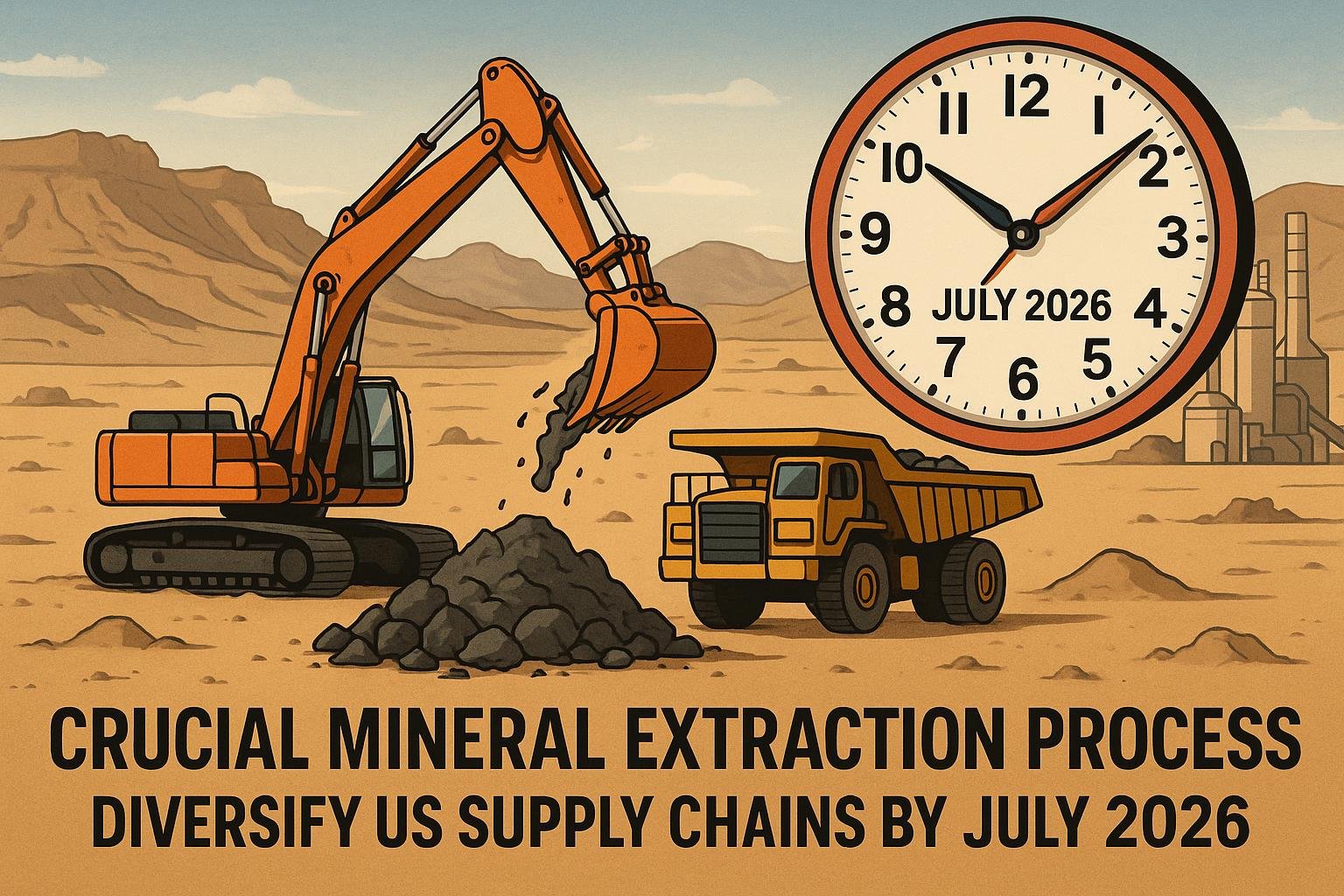
The Biden administration launches negotiations to reduce US dependence on foreign processed critical minerals, with a deadline to reach agreements or face potential trade restrictions and import controls by July 2026.

The White House on 14 January 2026 issued a Section 232 proclamation that orders the commerce secretary and the US trade representative to negotiate agreements with foreign partners aimed at reducing America’s dependence on processed critical minerals an...
Continue Reading This Article
Enjoy this article as well as all of our content, including reports, news, tips and more.
By registering or signing into your SRM Today account, you agree to SRM Today's Terms of Use and consent to the processing of your personal information as described in our Privacy Policy.
According to the White House, the action follows a series of administration moves last year intended to shore up supply chains for materials deemed essential to defence, energy, advanced manufacturing and other critical infrastructure sectors. In March 2025 the president signed an order to speed approvals for domestic mineral projects, and in April 2025 he launched a Section 232 investigation into national security risks posed by imports of processed critical minerals. A separate April 2025 directive sought expanded exploration and development of offshore mineral resources. The proclamation of 14 January is presented as the next procedural step in that broader policy push.
The administration frames the problem as twofold: not only is the United States heavily reliant on foreign sources for many raw inputs, but domestic capacity to process ores into usable materials is often lacking. Government material cited by industry commentators highlights that, as of 2024, the United States was entirely import‑dependent for 12 critical minerals and more than 50 percent import‑reliant for a further 29. Those shortfalls affect a broad set of sectors , from semiconductors and telecommunications to transportation and defence , and, the White House says, leave the economy vulnerable to price swings and supply disruptions.
The proclamation authorises negotiators to pursue a range of tools, including the potential establishment of minimum import prices for targeted processed minerals , a policy distinct from outright tariffs that would set a floor beneath which imports could not be sold. The White House fact sheet presents such price floors as a means to prevent foreign producers, often supported by state subsidies, from undercutting domestic industry while keeping diplomacy the primary avenue for immediate action.
Allied cooperation is central to the strategy. The administration points to existing partnerships with countries including Australia, Japan and several Southeast Asian states as building blocks for diversifying supply chains and expanding processing capacity outside adversarial jurisdictions. In government statements, officials have emphasised “friendshoring” , routing supplies through politically aligned partners , as a pragmatic complement to domestic development.
For US miners and processors the proclamation represents both an opportunity and a warning. On the one hand, the possibility of import measures and policy support could improve competitiveness for American producers and spur investment in processing facilities. On the other, the industry has long awaited concrete follow‑through on permitting reform, financing and infrastructure commitments. Without rapid implementation of capacity‑building measures, some analysts warn, higher protection at the border will not quickly translate into new domestic output.
Price volatility remains a pressing concern. Recent years have seen dramatic swings in commodities such as lithium and copper, driven by shifting demand from electric vehicles and data‑centre expansion as well as concentrated processing capacity abroad. The administration argues that broadening and securing processing networks will help moderate such volatility over time, but market observers note that diversification and new capacity take years to materialise.
What unfolds over the next six months will be decisive. Negotiators have until 13 July 2026 to report back; if agreements are judged insufficient, the president may move to implement trade restrictions, price floors or other measures under Section 232. Industry participants and trading partners will be watching closely for both the substance of any deals and whether follow‑up domestic actions , from permitting to investment incentives , deliver the increased processing capability the proclamation identifies as critical to long‑term resilience.
Source: Noah Wire Services
Subscribe to Industry Updates

