


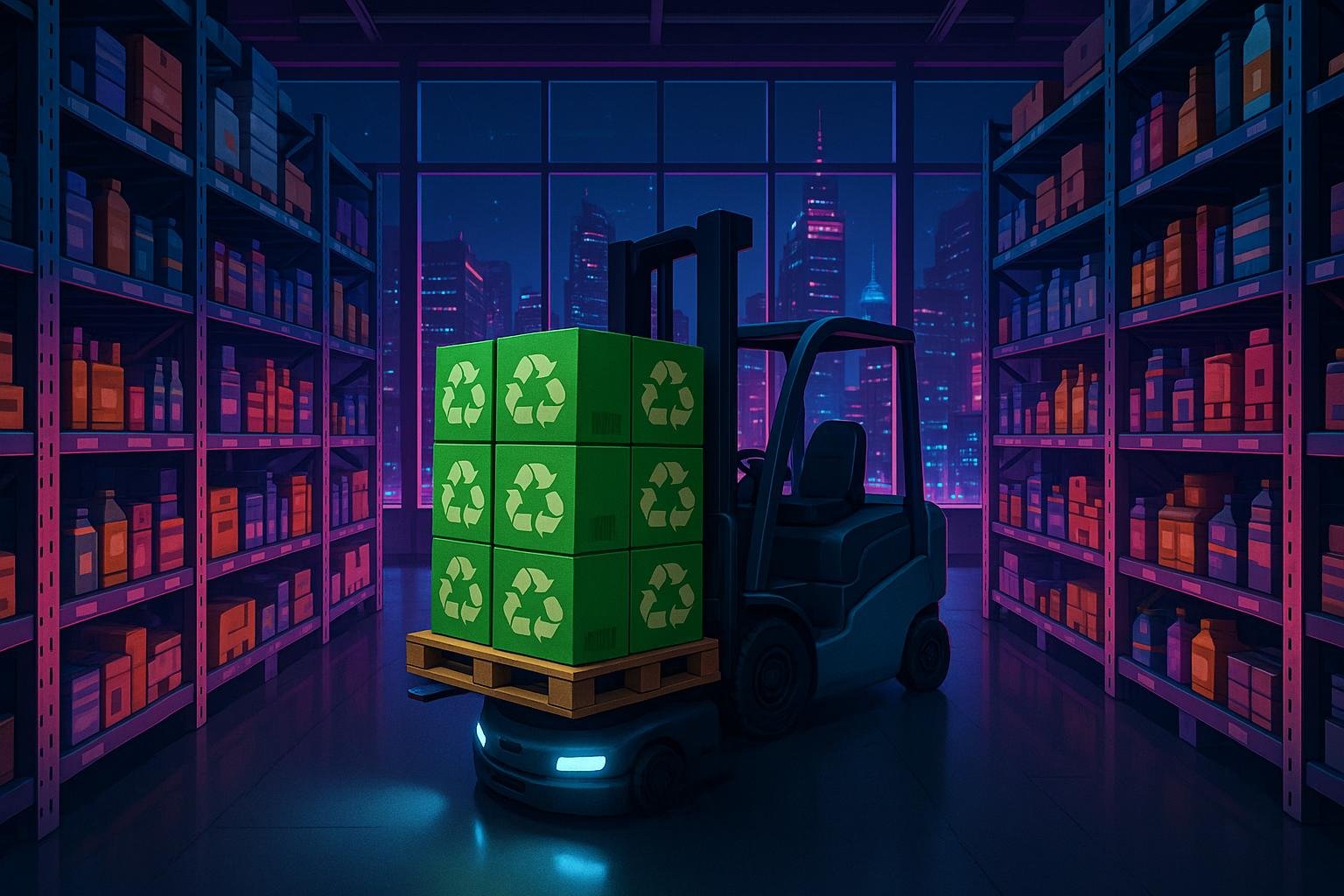
Walmart is transforming its supply chain through innovative AI tools, automation, and sustainable sourcing, strengthening its competitive edge amid global disruptions.

Walmart’s supply chain remains a defining element of the company’s competitive strength, built on technology, scale and an integrated logistics model that moves enormous volumes with tight cost control. The retailer’s approach combines real-time data sharing with suppliers, a dense distribution foot...
Continue Reading This Article
Enjoy this article as well as all of our content, including reports, news, tips and more.
By registering or signing into your SRM Today account, you agree to SRM Today's Terms of Use and consent to the processing of your personal information as described in our Privacy Policy.
Central to Walmart’s model is its long-standing practice of sharing operational data with trading partners so suppliers can align production with demand. According to SupplyChainToday, systems such as Retail Link give vendors near-real-time visibility into sales and inventory, enabling tighter replenishment and fewer stock imbalances. That data-driven collaboration is now being broadened: Walmart Data Ventures recently launched Scintilla, an AI-powered insights ecosystem described by the company as a tool that provides suppliers with actionable analytics and research summaries to accelerate decision-making and growth.
Walmart has layered multiple AI and analytics tools across its operations. The company highlights platforms such as Wally, which aggregates sales, inventory and demand signals to surface trends, and MyAssistant, an internal generative AI tool that helps associates and leaders interpret data. Industry commentary notes the retailer has also automated parts of supplier negotiations; a partnership deploying AI agents has reportedly secured agreements with a majority of targeted suppliers, trimming costs and streamlining contract terms, and is being extended to additional supplier tiers and transportation pricing, according to Logistics Viewpoints.
Physical logistics remain equally important. Walmart operates hundreds of distribution nodes and one of the largest private trucking fleets globally, offering control over routing, timing and cost. The firm’s extensive use of cross-docking minimises warehouse dwell time by transferring inbound goods directly to outbound trailers destined for stores, reducing handling and inventory carrying costs while accelerating replenishment of fast-moving items.
Inventory management emphasises responsiveness over accumulation. Walmart applies just-in-time principles for many categories so stores receive product close to the moment it is needed, lowering working-capital requirements and waste, especially for perishables. Complementing these practices are investments in RFID and augmented-reality tools to speed item location in stores and distribution centres, improving outbound accuracy and reducing labour friction.
Global sourcing and supplier diversification underpin both selection and resilience. Walmart Sourcing manages hundreds of thousands of unique SKUs produced by thousands of suppliers across more than twenty countries, a scale that delivers purchasing leverage and alternative sourcing pathways when regional disruptions occur, according to Walmart’s corporate sourcing overview. That buying power also enables economies of scale in procurement, transportation and technology investment.
Sustainability is increasingly integrated into procurement and financing. Walmart’s supplier-focused climate programmes aim to shrink Scope 3 emissions and reduce waste, and the company has piloted initiatives to extend produce shelf life during transit. According to the retailer, a partnership with an agritech start-up is testing plant-extract sachets that slow ripening to reduce spoilage. Financial incentives are also being used: Walmart and HSBC have developed a sustainable supply-chain finance programme that offers favourable terms to suppliers meeting environmental targets, encouraging lower-emission practices across the supplier base.
Transparency and traceability efforts have seen Walmart explore blockchain and other track-and-trace technologies to speed food-safety responses and trace origins more quickly. Those investments, paired with automation in distribution centres and advanced route optimisation for its fleet, aim to balance speed, cost and quality in a sprawling network that serves millions of customers weekly.
Taken together, these elements explain why analysts and practitioners point to Walmart as a case study in large-scale retail logistics: integrated data flows with suppliers, substantial control of transportation, dense and automated distribution infrastructure, continuous deployment of AI and automation, and an expanding focus on supplier sustainability. The combination yields rapid replenishment, strong purchasing economics and an ability to adapt procedures and partners to shifting market and environmental conditions.
Source: Noah Wire Services
Subscribe to Industry Updates

