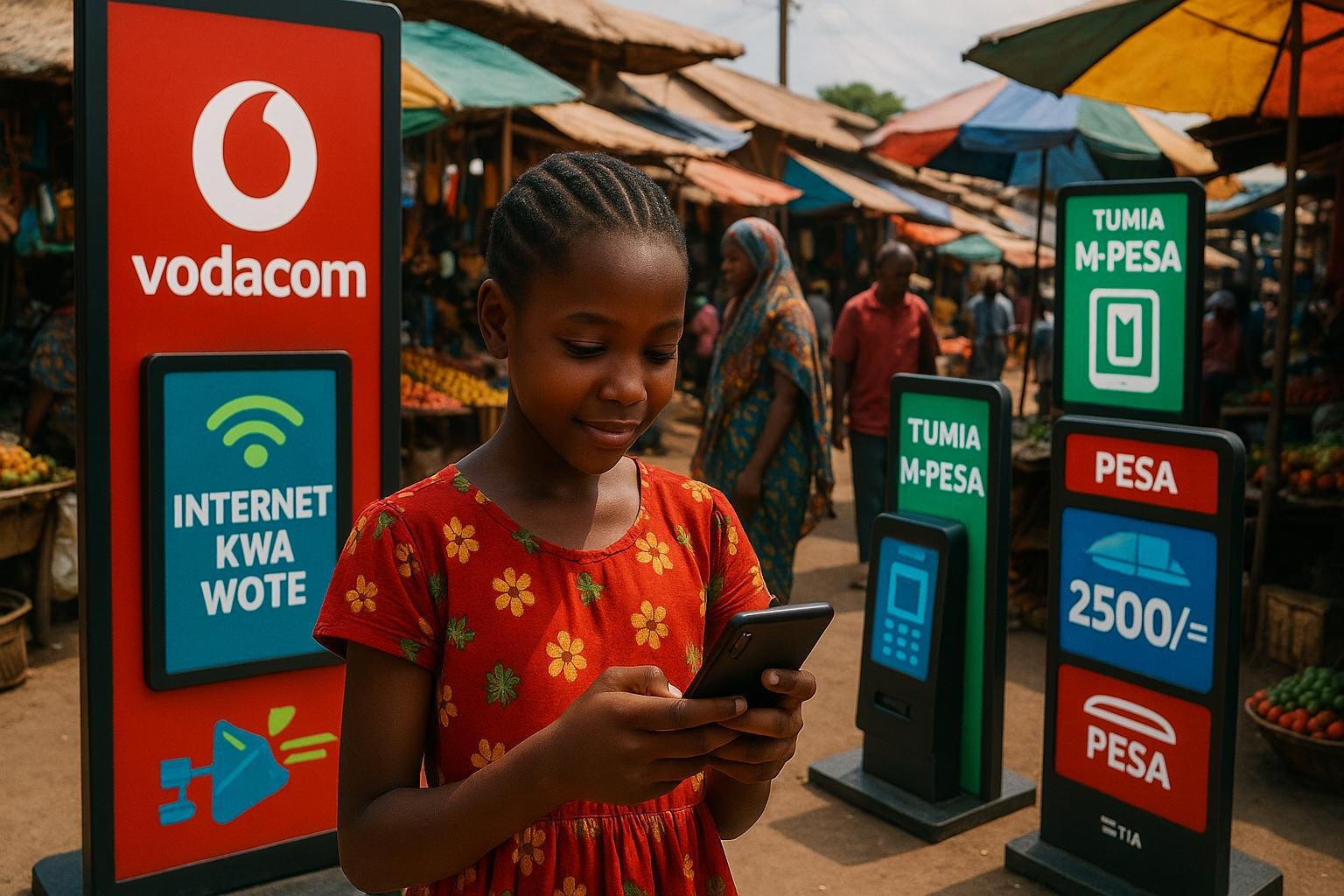
Celebrating a quarter-century of growth, Vodacom Tanzania has driven extensive socio-economic progress through network expansion, mobile money, health initiatives, and digital skills development, positioning itself as a catalyst for Tanzania’s digital future.

Over the last twenty-five years, Vodacom Tanzania has evolved from near-zero mobile connectivity to a pivotal player in Tanzania’s digital transformation, impacting over twenty-two million users and reshapi...
Continue Reading This Article
Enjoy this article as well as all of our content, including reports, news, tips and more.
By registering or signing into your SRM Today account, you agree to SRM Today's Terms of Use and consent to the processing of your personal information as described in our Privacy Policy.
Vodacom Tanzania’s growth story is one marked by resilience and purpose. From its early days, the company focused on extending access to mobile connectivity across the nation, enabling Tanzanians to engage in commerce, healthcare, education, and digital financial services. Today, Vodacom Tanzania boasts broadband coverage reaching more than 70% of the population, supported by substantial investments in 4G and 5G networks. The operator is currently investing nearly $100 million to modernize its network infrastructure, expanding 4G coverage, strengthening 5G capacity, and deploying energy-efficient technology to reduce both operational costs and environmental impact.
One of Vodacom’s landmark achievements lies in its pioneering mobile money service, M-Pesa, a platform that has almost reached nineteen years of operation. According to Besiimire, mobile money adoption has dramatically increased formal financial inclusion, surging from under 26% five years ago to over 76% today, with more than ten million active users transacting over three trillion Tanzanian shillings monthly. Beyond simple money transfers, the M-Pesa ecosystem now offers a suite of financial products such as short-term credit, micro-loans, merchant payments, and business management tools. Innovations like Songesha and M-Koba have further expanded financial access and utility for individuals and merchants alike.
Beyond telecommunications and financial services, Vodacom Tanzania’s social impact initiatives, particularly in health and education, have profoundly affected societal well-being. The M-Mama programme epitomises this impact. Launched as a technology-driven maternal health emergency system, M-Mama connects pregnant women and new mothers in distress with a network of community drivers and healthcare facilities through a toll-free emergency number, 115. Supported by over $10 million in investments from Vodacom Tanzania Foundation and Vodafone Foundation, and developed in partnership with the Tanzanian government and international donors, the programme aims to transport over 300,000 women annually, potentially saving more than 9,000 lives. The initiative has already demonstrated significant success, reducing maternal mortality by 38% in targeted regions and benefitting more than 19,000 mothers and newborns, with comprehensive training for hundreds of health workers and drivers.
Vodacom’s contributions extend to job creation and digital skills development. Over 270,000 Tanzanians earn livelihoods linked to Vodacom’s ecosystem, highlighting the company’s role in economic empowerment. Digital literacy programmes, particularly aimed at youth and girls through initiatives like Code Like a Girl and mobile computer labs, address critical skills gaps, preparing the workforce for a technology-driven future. Besiimire notes the increasing integration of artificial intelligence across Vodacom’s operations, from AI-enhanced customer support and predictive network maintenance to ethical data practices ensuring trust and privacy.
Looking forward, Besiimire emphasises the need for balanced government policies to sustain Tanzania’s digital growth. While taxation is essential for public services, he argues that regulatory frameworks must enable investment in infrastructure, affordable device access, and broadband expansion to fulfil Tanzania’s Vision 2050 ambitions. Harmonisation of policy and regulation, fostering investment incentives, and reducing barriers to digital access will be crucial.
Vodacom is also diversifying its technology offerings beyond mobile telephony into sectors such as Internet of Things (IoT), HealthTech, AgriTech, utilities management, mining, and smart city solutions. Pilot projects targeting water leakage detection, environmental monitoring, telemedicine, and agricultural digital platforms illustrate how digital innovation is being leveraged to address local challenges.
As device prices fall and network capabilities expand, Vodacom anticipates broader 5G uptake among consumers, initially driven by enterprise and fixed wireless applications. Complementing fibre network expansion and satellite solutions aimed at reaching remote areas, these advancements signal a robust trajectory for Tanzania’s digital future.
In summary, Vodacom Tanzania’s twenty-five-year journey is not just one of business growth but of purposeful impact, enhancing financial inclusion, public health, education, and economic empowerment. By continuing to invest in infrastructure, championing policy reform, and leveraging emerging technologies, the company seeks to catalyse Tanzania’s transformation into a connected, inclusive digital economy.
Source: Noah Wire Services
Subscribe to Industry Updates