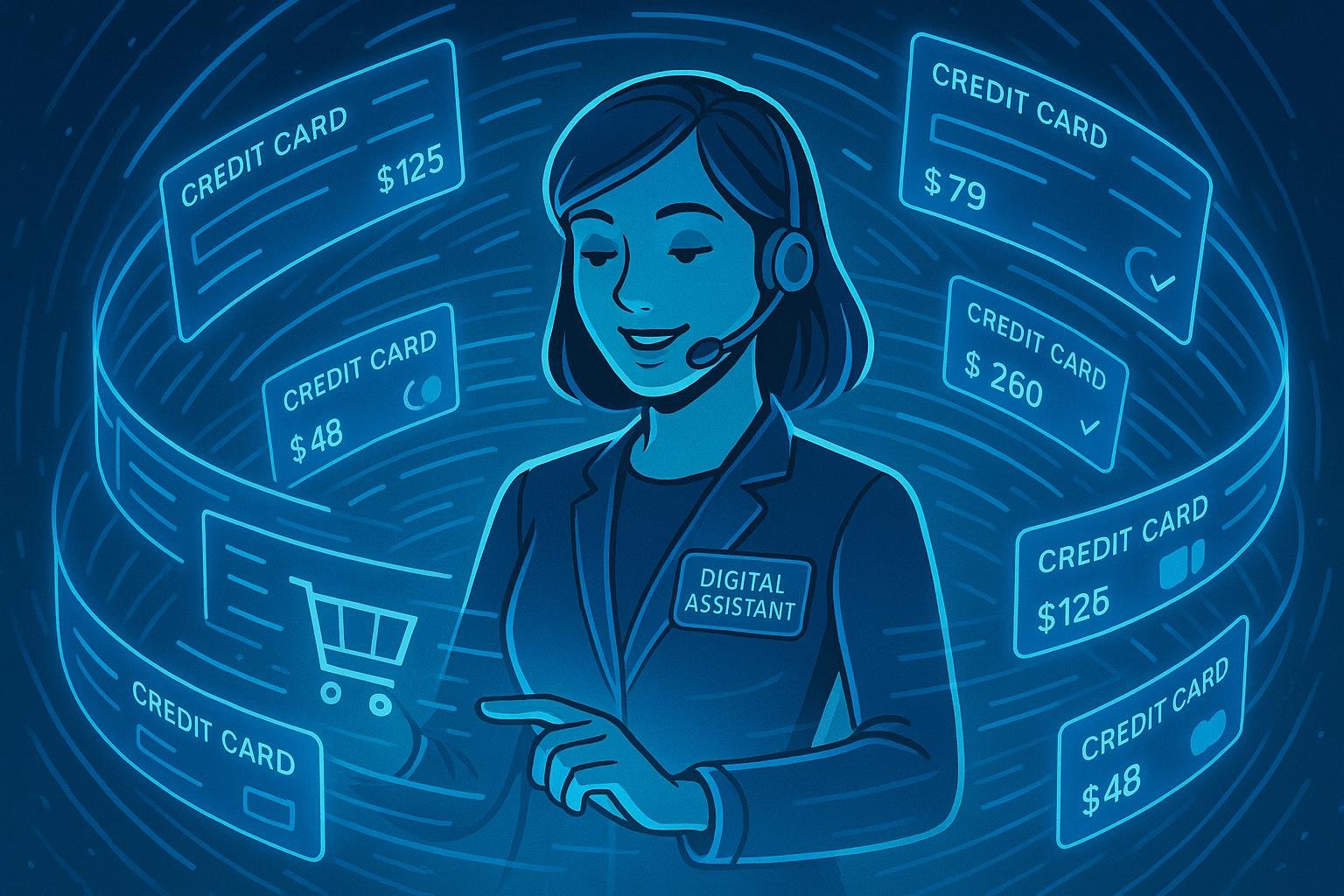
Visa and Mastercard are racing to embed payments into autonomous digital agents set to revolutionise online shopping by 2026, pushing the boundaries of AI‑driven transactions and raising new security and regulatory challenges.

Payment networks Visa Inc. and Mastercard Inc. are positioning themselves at the centre of a coming shift in online commerce as so‑called “agentic” artificial intelligence prepares to shop, bargain and pay on behalf of consumers.
Ac...
Continue Reading This Article
Enjoy this article as well as all of our content, including reports, news, tips and more.
By registering or signing into your SRM Today account, you agree to SRM Today's Terms of Use and consent to the processing of your personal information as described in our Privacy Policy.
Visa and Mastercard are building different but complementary pieces of infrastructure to capture that market. Visa has launched Visa Intelligent Commerce, a suite of APIs and tools that use natural language processing to interpret user intents such as “find the cheapest flight to New York next week” and to execute payments through its network; the company says pilot programmes have already processed hundreds of AI‑driven transactions, according to CNBC and AP. Finextra reports Visa is working with more than 100 partners to develop agentic shopping solutions, and Axios describes Visa’s Trusted Agent Protocol, developed with Cloudflare and supported by partners including Microsoft, Shopify and Adyen, as an open standard intended to help merchants distinguish legitimate shopping agents from malicious bots.
Mastercard is advancing a parallel approach. The company has rolled out an “Agent Toolkit” and Agent Sign‑Up, and announced Agent Pay to help AI assistants integrate with Mastercard’s APIs and payment rails. According to Mastercard’s September announcement, the company is providing tools such as a Model Context Protocol (MCP) server alongside Agent2Agent support, and is collaborating with platforms including Claude, Cursor and GitHub Copilot to make agent integration smoother and more secure.
Beyond the card networks, other payment and tech firms are converging on the same idea. PayPal, according to Investing.com and PYMNTS, is developing agentic services and plans closer wallet integrations with large language models; AP notes Visa’s partnerships with leading AI developers including OpenAI, Microsoft, Anthropic, Perplexity and Mistral. Industry reporting shows demos and early products from startups and developer communities , for example, Fetch.ai and MultiON have demonstrated flight‑booking agents , that already execute real bookings and price comparisons in live tests.
The commercial and technical stakes are substantial. Industry research cited by WebProNews and McKinsey projects agentic commerce could reach into the trillions of dollars over the coming years, with travel often singled out as an early high‑penetration category. The payment networks’ existing scale , collectively processing tens of billions of transactions annually , gives them a distributional advantage: building standardised protocols for AI‑to‑AI communication, tokenisation, authentication and real‑time fraud detection could lock agents into established rails.
That prospect is reshaping merchant strategy and prompting partnerships. Mastercard has discussed loyalty and points redemption integrations with enterprise platforms such as SAP; Visa has signed collaborations across travel and grocery verticals. Yet retailers may resist if agents amplify price pressure by constantly aggregating offers and demanding deep discounts. eMarketer and GeekWire reporting warn of a potential “retailer pushback” even as some merchants welcome more efficient discovery and conversion.
Security, fraud and regulatory scrutiny are central concerns. Both card networks emphasise tokenisation, biometric verification and limits for agent accounts; Investing.com and Axios highlight work on attestation systems and “agent passports” to establish provenance and authorisation for autonomous agents. Regulators in the United States and Europe are already weighing how data privacy rules, anti‑trust safeguards and consumer protections should apply when AI acts as a purchaser. The FTC and GDPR‑era obligations are likely to shape requirements for transparency, traceability and competition, according to industry coverage.
Early consumer receptiveness is mixed but growing. Surveys referenced by WebProNews suggest many shoppers already use AI to aid purchases and a sizeable share would allow agents to buy for them if prices improve. Developers and pilot partners are publishing demonstrations on social platforms showing agents that can research, compare and buy with little human oversight.
As pilots scale, contest over standards and control will intensify. Visa and Mastercard are framing themselves as neutral intermediaries offering APIs and protocols that enable compliant integrations across AI ecosystems, while tech platforms and wallet providers such as PayPal and OpenAI push complementary approaches. According to PYMNTS and Digital Commerce 360, the coming year will test whether open standards such as the Trusted Agent Protocol and MCP gain broad adoption or whether fragmented solutions limit interoperability.
The transition from human‑driven clicks to delegated, agentic procurement presents both opportunity and risk: companies that stitch together secure, auditable payment rails for autonomous agents may reap massive volumes of commerce, but the same systems will need robust defences against fraud and clear regulatory guardrails to protect consumers and competition. Industry reporting indicates the next 12–24 months will be decisive as pilots become products and policy debates move from theory to enforcement.
Source: Noah Wire Services
Subscribe to Industry Updates