


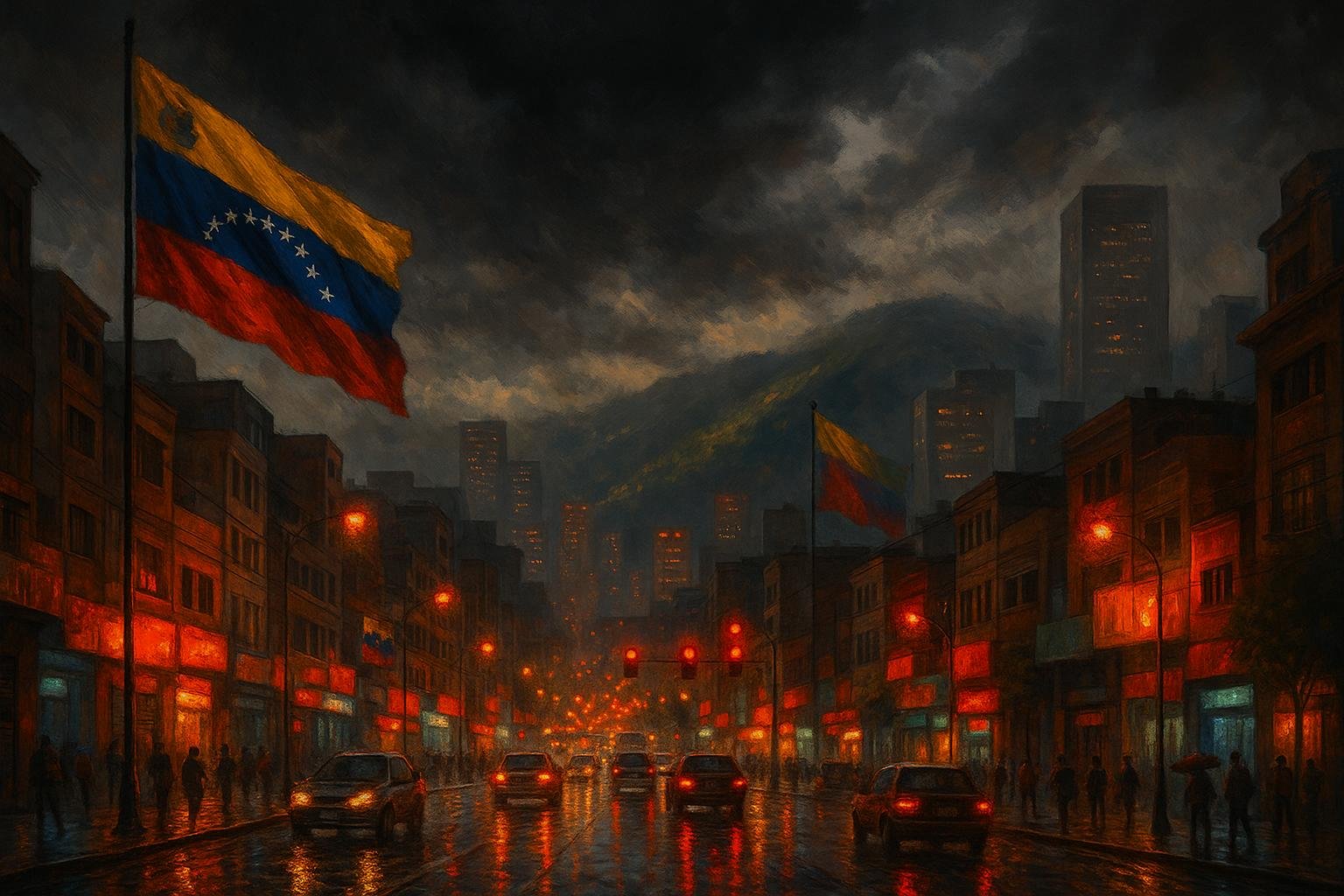
Following Nicolás Maduro’s extradition, Delcy Rodríguez’s rise to interim presidency signals a complex balance between regime continuity and potential rapprochement with the United States amid ongoing concerns over entrenched power and regional influence.

Following the capture and extradition of Nicolás Maduro to the United States, Delcy Rodríguez , a long‑time figure in Venezuela’s Bolivarian establishment , was sworn in as interim president, a change that ...
Continue Reading This Article
Enjoy this article as well as all of our content, including reports, news, tips and more.
By registering or signing into your SRM Today account, you agree to SRM Today's Terms of Use and consent to the processing of your personal information as described in our Privacy Policy.
According to InterNewscast, Rodríguez assumed the presidency on Monday and was sworn in by her brother, Jorge Rodríguez, the head of the National Assembly. The outlet quoted President Donald Trump as saying Saturday that Rodríguez, 56, stood “willing to do what we think is necessary to make Venezuela great again.” InterNewscast also reported that an anonymous former Venezuelan official told Fox News Digital that “The regime remains unchanged, and she harbors animosity towards the West,” warning that her elevation represents continuity from within Maduro’s inner circle rather than a break with the past.
Rodríguez’s résumé is closely tied to the structures and personalities of the Chávez and Maduro eras. She has served as foreign minister, president of the Constituent Assembly, vice‑president and, most recently, oil minister. The InterNewscast profile noted allegations that her tenure has been mired in controversy, including claims that Venezuelan passports and other civil documents were sold abroad , charges she publicly denied at the United Nations General Assembly in 2016. The U.S. Treasury Department’s Office of Foreign Assets Control sanctioned Rodríguez in 2018, and those sanctions remain in place, InterNewscast said.
Critics point to family and ideological roots as further evidence of continuity. InterNewscast recounted that Rodríguez is the daughter of Jorge Antonio Rodríguez, a Marxist guerrilla leader and co‑founder of the Socialist League, who died in police custody after his 1976 arrest in a high‑profile kidnapping case. The anonymous former official cited by Fox News Digital linked that history to Rodríguez’s alleged hostility to Western democracies, saying “That ordeal is the foundation and the origin of Delcy’s hatred of the West and of democracy.” The same source , speaking on condition of anonymity , repeated unproven allegations around “Delcygate,” asserting she had transported gold into Europe and that “She had 40 bags full of gold in a private jet as vice president.” Rodríguez has denied such claims.
Those alarmed by the appointments have broadened their critique beyond personnel. The anonymous official told Fox News Digital that “Venezuela has become an occupied territory by Iran, China, Russia, and Cuba,” and described armed groups including FARC and ELN as controlling large areas, warning of “atrocity crimes… plus there’s kleptocracy and grand corruption, which are all still in place.” Similar concerns about an entrenched elite recycling itself , “they rotate the same people because they don’t have anybody else that they trust” , were voiced in several domestic and U.S. media accounts cited by InterNewscast and echoed on other outlets.
Yet other accounts emphasise a different, more pragmatic strand to Rodríguez’s early signals. According to Al Jazeera, on 5 January Rodríguez publicly toned down previous denunciations of the United States and expressed a willingness to cooperate on shared development within the framework of international law, a shift the broadcaster linked to the U.S. military operation that led to Maduro’s capture. The Guardian described her position as a “tightrope,” noting that Rodríguez faces the task of maintaining regime continuity while under intense international pressure and that her outreach to Washington could be a strategic attempt to stabilise the country.
The divergent portrayals mark a critical moment for Venezuela’s foreign relations and domestic governance. Industry and diplomatic observers will be watching whether Rodríguez’s stated readiness to engage with the United States translates into concrete steps that affect sanctions, oil sector management and humanitarian access , or whether the concerns voiced by former officials and critics about entrenched networks of power prove prescient.
For now, Rodríguez’s presidency combines entrenched institutional links to the Chávez‑Maduro era, a record that includes sanctions and disputed allegations of misconduct, and a newly public willingness to explore engagement with the United States, according to Al Jazeera and The Guardian. At the same time, anonymous critics cited by Fox News Digital and reported by other outlets continue to portray her as part of an unbroken elite resistant to Western influence, underscoring how contested Venezuela’s political future remains.
Source: Noah Wire Services
Subscribe to Industry Updates

