


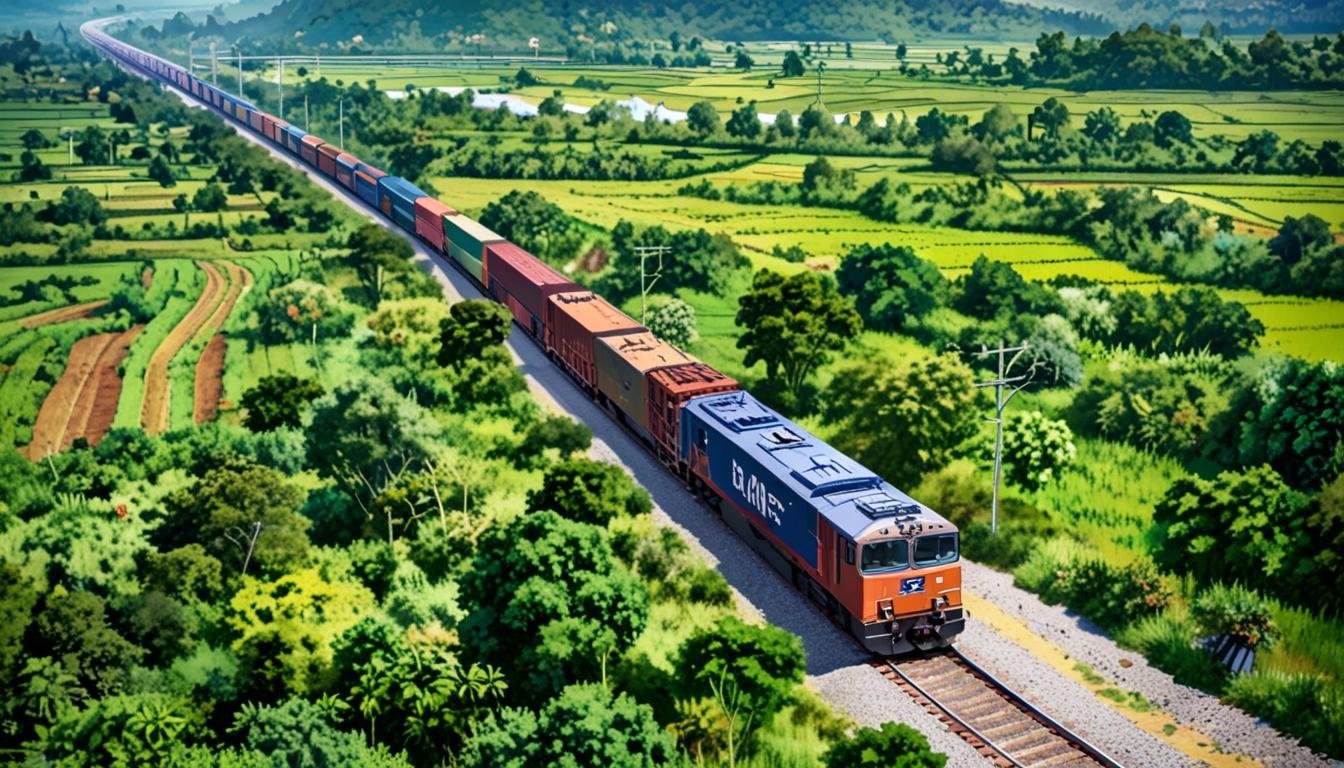
**Philippines**: The US Trade and Development Agency has increased funding for the Luzon Economic Corridor to $3.8 million, focusing on the Subic-Clark-Manila-Batangas freight railway pre-feasibility study, while tariff talks aim to strengthen bilateral trade and safeguard local industries.
The United States Trade and Development Agency (USTDA) has announced an additional grant of $1.3 million to support the Luzon Economic Corridor (LEC), bringing the total funding for the project to $3.8 million. This update was communicated by the Office of the Special Assistant to the President for Investment and Economic Affairs (OSAPIEA) on Sunday, emphasising the ongoing bilateral partnership between the US and the Philippines.
This new financial commitment is primarily focused on developing the pre-feasibility study for the Subic-Clark-Manila-Batangas (SCMB) Freight Railway, a key component of the LEC. The enhancement of this corridor is seen as instrumental in promoting transformative infrastructure projects designed to link essential business hubs throughout the Philippines, such as Subic Bay, Clark, Manila, and Batangas.

The announcement follows a competitive selection process for consultants, and the USTDA is expected to reveal the chosen firm shortly, pending final due diligence checks. Secretary Frederick Go, head of OSAPIEA, indicated that the department will convene with the Department of Transportation (DoTr) and the US Embassy next week to discuss the signing of a Beneficiary Agreement for the freight railway. In parallel, there is also a separate $1.2 million grant from Swedfund aimed at complementing this initiative.
Secretary Go highlighted the significance of this development, stating, “Great positive news. This milestone demonstrates that RP-US economic ties are stronger than ever. The increased USTDA grant for the SCMB Rail pre-feasibility study signals renewed investor confidence and will translate to more job opportunities along the corridor.”
The LEC aims to bolster economic activity through enhanced logistics, reduced transportation costs, and the generation of employment opportunities. The initiative is further supported by international partners, including Japan, which are collaborating with the Philippines to foster regional integration and infrastructure-led growth.
In a separate undertaking, Secretary Go reported on productive tariff negotiations with the US Trade Representative, Jamieson Greer, concerning the 17 percent tariff currently imposed on all US-bound Philippine exports. The discussions focused on the welfare of local industries, which Secretary Go identified as a central concern. “We made sure to put the welfare of Philippine local industries at the centre of our negotiations. We are hopeful that these discussions mark the beginning of a process toward arrangements from both sides that will not only strengthen US-Philippines trade ties but also help diversify our country’s export markets,” he stated.
Although the dialogue yielded positive outcomes, it remains unclear whether the tariffs will be reduced. Secretary Go noted that the overarching goal was to establish a partnership that would support the growth of domestic industries.
Additionally, Department of Trade and Industry (DTI) Secretary Ma. Cristina A. Roque expressed optimism regarding the discussions, stating, “We were able to convey to the USTR our local industries’ concerns, and we are hopeful this will yield our desired results.”
US Ambassador to the Philippines, Babe Romualdez, also participated in the negotiations, acknowledging the strategic value of the US-Philippines alliance and the complementary nature of their economies. While he refrained from delving into specifics, Romualdez indicated that both nations aspire to reach an advantageous agreement. “We cannot discuss details for now. We are confident both countries will come up with a good and mutually beneficial agreement,” he conveyed, also mentioning the possibility of a second round of talks regarding the tariffs.
Source: Noah Wire Services

