


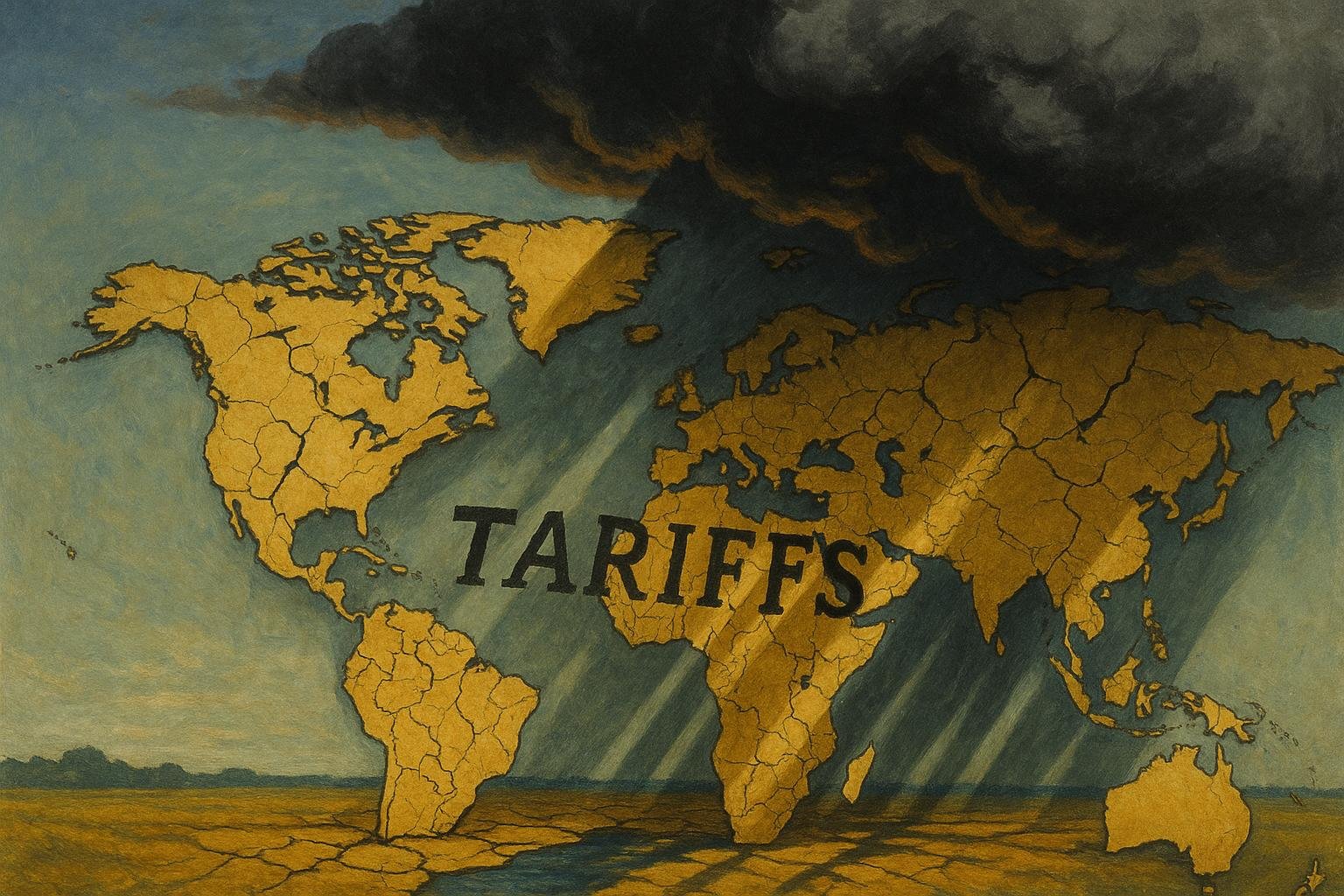
Donald Trump’s proposed tariffs on UK imports could raise costs for manufacturers, consumers, and exporters, escalating diplomatic tensions and risking a long-term economic slowdown for Britain.

Donald Trump’s threat to impose a 10 per cent tariff on all goods imported from the UK from 1 February, rising to 25 per cent from 1 June, has shifted a diplomatic spat over Greenland into a broader economic risk for Britain’s manufacturers, exporters and consumers, accord...
Continue Reading This Article
Enjoy this article as well as all of our content, including reports, news, tips and more.
By registering or signing into your SRM Today account, you agree to SRM Today's Terms of Use and consent to the processing of your personal information as described in our Privacy Policy.
The levy, the White House has said, would apply alongside existing sector-specific duties rather than replacing them, and would cover most UK food, drink, automotive, technology and manufactured goods shipped to the United States. The Government has sought to raise the matter with Washington: Sir Keir Starmer called the plan “completely wrong”, and warned of the consequences for trade ties with a key ally.
Immediate and sectoral effects
According to the iNews analysis, the new baseline tariff would directly hit UK food exports such as cheese and salmon and sits alongside the risk of retaliatory duties that could target specific products. UK-aligned trade arrangements struck in 2025 , for example the removal of a 20 per cent tariff on US beef under the Economic Prosperity Deal , could be suspended if the dispute escalates, raising the prospect of higher costs for some imported foodstuffs.
The automotive sector is highly exposed. Government data cited by iNews show vehicles and parts account for a substantial share of UK goods exports to the US; the introduction of separate 25 per cent tariffs on passenger vehicles and light trucks in April, followed by duties on parts, has already reduced exporters’ margins. That pressure, combined with parts rerouting and supply-chain disruption, risks higher costs for buyers and for servicing and repairs over time.
Technology and semiconductors are another flashpoint. The President has publicly discussed duties of up to 100 per cent on some semiconductor imports, and iNews noted that higher chip costs would feed through to devices assembled outside the US because chips remain a key input. Separately, the removal of the US $800 duty-free threshold for commercial imports has already raised logistics charges for low-value parcels, adding to costs faced by UK shoppers buying from abroad.
Metal tariffs introduced earlier , a 25 per cent levy on steel and aluminium raised to 50 per cent and widened to additional products, and a 50 per cent tariff on copper-based products , are an existing channel through which US measures can raise costs in the UK by lifting global metal prices and complicating exporters’ paperwork and production planning.
Macro risks and official warnings
Central bankers and international organisations have warned that US-led trade measures could carry material macroeconomic costs. According to The Guardian, in March 2025 Bank of England Governor Andrew Bailey said the US-led trade war posed “significant risks” to the UK economy, warning that new US tariffs could push up UK prices and complicate the Bank’s assessment of inflation and growth.
International institutions have recorded a wider drag on growth. The OECD in March 2025 downgraded global growth forecasts and warned that consumers would bear “much of the burden” of higher tariffs, and the International Monetary Fund later projected that trade tensions would trim global growth by about 0.3 percentage points in 2025, while upgrading its near-term forecast for the UK to about 1.2 per cent amid a complex interplay of factors.
Independent modelling underscores the potential scale of the shock. Analysts at the Centre for Economics and Business Research projected that President Trump’s proposed tariffs could lower UK GDP by around 0.9 per cent by the end of his term, while The Guardian reported modelling from the National Institute of Economic and Social Research suggesting a more severe, long-run scenario in which an all-out trade war could shave several percentage points from UK output over a decade.
Short-term boost, longer-term drag
Not all effects are necessarily contractionary in the short term. The Institute of Chartered Accountants in England and Wales reported in May 2025 that UK activity in some export sectors was brought forward ahead of tariff deadlines, producing a temporary boost in output for items such as IT equipment, machinery and car exports. ICAEW cautioned, however, that the uplift was likely temporary and would be followed by a sharper slowing as tariffs bite, inflation rises and uncertainty weighs on investment and productivity.
Who ultimately pays
Although tariffs are nominally levied on importers, many experts and industry figures expect costs to be passed on to end consumers over time. Thomas Pugh, UK economist at RSM, told iNews that “there would be no need for manufacturers to increase prices in the UK and Europe, and there should be no impact on consumers here”, adding that “US consumers would have to pay higher prices”. He warned, however, that retaliatory tariffs or anti-coercion legislation would have a much bigger effect on the UK and EU.
Marco Forgione, director general of the Chartered Institute of Export & International Trade, told iNews the tariff is “a cumulative tariff, so one that is on top of the existing tariffs”, and said UK businesses could either absorb costs to remain competitive or risk losing market share in the US. “Automotive, pharmaceuticals, aerospace, machinery, technology, food and drink are all industries that could be affected,” he said, noting the speed of consumer impact depends on stocks already in the marketplace but that the announcement’s effects are “pretty quick on consumers”.
Policy and political implications
The dispute has diplomatic as well as economic consequences. The White House framing , presenting tariffs as leverage to secure concessions over Greenland and other strategic interests , represents an unconventional use of trade policy that allies and exporters say risks escalation. UK ministers have signalled direct engagement with Washington, while analysts warn that prolonged uncertainty will feed through to business investment decisions and sterling exchange rates, with knock-on effects for import prices and inflation.
Outlook
Economists and international bodies present a range of scenarios: a temporary pre-tariff surge in activity, a moderate hit to GDP if duties remain limited and contained, or a deeper, long-lived slowdown in a more extensive trade war. Industry data and modelling cited by The Guardian, the CEBR and the OECD suggest upside risks to inflation and downside risks to growth, while the IMF’s assessment in December 2025 indicated that, despite the headwinds, the UK’s near-term growth outlook remained resilient relative to earlier forecasts.
For UK households the most palpable channels are higher prices for food, some manufactured goods, technology and cars, and the risk that sustained inflation could keep borrowing costs higher for longer. For exporters and manufacturers the immediate challenge is to absorb or reprice increased costs, reroute supply chains and manage the diplomatic fallout that will determine whether the tariffs remain a temporary threat or a lasting brake on trade.
Source: Noah Wire Services
Subscribe to Industry Updates

