


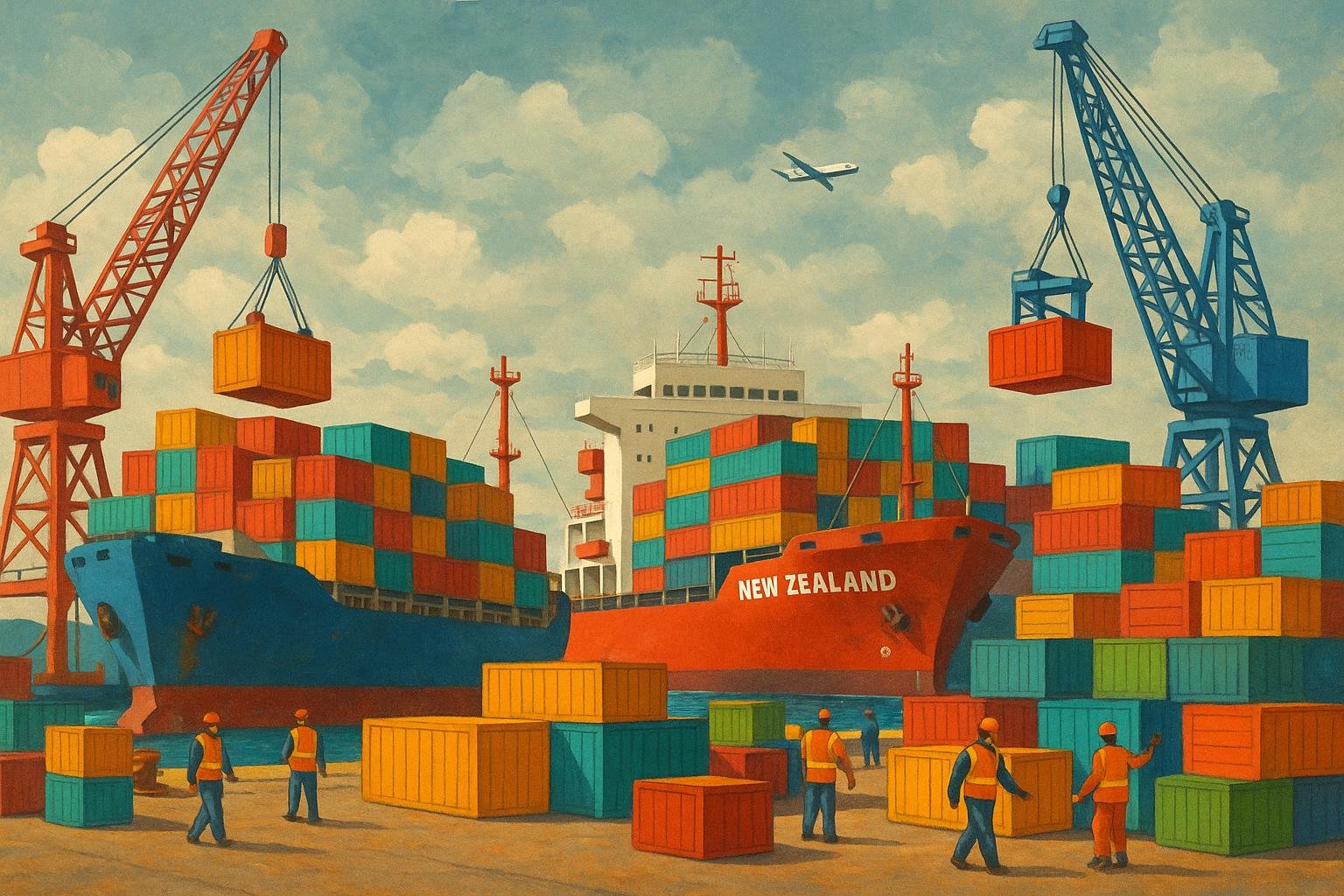
The US Supreme Court’s ruling against President Trump’s tariff authority has plunged exporters into fresh uncertainty, prompting industries to prepare for potential policy shifts amid ongoing trade tensions with the US.

Exporters to the United States face renewed uncertainty after the US Supreme Court on Saturday struck down President Donald Trump’s use of the International Emergency Economic Powers Act to impose global tariffs last year, ruling that the statu...
Continue Reading This Article
Enjoy this article as well as all of our content, including reports, news, tips and more.
By registering or signing into your SRM Today account, you agree to SRM Today's Terms of Use and consent to the processing of your personal information as described in our Privacy Policy.
The 6-3 decision concluded that while IEEPA allows the president to “regulate commerce” with foreign nations to address an economic emergency, it does not confer authority to impose import duties, a move the court said would amount to a sweeping transfer of taxing power from Congress to the executive. According to The Guardian, the ruling marks the first time the court has overturned one of Mr Trump’s second-term policies.
New Zealand exporters were among those affected when a 10% tariff was introduced in April 2025 and subsequently raised to 15% in August. Meat, dairy and horticulture industries reported substantial costs: the Meat Industry Association estimated roughly $300 million in reciprocal tariffs on red meat since April, while kiwifruit marketer Zespri said it had incurred about $40 million. Fonterra has declined to specify its losses, though its trade strategy general manager Justine Arroll warned the trade backdrop would stay volatile and additional policy changes remain possible.
Within hours of the Supreme Court’s ruling, the White House announced a fresh global tariff under Section 122 of the Trade Act of 1974, initially set at 10% and later raised to 15%. Section 122 permits the president to impose duties to address “large and serious” trade deficits, but any such measures are limited to a 150-day duration. The administration has signalled plans to pursue further tariff action under alternative legal authorities, Arroll said.
The court’s judgment follows earlier litigation at the United States Court of International Trade, which in May 2025 found that the administration had exceeded its statutory powers; that ruling was appealed and briefly stayed while the case moved through the federal courts. TASS and other outlets noted the Supreme Court emphasised the absence of historical precedent for treating IEEPA as a general grant of tariff authority.
For New Zealand exporters, practical questions now centre on whether duties already paid will be returned. The Supreme Court did not rule explicitly on refunds. Chapman Tripp litigation partner Nicola Swan told Farmers Weekly prior to the high court’s decision that while refunds are a normal part of US customs processes, the scale of these tariffs would make any recovery “unusual.” Any remittances, she said, would likely go to US importers, leaving exporters dependent on those buyers to pass refunds downstream.
The Trump administration exempted certain foodstuffs, including beef and kiwifruit, from tariffs in November as it sought to ease cost-of-living pressures. After that exemption, beef reverted to the longstanding country-specific quota rate of US4.4c/kg. Fonterra’s group director of global external affairs, Simon Tucker, reiterated that the US remains an important market and that tariffs add costs through supply chains ultimately paid by consumers, according to Rural News.
Industry leaders say the final financial impact will take time to determine. Fonterra’s global ingredients president, Richard Allen, told Farmers Weekly it is too early to gauge the full consequences, noting that many of the cooperative’s exports to the US are specialised products the United States does not produce in sufficient quantities, which could blunt some tariff effects.
As legal and administrative processes play out, exporters are being advised to maintain strong links with American buyers and to prepare for a fluid policy environment. The Supreme Court’s decision curtails a major expansion of executive trade power, but the rapid turn by the administration to alternative statutory mechanisms demonstrates how quickly the practical consequences for traders can change.
Source: Noah Wire Services
Subscribe to Industry Updates

