


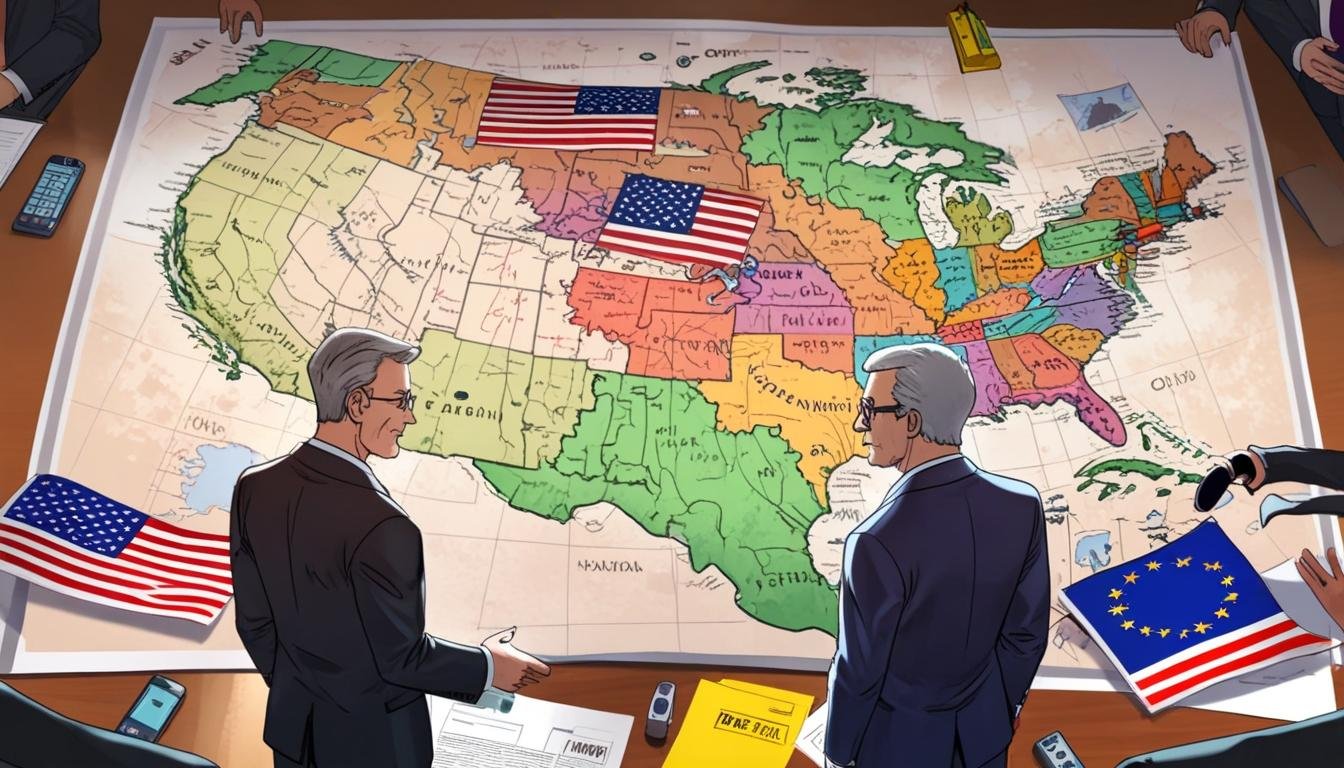
**Brussels**: As the US prepares to unveil new tariffs on European goods, EU officials express concerns over potential economic fallout. With retaliatory measures in the pipeline, both sides could face significant consequences in their ongoing trade dispute, impacting consumers and established supply chains.
As the ongoing trade tensions between the United States and the European Union escalate, the White House is set to announce a new round of tariffs on European goods. Scheduled for April 2, this announcement has raised concerns among European officials and industry leaders regarding the potential economic ramifications of a tit-for-tat escalation.
The specifics of these “reciprocal” tariffs remain unclear, yet reports indicate that the rates will take into account a variety of factors including value-added tax, subsidies, and regulatory measures. Analysts suggest that approximately one-third of EU goods exported to the United States could face tariffs of up to 20%. Such a significant increase in costs may threaten to plunge the European economy into recession.

In response to this potential US move, the European Union has reportedly prepared retaliatory duties on US products amounting to as much as $28 billion. This could lead to substantial price hikes for American consumers, affecting a range of products from prescription drugs to manufacturing machinery and agriculture inputs.
European officials have expressed their outrage over the proposed tariffs, reflecting a sentiment of frustration at the current U.S. administration’s approach to trade. Speaking to Bloomberg Opinion, European leaders emphasise that the implications of a trade war could ultimately prove detrimental to both sides, with higher costs for consumers and disruptions to established supply chains.
While the EU has the capacity to respond with measures that target specific American products—similar to strategies employed during the previous administration under Donald Trump—experts warn that broader retaliatory actions could cause self-inflicted harm. The suggestion is for Europe to avoid measures that could adversely impact U.S. financial, tech, or other service companies, as these sectors benefit European consumers and companies alike.
In anticipation of potential disruptions, European leaders are considering strategies that align economic interests with U.S. demands. For example, increasing imports of U.S. liquefied natural gas would not only meet a key requirement from Washington but also help reduce dependency on Russian energy sources. Furthermore, enhanced purchases of U.S. military equipment could bolster European defence capabilities amid growing security concerns.
Amidst these trade tensions, there is also a call for Europe to rectify its own trade discrepancies. Reducing the 10% tariff on cars to align with the U.S. rate of 2.5% is one potential measure under consideration, despite the challenge it presents to European car manufacturers. Additionally, taking a more constructive stance towards technology regulations might ease current strains in US-EU relations while fostering innovation domestically.
Looking beyond immediate trade disputes, analysts suggest that Europe must also work to fortify its military and economic resilience in the face of evolving global dynamics. Germany’s recent commitment to expand defence spending, alongside proposals from European Commission President Ursula von der Leyen to mobilise €800 billion ($867 billion) for military enhancement across the EU, signals a concerted effort to strengthen collective capabilities.
Furthermore, establishing a robust financial-markets union stands as a priority in order to effectively allocate capital and spur innovation within the EU. Enhancing energy market regulations, standardising service regulations, and accelerating digital integration are other initiatives that could help buffer the bloc against potential shocks.
In summary, as the United States prepares to unveil its new tariff strategy, the European Union faces significant decisions that could shape its economic landscape and international relations. The ability to navigate these challenges while maintaining economic stability remains a pressing concern for EU leaders and businesses alike.
Source: Noah Wire Services

