


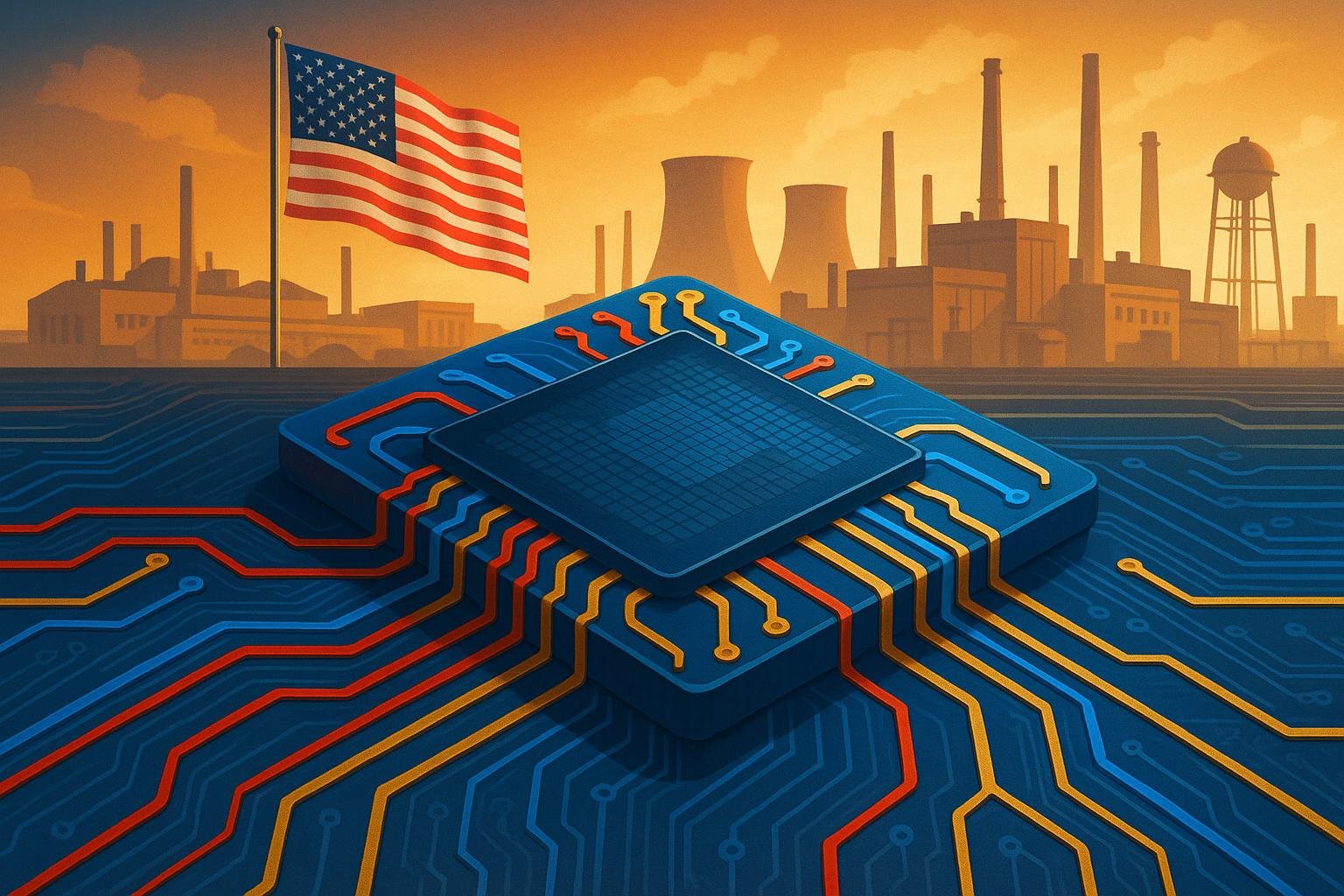
President Donald Trump has announced a targeted 25% tariff on certain advanced computing chips to protect US national security and encourage domestic semiconductor manufacturing, signalling a strategic shift amidst evolving global tech supply chains.

On 14 January 2026, President Donald J. Trump signed a proclamation invoking Section 232 of the Trade Expansion Act of 1962 to impose a 25% tariff on imports of a narrowly defined set of high‑end computing chips, a move t...
Continue Reading This Article
Enjoy this article as well as all of our content, including reports, news, tips and more.
By registering or signing into your SRM Today account, you agree to SRM Today's Terms of Use and consent to the processing of your personal information as described in our Privacy Policy.
The proclamation follows a nine‑month Section 232 investigation, the White House said, and is presented as part of a broader strategy to reduce dependence on foreign supply chains and incentivise semiconductor production on US soil. Government figures cited by the administration note that the United States currently manufactures roughly 10% of the chips it requires, a shortfall the proclamation links to economic and security vulnerabilities. According to the report by the White House, exemptions exist for chips imported to support the development of the US technology supply chain and to strengthen domestic manufacturing capacity for semiconductor derivatives, but the administration has not yet provided detailed criteria for how companies will qualify for those carve‑outs.
The policy is designed to be selective rather than blanket: the administration says chips and derivative devices imported for US data centres, startups, non‑data‑centre consumer and civil industrial applications, and US public‑sector uses will generally be spared. Yet other outlets reporting on the proclamation have described variations in how the policy will be applied. Tom’s Hardware, for example, emphasised that the measures are framed as curbs on exports bound ultimately for overseas customers and noted additional procedural requirements, including a 90‑day review window and rules intended to prevent circumvention through downgraded chip variants or grey‑market routes. The Washington Post and The Guardian likewise reported the tariffs as narrowly focused but warned the proclamation could be a first step, with the White House signalling potential future expansions to a wider range of semiconductors and related products.
Industry observers warn the tariff will reshape global AI hardware flows. Analysts say Nvidia’s accelerators power a substantial share of the data centres that underpin current generative AI services, and any added cost on imports could raise the price of AI infrastructure outside the United States. Tom’s Hardware pointed out that the new rules could affect American companies’ overseas data‑centre operations because even US‑origin firms shipping chips abroad may now fall under export restrictions. The decision also arrives against a backdrop of reciprocal trade frictions: Chinese companies and platforms have already begun shifting toward domestic alternatives in some cases, with reports that Alibaba and others are adopting local designs such as Huawei’s accelerators.
The White House framed the tariff as both protective and coercive: the administration has previously floated much larger tariff options, including suggestions of levies up to 100% on some chips and semiconductors, using exemptions as leverage to persuade firms to expand US manufacturing. The fact sheet reiterates that approach, tying relief from duties to investments that would bolster domestic production. The move follows earlier public comments from Mr Trump about allowing certain sales of advanced chips abroad under conditions that would secure financial or strategic returns for the US government.
Chipmakers and cloud providers are facing immediate uncertainty. Nvidia and AMD did not immediately provide comments to the press at the time of the announcements, and the White House did not offer detailed guidance on the exemption process. Financial and technology news coverage has underlined the operational questions that remain: how customs authorities will identify affected products, how companies will certify intended end‑use, and how longstanding global supply agreements will be reconciled with the new US policy. The administration says exporters will be required to demonstrate that domestic demand is met before shipments bound for foreign customers may proceed, a requirement reported in industry coverage as likely to complicate international sales and planning.
Beyond the short term, the proclamation is intended to accelerate a strategic shift. The White House and media reporting frame the tariffs as part of a broader effort to “reshore” advanced manufacturing and keep the US ahead in the race to develop and deploy artificial intelligence. Critics, however, caution that trade measures of this type risk prompting retaliatory steps, disrupting global supply chains concentrated in Taiwan, South Korea and China, and increasing costs for overseas firms and consumers that rely on US‑designed accelerators. As multiple outlets noted, the administration’s signalling that the tariffs could expand raises the prospect of escalating restrictions on an industry that is both globally integrated and central to national competitiveness.
For now, the policy’s full effects will depend on implementing guidance yet to be released and on how companies, trading partners and customs authorities interpret the carve‑outs and compliance requirements. The White House has described the action as calibrated to protect national security while encouraging domestic production; industry reporting stresses that the practical and economic consequences for AI infrastructure and global chip markets will become clearer only as regulators publish the rules and firms begin to adjust their supply chains.
Source: Noah Wire Services
Subscribe to Industry Updates

