


**Washington:** The US Army is adopting a transformative ‘team-of-teams’ model for its Next Generation Command and Control initiative, encouraging diverse vendor participation to enhance innovation, agility, and responsiveness in military technology integration, while moving away from traditional single-vendor reliance.
The United States Army is embarking on a transformative approach to its Next Generation Command and Control (NGC2) initiative, with plans to involve a diverse array of vendors in a “team-of-teams” model. This new strategy aims to foster self-organisation among contractors rather than adhering to traditional single-vendor integration systems. Officials have emphasized that the NGC2 will mark a fundamental departure from existing processes, adopting a clean-slate methodology designed to enhance agility and leverage modern software-based architectures.
Over the past year, Army Futures Command has conducted extensive experimentation to validate capabilities for NGC2. Concurrently, the program office and the Army Contracting Command have been developing their acquisition and contracting strategies as the initiative transitions from prototypes to a formal programme of record.

Joseph Welch, the deputy to the commander of Futures Command, highlighted the Army’s collaboration with a range of innovative technology companies, both large and small. He stated, “By encouraging them to self-organize and solve the problem for us, to enable them to team with each other instead of us telling them how to do business, we’re largely getting government bureaucracy out of the way and unleashing the talents that already exist in our commercial enterprise within the United States to help us solve this challenge.”
In pursuit of this initiative, the Army has opted for a more flexible approach to defining its requirements. It has introduced a characteristics-of-needs statement, described as a living document that will undergo updates every 90 days. This strategy allows the Army to articulate broad challenges for the industry to address, rather than dictating specific requirements.
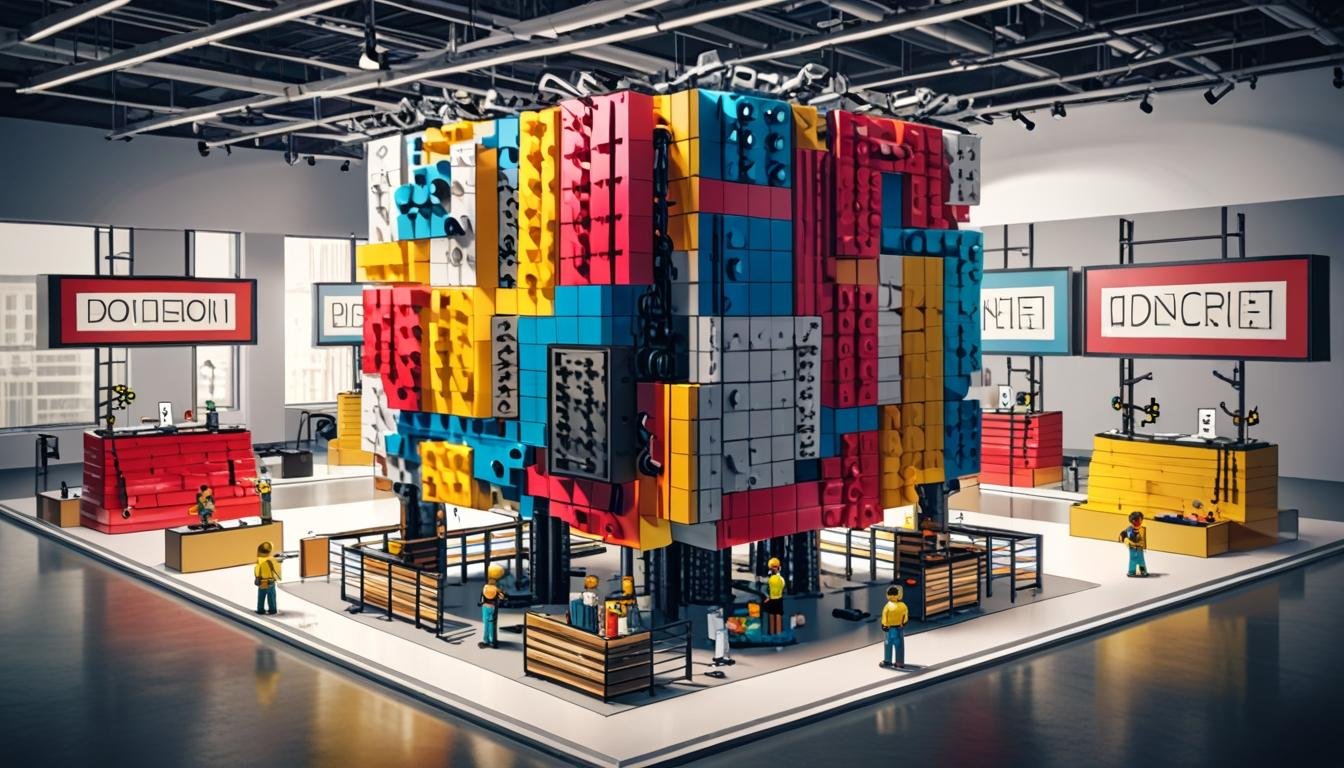
The Army seeks a multitude of contributing teams rather than remaining reliant on a single vendor for integration. Officials noted that a sole integrator model has often fallen short, as companies may not possess expertise across all necessary areas. Alex Miller, chief technology officer for the chief of staff, likened this approach to “Lego blocks,” where different vendors can contribute unique components.
Continuous competition among teams is envisioned as a key element in ensuring optimal technology integration. Lt. Gen. Robert Collins, the military deputy in the office of the assistant secretary of the Army for acquisition, logistics, and technology, remarked, “I think there’s an opportunity here where we can have continual competition to make sure we’ve got best of breed across the capability.” This competitive model is built upon an open systems architecture, enhancing collaboration opportunities across various types of companies.
As the Army re-evaluates its vendor relations, officials maintain a commitment to accountability throughout the engagement process. Welch stated, “We need to be a better customer,” outlining the importance of partnership and understanding shared incentives and conflicting motivations.
The Army is exploring alternative purchasing models, such as paying for services based on usage, which may align better with its operational needs and fiscal responsibilities. Additionally, it is moving away from static paper demonstrations, requiring companies to conduct live tests of their solutions.
Contracts related to NGC2 are described as “imminent,” although no specific timeline has been disclosed. Past communication suggested a target date of May for the awarding of contracts, following demonstrations at Project Convergence Capstone 5 in March.
The Army plans to leverage insights gained from Project Convergence while continuing to develop prototypes. After Project Convergence, the Army will outfit an entire division with the new architecture, with a subsequent plan to engage all units in operational exercises during Project Convergence Capstone 6.
Notably, the fielding of NGC2 is set to differ significantly from traditional processes, as its cloud-based nature will facilitate broader access for multiple divisions simultaneously. Miller expressed confidence that this approach would allow for concurrent operations across different units as soon as the system goes live.
Officials also indicate that the expected costs for NGC2 will align with current spending on existing network and command-and-control systems, aiming for efficient resource utilisation to deliver a modernised operational framework.
Source: Noah Wire Services

