


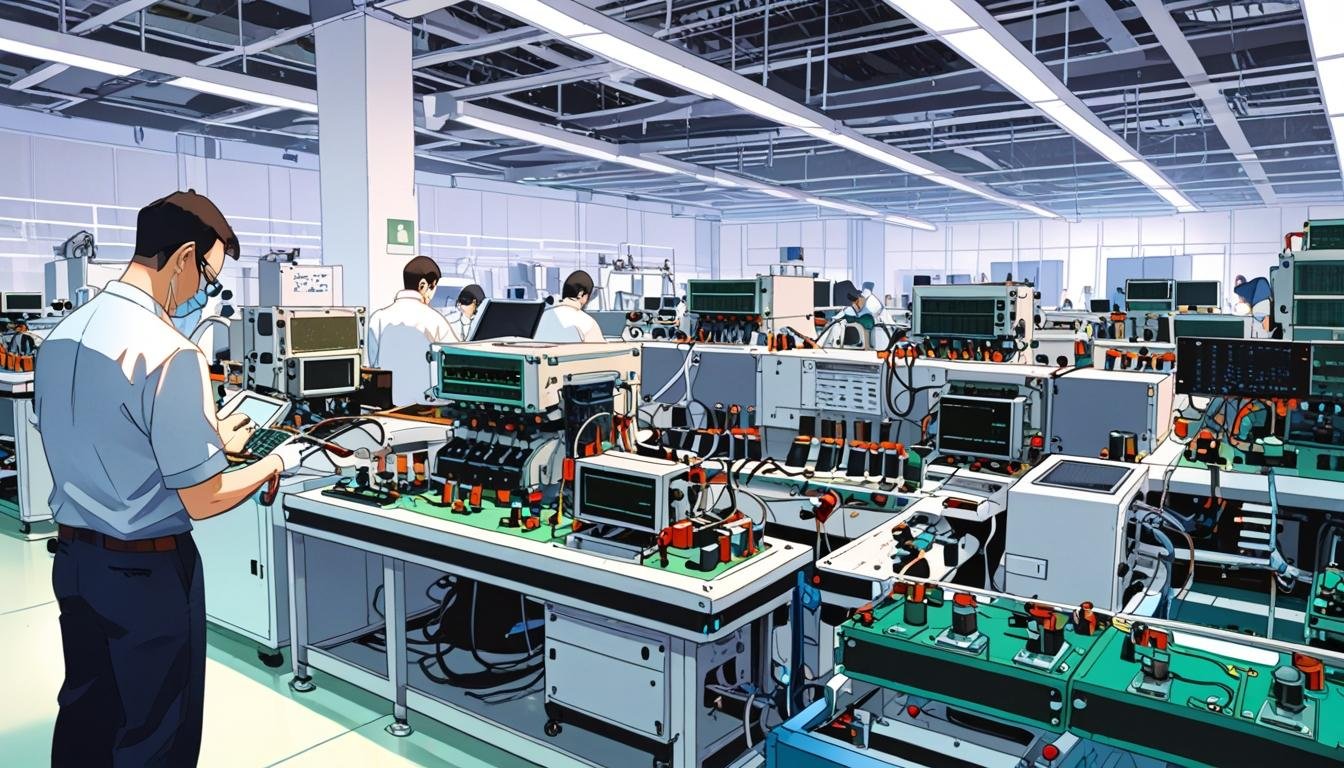
**London**: An article by the ECIA in Electronics Sourcing UK & Ireland explores the key differences between component lead time and cycle time in semiconductor manufacturing, highlighting the importance of understanding production timelines for efficient supply chain management amidst fluctuating component availability.
In the latest issue of Electronics Sourcing UK & Ireland, an article by the Electronic Components Industry Association (ECIA) has come forth with an in-depth examination of the distinctions between component lead time and cycle time in semiconductor manufacturing. This comprehensive exploration reveals the intricate relationship between the complexity of semiconductor devices and the time required for their production.
The article elucidates that not all professionals involved in electronics purchasing may possess a thorough understanding of the various stages inherent to semiconductor fabrication, packaging, and testing. The author expresses a personal acknowledgment of this gap in knowledge, stating, “I certainly don’t,” which underscores a common uncertainty within the field. However, the insights gained from the article provide a valuable perspective on the numerous steps involved and the corresponding timeframes for each.

The suggested importance of robust distribution channels means that timely availability of components is essential. Yet, the reality presents challenges, as economic and technological cycles often experience discrepancies, leading to phases of both surplus and scarcity in component availability. Acknowledging this imbalance, the article highlights that having a foundational understanding of semiconductor manufacturing timelines should drive purchasing departments to prioritise the prediction and communication of demand to their distribution partners as early as possible.
Further addressing the complexities involved, the article points out that while many bills-of-materials may contain components that are technologically mature, stable, and readily available from multiple sources, the overall production timeline for a finished product hinges on the availability of all necessary parts. This includes those critical semiconductor devices that may require significantly longer manufacturing durations, sometimes extending to several months.
Ultimately, the article posits that effective communication of demand, carried out as early as possible, can facilitate smoother operations, allowing distribution partners to optimise their resources and meet the needs of their clients efficiently. The insights offered signal a fundamental shift in how purchasing departments might approach their strategies in a landscape marked by variability in supply and demand dynamics.
Source: Noah Wire Services

