


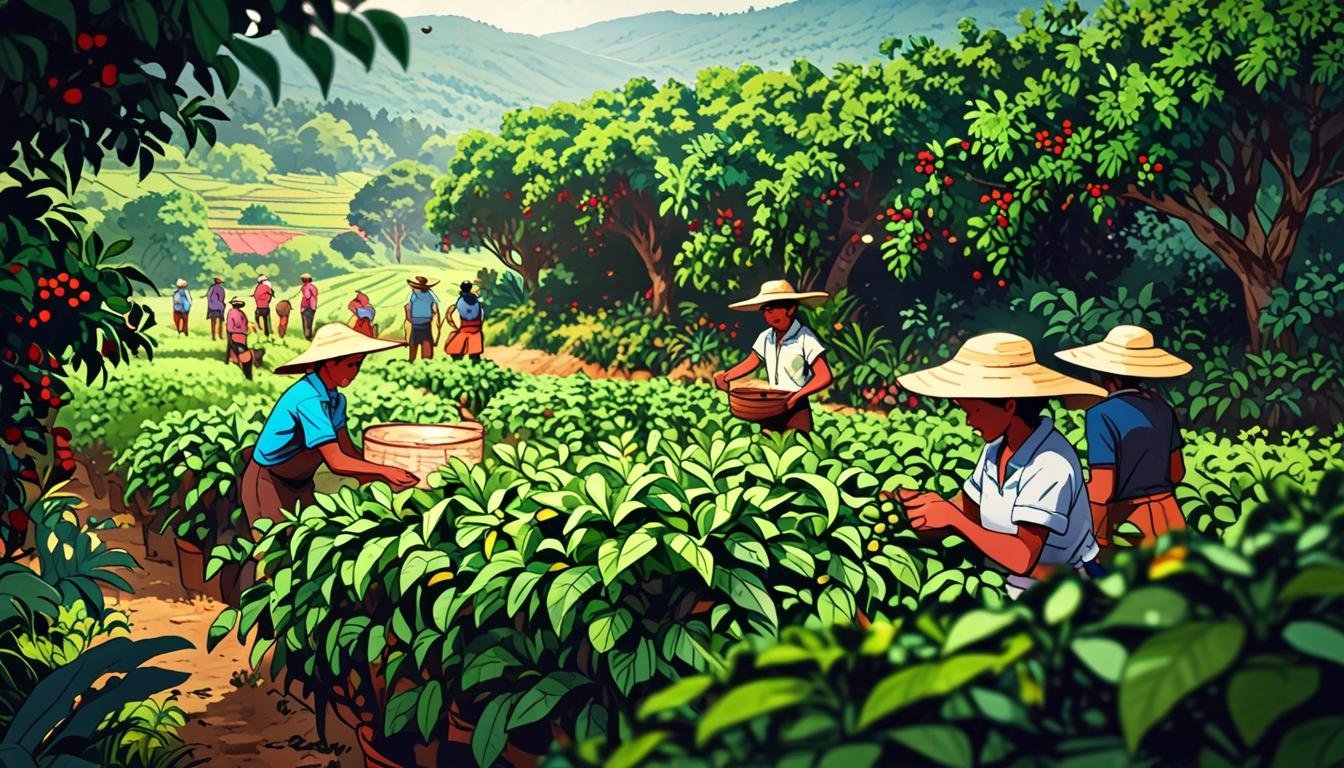
**London**: The direct trade model in specialty coffee not only enhances product quality and ensures fair payments for producers but also raises concerns about authenticity and ethical practices. Industry leaders advocate for meaningful connections between roasters and producers to address both business challenges and climate risks.
The concept of “direct trade” has become a defining principle within the specialty coffee sector, emerging as a proactive alternative to traditional supply chains dominated by multinational corporations. This model promotes closer collaboration between coffee roasters, traders, and producers, ultimately positioning them as partners rather than mere transactional relationships. By reducing the number of intermediaries involved in coffee sourcing, this approach aims not only to enhance product quality but also to create a more equitable framework for producers.
Initially viewed as a strategy rooted in social responsibility, the direct trade model enabled roasters to pay higher prices for premium-quality coffee. This initiative supported coffee-growing communities by fostering a sustainable production environment. Over time, however, the integrity of this model has faced scrutiny, as it has been observed that some roasters exploit the terminology for marketing purposes, offering consumers an ambiguous sense of ethical sourcing without sufficient accountability.

Current market dynamics have seen a shift, with record arabica futures pushing many roasters to adopt direct trade as a risk management strategy, further allowing them to influence supply chain costs. Despite these changes, industry insiders assert that the social and ethical dimensions of direct trade remain vital in shaping the specialty coffee landscape.
Discussing the direct trade model, Ansha Yassin, managing director at Co Qua Lab, stated, “As the name implies, direct trade is without the involvement of middlemen, leading to a shorter supply chain where the shipment of coffee goes directly to the buyer.” Her organisation collaborates with Coffee Circle, a German specialty coffee roaster committed to sourcing practices that prioritise ethical standards and sustainable relationships with producers.
Since its inception, direct trade has demonstrated significant advantages for both producers and roasters. Producers often receive substantially higher payments, allowing them to reinvest in their farming operations and secure more viable livelihoods.Equally important, roasters gain direct access to producers, facilitating knowledge exchange about coffee processing and flavour development.
Martin Elwert, CEO and founder of Coffee Circle, emphasised the importance of building meaningful relationships within this framework. “When we talk about direct trade at Coffee Circle, we mean building a personal relationship between producers and roasters,” he explained. “This includes mutual respect and understanding of social and economic circumstances and challenges.”
Although the direct trade model has brought positive changes, it is essential to recognise its limitations. The term “direct trade” is not clearly defined or regulated, leading to potential confusion among consumers about its genuine implications. This lack of standardisation creates an environment where roasters can claim adherence to direct trade principles without substantial evidence, blurring the lines between authentic practices and marketing gimmicks.
Recent conclusions suggest that with the soaring prices of arabica coffee, direct trade has evolved into a crucial strategic sourcing method. By avoiding traditional channels, producers can establish their prices while ensuring that roasters maintain closer oversight of their supply chains. “Taking care of internal and external stakeholders, employees, customers, producers, and partners of any kind is good business,” Martin remarked.
As the direct trade model advances, it has become increasingly recognised as a dual-purpose initiative, providing both a framework for ethical sourcing and a pragmatic business approach. The challenges facing coffee producers have intensified due to climate risks and market fluctuations, necessitating that all actors in the supply chain actively invest in sustainable farming practices.
Founded to address these critical issues, Coffee Circle operates the Coffee Circle Foundation e.V., with a commitment to assisting coffee-growing communities. For every kilogram of coffee sold, the company contributes €1 to projects aimed at improving access to clean water, agricultural education, and essential community services. Since its inception, it has invested over €5 million into initiatives that directly benefit these communities.
Yassin added that “Higher profit margins go to the producers, which benefits the community at large,” underscoring the importance of financial sustainability in maintaining a healthy coffee industry.
The future of direct trade appears to be one that blends ethical sourcing with pragmatic business considerations. As industry players aim for improved knowledge and understanding among all parties involved, they are better equipped to confront the challenges ahead. As Martin noted, “The more we know from seed to cup, the better we can overcome challenges,” reflecting a growing awareness of the intersection between social responsibility and commercial viability in the specialty coffee sector.
Source: Noah Wire Services

