


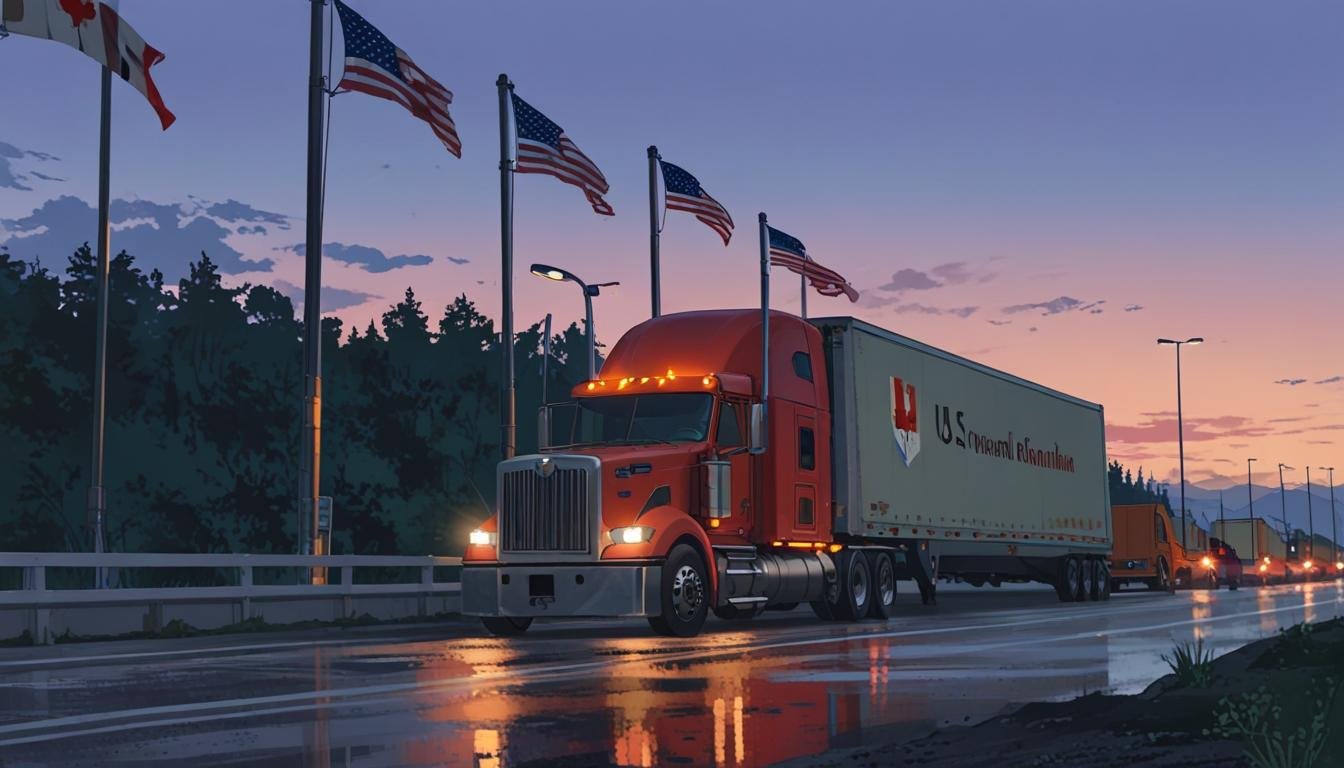
**Blaine, Washington**: A tractor trailer crosses into Canada amid growing uncertainty over new tariffs imposed on imports from Canada and Mexico. Banking executives voice concerns about potential impacts on their businesses, as the market braces for possible economic fallout and rising consumer prices.
On Wednesday, at the Pacific Highway Border Crossing in Blaine, Washington, a tractor trailer was seen entering Canada from the U.S., marking a moment of uncertainty in North American trade relations. This development follows the recent imposition of sweeping tariffs on Canadian and Mexican imports by the Trump administration, which has raised concerns among financial institutions and industry leaders about the potential ramifications of these trade barriers.
U.S. and Canadian banks are closely monitoring the situation, as the tariffs could significantly impact their businesses and clients. While there remains a prevailing optimism regarding the U.S. economy, banks are assessing the potential fallout from the added tariffs, which include a 25% tax on various goods from Canada and Mexico that was enacted on Tuesday.

Phil Thomas, Chief Risk Officer at the Bank of Nova Scotia, highlighted the seriousness of the situation, describing it as “a slow-moving crisis” that could have widespread damage on both sides of the border. Speaking at an RBC Capital Markets conference in New York City, Thomas explained that the uncertainty surrounding the duration of these tariffs is particularly concerning. “Duration is kind of the word of the day,” he noted, adding, “There are tons of variables right now for us to digest.”
Other banking executives shared similar sentiments, particularly regarding the potential length of the trade disruptions. Tayfun Tuzun, Chief Financial Officer of BMO Financial Group, expressed concern over the timelines, stating, “The unknown factor here is the time dimension, because if it’s only for 90 days or 180 days, you can hunker down. But if it ends up being a longer period of time when we are under this regime, then we’re going to see stress.”
Canadian banks have started to brace themselves for the anticipated impacts of the tariffs. BMO recently warned that its operating performance would be adversely affected, while the Royal Bank of Canada has raised its provisions for credit losses in anticipation of the duties. In a report by BMO, it is estimated that around 20% of Canada’s gross domestic product is at risk from the tariffs either directly or indirectly, prompting adjustments in economic forecasts that predict a mild recession and rising unemployment.
The volatility of the current situation extends beyond just the Canadian and Mexican borders. President Trump has also increased tariffs on imported goods from China, which has in turn announced retaliatory measures against U.S. products. Executives at U.S.-based banks, like Russell Hutchinson of Ally Financial in Detroit, noted the potential affordability impacts these tariffs might have on consumers already grappling with financial pressures.
However, not all industry leaders view the tariffs solely as a negative development. Some, such as TD Bank Group’s Chief Financial Officer Kelvin Vi Luan Tran, see opportunities amidst the turmoil. He believes that clients, feeling the uncertainty, will seek strong financial guidance, allowing banks to deepen relationships and potentially acquire new clients. “They’re seeing uncertainty, and they understand the value of having … strong bankers providing advice,” he remarked.
Similarly, Canadian Imperial Bank of Commerce’s CFO Robert Sedran emphasised a relationship-oriented approach, stating, “I think we start from the perspective of, this is something that is not really happening to us. It’s happening to our clients.”
The Federal Reserve’s summary of current economic conditions reflects widespread concerns regarding the impact of tariffs, noting expected increases in prices that could have particularly adverse effects on the construction sector due to its reliance on lumber imports from Canada.
As the trade discussions continue, Scotiabank’s Thomas commented on the uncertain future, holding out hope that a resolution might eventually materialise. “I’ll cross my fingers,” he said. “Maybe some cooler heads will prevail, and we’ll all win.”
Source: Noah Wire Services

