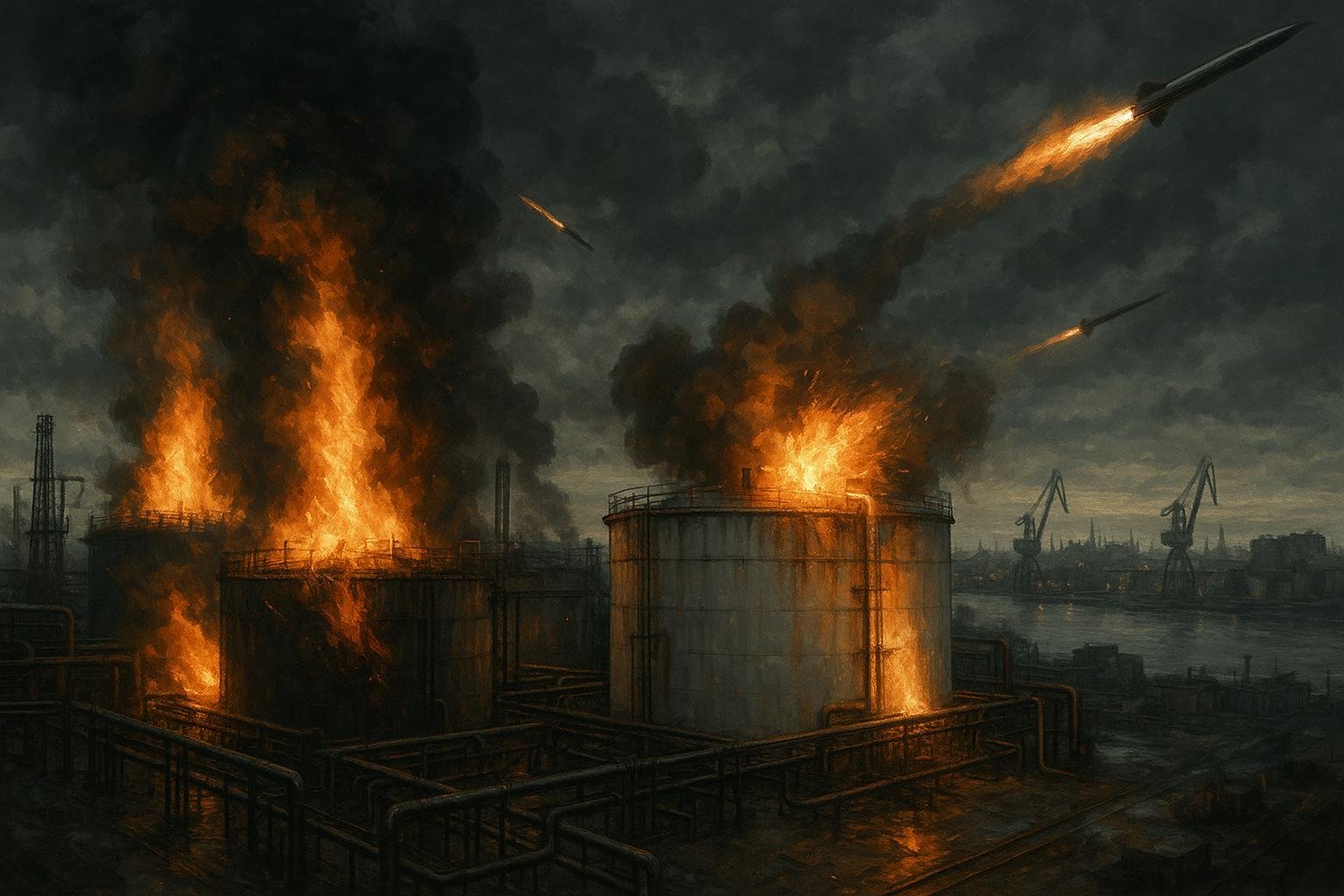
Burning storage tanks and columns of smoke over the Baltic have undercut what looked set to be a lucrative windfall for Moscow, as Ukrainian strikes on Russia’s oil-export infrastructure blunt the Kremlin’s ability to capitalise on a surge in crude prices.
According to the t-online report, prices for Russia’s Urals grade briefly climbed above $120 a barrel in early April after disruptions in the Middle East pushed global benchmarks sharply higher. Those market moves brief...
Continue Reading This Article
Enjoy this article as well as all of our content, including reports, news, tips and more.
By registering or signing into your SRM Today account, you agree to SRM Today's Terms of Use and consent to the processing of your personal information as described in our Privacy Policy.
ly translated into unexpectedly large export proceeds for Russia; t-online cites an estimate that Moscow earned about $6.9 billion in additional oil revenues in the first two weeks of March alone, aided by a temporary US waiver on sanctions covering cargoes already at sea through 11 April.
But Kyiv has stepped up a deliberate campaign to deny Moscow those gains by striking facilities that handle exports. Le Monde reports that Ukrainian long-range drones have repeatedly hit key Baltic terminals, including Ust-Luga and Primorsk, Russia’s largest oil export terminal, and struck Novorossiysk on the Black Sea, as well as refineries and related infrastructure. Those attacks have produced major fires, damaged port equipment and forced suspension of loading operations, according to the French newspaper.
The practical effect has been substantial. Industry reporting compiled by Maritime Professional indicates that attacks on pipelines, terminals and refineries have cut Russian export capacity by roughly one million barrels per day, about 5% of the country’s output, a scale of disruption likely to depress production over time. Bloomberg reporting, summarised by UNN, found that port shipments fell to around a third of the previous week’s level following repeated strikes, costing Moscow in excess of $1 billion in lost revenues during that period.
Ukrainian officials frame the strikes as a financial chokehold intended to prevent oil proceeds from sustaining Russia’s war effort. AP notes that Kyiv has also used domestically developed long-range drones to reach targets inside Russia, including oil terminals in Novorossiysk, and said such operations aim to curtail export income that could underwrite further aggression. Russia, for its part, claims many Ukrainian drones were intercepted during recent nights of fighting.
Analysts caution the campaign’s ultimate impact requires sustained pressure. Research from the Baker Institute stresses that while crude export volumes were largely steady through 2025, exports of refined products began to decline, prompting Russian authorities to restrict some product shipments temporarily. Breaking Defense quoted EU officials describing the strikes as “painful” to the Russian economy, noting rising logistical costs and greater uncertainty for oil flows.
The balance of forces on global markets is now more complex than a simple price shock from geopolitics. Le Monde observed that before the escalation linked to tensions in the Middle East, Brent traded around $70 a barrel; with prices now above $100, Ukraine’s strikes have limited the extent to which Moscow can convert higher prices into durable fiscal gains. At the same time, Russia cites stockpiles afloat and alternative routing through Pacific ports to mitigate losses, underscoring competing assessments of resilience and damage.
For Moscow the risk is twofold: immediate revenue shortfalls from disrupted shipments and longer-term increases in the cost and vulnerability of its export system, which could erode flexibility in financing state priorities. Kyiv’s intensified targeting of export hubs represents a strategic attempt to translate battlefield pressure into economic strain, and industry and intelligence assessments suggest that if the campaign continues, it will deepen the strain on Russia’s oil-dependent finances.
Source: Noah Wire Services