


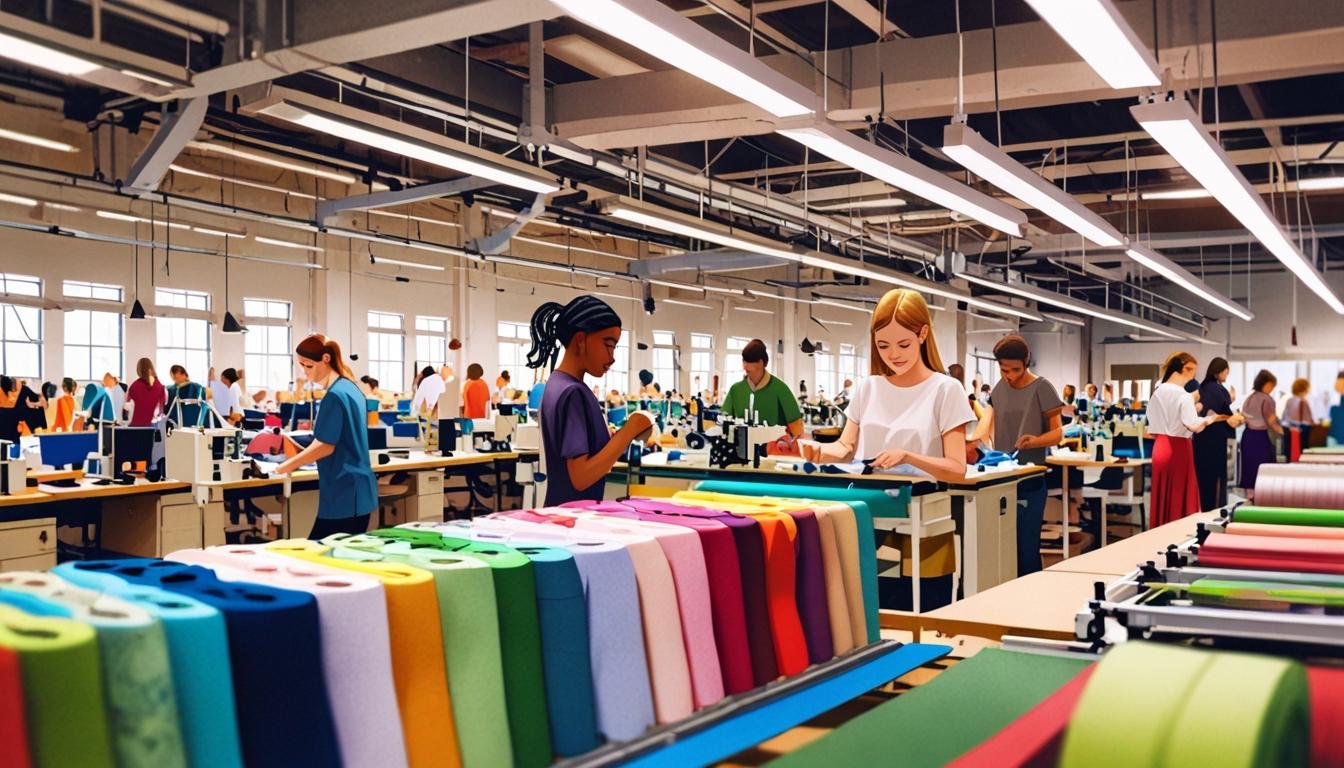
**London**: A report by the UK Fashion and Textile Association outlines strategies to enhance social and ethical compliance in the domestic fashion sector. It highlights areas of improvement and proposes collaboration to strengthen ethical practices and boost UK production in the fashion industry.
A recent 37-page report released by the UK Fashion and Textile Association (UKFT) outlines strategies aimed at enhancing social and ethical compliance practices within the domestic fashion and textile manufacturing sector. The focus of the report is to invigorate UK production and establish the nation as a leading player in responsible fashion and textile manufacturing.
The report identifies opportunities for improvement in five key areas: legislation and policy, training and education, demystifying standards, tools and systems, and incentives and funding. The UKFT believes that addressing these areas will facilitate a stronger commitment to ethical and sustainable practices within the industry.

Adam Mansell, CEO of UKFT, commented on the findings, stating, “The benefits of domestic sourcing are compelling – increased responsiveness, flexibility, reduced carbon footprint, and greater visibility of manufacturing environments. However, to fully realise these opportunities, we must address the complex social and ethical compliance landscape faced by all.”
The report notes a significant challenge due to the “fragmentation” within the fashion and textile industry. As manufacturers currently grapple with compliance to nearly 50 different standards and frameworks, the resulting operational strain complicates their processes. This multitude of requirements has been noted as a burden, with both manufacturers and retailers acknowledging the difficulties in navigating multiple frameworks.
A collaborative approach between manufacturers and clients was emphasised as a vital factor for achieving success. The report suggests that despite expectations for manufacturers to cover audit costs, investment and effort should be shared. It further indicates that smaller manufacturers face particular difficulties in allocating adequate resources for effective social and ethical compliance management, underscoring the need for open communication regarding the challenges they face.
Financial implications are also highlighted in the report, pointing out that hidden costs associated with social and ethical compliance can have a profound effect on a company’s overheads and pricing strategies. Many buyers reportedly display a limited understanding of ethical pricing alongside the cost structures inherent to UK manufacturing. The UKFT notes that pressures from pricing can sometimes lead to the compromise of ethical practices, stressing the importance of understanding which costs should be included in price negotiations to uphold ethical standards, particularly those that directly impact employee welfare.
Shifting the approach from heavy audit reliance to fostering strong, ongoing relationships between manufacturers and clients is another recommendation put forth by the UKFT. The report suggests that manufacturers who adopt more transparent methods have generally enjoyed improved relationships with buyers, an essential element for mutual growth and understanding.
Looking ahead, the report finds consensus among industry players that showcasing high levels of social and ethical compliance can unlock new business opportunities. The advancements in technology and production methods—including on-demand and zero waste strategies—allow UK manufacturers to leverage unique advantages. Factors such as the ability to respond quickly to market demands and improve production flexibility can help counterbalance the typically higher costs of UK manufacturing.
The report also anticipates that increased supply chain visibility and collaboration will enhance the dynamics of the domestic manufacturing sector. Greater engagement could facilitate more frequent site visits and stronger connections between buyers and manufacturers, which in turn could lead to improved oversight of production processes.
To support these initiatives, UKFT proposes the establishment of a new online platform featuring a UK manufacturing database. This platform aims to enhance functionality by detailing key social and ethical compliance indicators for manufacturers. Additionally, it would include a Responsible UK Supply Chains Toolkit designed to provide comprehensive guidance on social and ethical compliance within the sector.
This report’s publication follows a series of workshops that involved participation from various stakeholders, including well-known brands and retailers such as John Lewis, New Look, and Next, as well as textile and garment manufacturers and social and ethical compliance experts.
Source: Noah Wire Services

